

The Manosphere-to-Catholic Mass Pipeline
How loneliness, online influencers, and a hunger for tradition are pulling young men into the certain branches of Christianity.

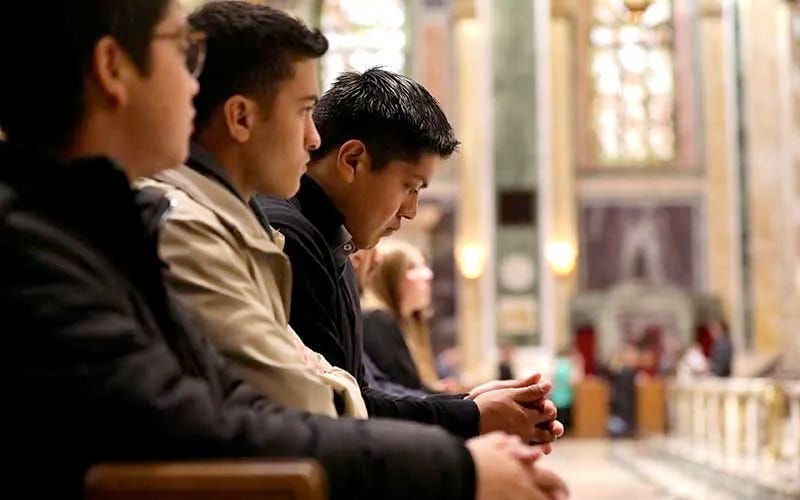
In the months since Charlie Kirk’s funeral — a spectacle that filled an NFL stadium with 90,000 people for what many described as a religious revival — churches across the country have reported an attendance surge, especially among young men, that’s been dubbed the “Charlie Kirk Effect.” Anecdotal accounts of a spike have provoked speculation that the country is entering a new Great Awakening.
To be clear, there is little evidence that Americans are on the doorstep of a dramatic surge in religious activity. In the decade since 2015, the United States has witnessed a 17-point dip in the percentage of people who report that religion is an important part of daily life, one of the most dramatic downturns of religiousness anywhere in the world, according to a Gallup study. Since the 1970s, it’s become an axiom that each generation of Americans is markedly less religious than the previous — and data suggest that in recent generations, men, not women, have led the charge away from church.

There is nevertheless something profound occurring with religion in America. For the first time in recent history, a generation of young Americans is “at least as religious as their immediate predecessors,” according to a recent Pew study. And in an equally historic turn, it appears to be young men, like those reported in churches after Kirk’s funeral, who are stabilizing the decline by attending at rates at least as high as young women, who are trending away from church.
But the most striking fact about the young men of Gen Z is not that they aren’t leaving the church; it’s that in their search for spiritual life, many are converting to Catholic and Orthodox churches that are more demanding than Protestantism, requiring lengthy and rigorous conversion processes.
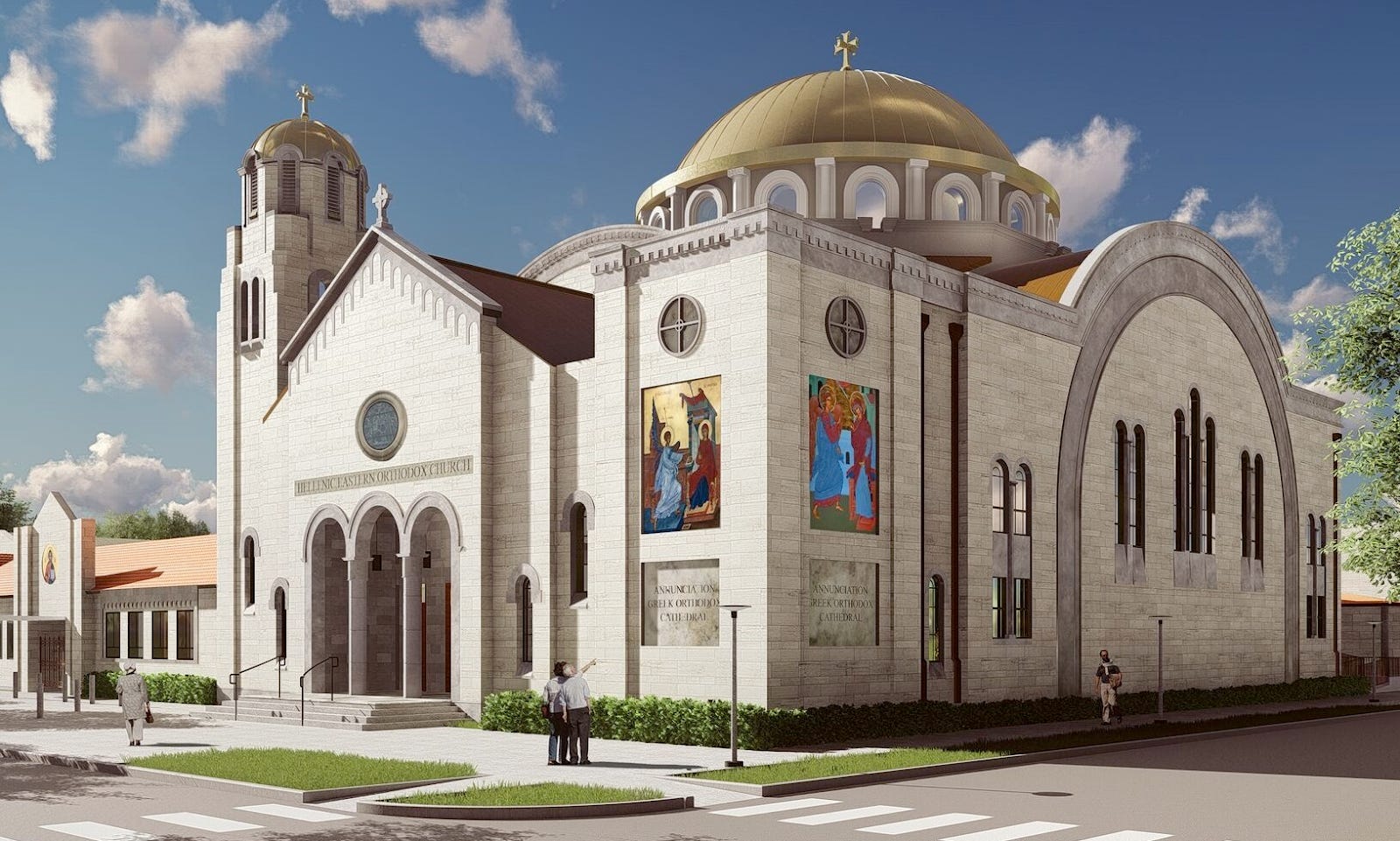
There’s no shortage of theories about why Gen Z men are finding comfort in more structured religious traditions.
Some say it’s a cry for rootedness amid the collapse of communities over the last half century. Madeleine Kearns of The Free Press writes that “Americans are starved of beauty, meaning, purpose, and community,” all of which, she suggests, are offered by the Catholic Church. Others suggest that in a world of constant change, the deeply rooted traditions of Catholic and Orthodox churches offer desirable stability, especially on the heels of a global pandemic. As Dan Hitchens, former editor of Catholic Herald, told Kearns, “In an age of instability, people are attracted to ancient religious traditions” and find “something appealing about the tough demands of Catholic doctrine.”
Many argue that because young men feel alienated by cultural trends perceived as hostile toward masculinity, such as #MeToo, they are reaching for theological traditions that explicitly value masculinity and offer more clearly delineated roles for men and women. In a recent article for First Things, a journal on religion and public life, Blake Johnson writes that “many Gen Z men appear to be gravitating specifically to churches that are traditional in liturgy and conservative in doctrine, and that exert a ‘masculine’ appeal,” choosing to“pass on mainline and progressive evangelical churches that echo the broader culture’s suspicion of masculinity.”
Still others believe online influencers are steering young men toward stricter religious traditions. And, of course, there’s a chorus of those who suggest that in a hyper-polarized world where religion is a coded political identity, young conservative men are gravitating toward church as an expression of politics. Writing for Katie Couric Media, Tess Bonn says that “religion — particularly conservative Christianity — is now being reimagined as a kind of countercultural refuge” where men can push back “against the perceived pressures of modern secular progressivism.”
In many ways, these arguments are related as layers in an onion — each one necessary to make sense of the others.
To be sure, the fracturing of traditional communities is part of the deep context for understanding why some Gen Z men are turning to highly structured churches. Community networks have, in fact, weakened in the past half century. Robert Putnam’s Bowling Alone, the classic study of community collapse in America, describes a decline not only in church attendance but also in membership in Parent Teacher Associations, unions, fraternal societies, bowling clubs, and other groups that act as community glue. And he argues that alienation from these groups has meant removal from face-to-face relationships and increased loneliness.
But community collapse has not hit men and women equally. There is growing evidence that women have maintained stronger social networks than men, a contributing factor in young men having higher rates of loneliness (25%) than young women (18%). Last year, Time magazine reported that isolated young men are more likely to retreat into “misogynist and anti-democratic spaces online.” In 2023, according to the State of American Men survey, almost half of the youngest group of surveyed men said they trusted Andrew Tate — a British influencer and self-described misogynist who is facing 21 criminal charges for rape, assault, and human traficking — more than President Biden. And it’s not just young men. In the same survey, 40% of all men trusted one or more “‘men’s rights,’ anti-feminist, or pro-violence voices from the manosphere.”
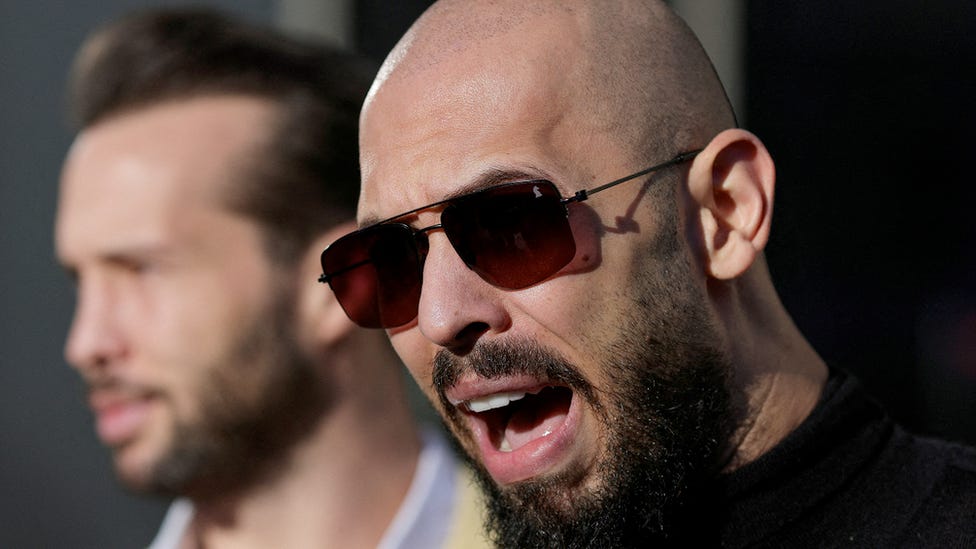
These isolated men are finding comfort not only in Andrew Tate but also in other figures of the so-called manosphere, an amorphous online space where woke culture is blamed for weakening masculinity. Its online personalities — ranging from Jordan Peterson to Nick Fuentes and Steve Bannon to the now-deceased Charlie Kirk — blend male grievance with far-right politics and conservative religious traditions. Jordan Peterson is not Catholic but his wife recently converted, and he often cheers Catholicism; Charlie Kirk, a conservative evangelical, often praised Catholic and Orthodox churches for their embrace of ritual and tradition; Steve Bannon, whose War Room podcast is among the most popular in the country, has been described as the “most inflammatory voice of rightwing Catholic discontent”; and Nick Fuentes, a Holocaust-denying white nationalist with more than a million followers on X, espouses what he describes as a traditionalist Catholic theology.
Once young men dive into these online worlds, algorithms begin suggesting a series of conservative religious figures, like Bishop Robert Barron, who is closely connected with President Trump and whose Catholicism overlaps with that of many manosphere influencers. Of course, there should be no discounting that many are inspired to faith by this online world, nor that they find beauty and nourishment in the values, communities, and traditions of the religions they are discovering. It would oversimplify complicated conversion decisions to suggest that young men are joining ancient churches merely as an expression of politics.
But the overlap with politics is undeniable. According to a recent Gallup poll, 60% of recent Catholic converts lean Republican, compared with 52% of those who were raised as Catholics. And if we set aside the 49% who converted for marriage, the percentage of conservatives among new converts would certainly be above 60%.
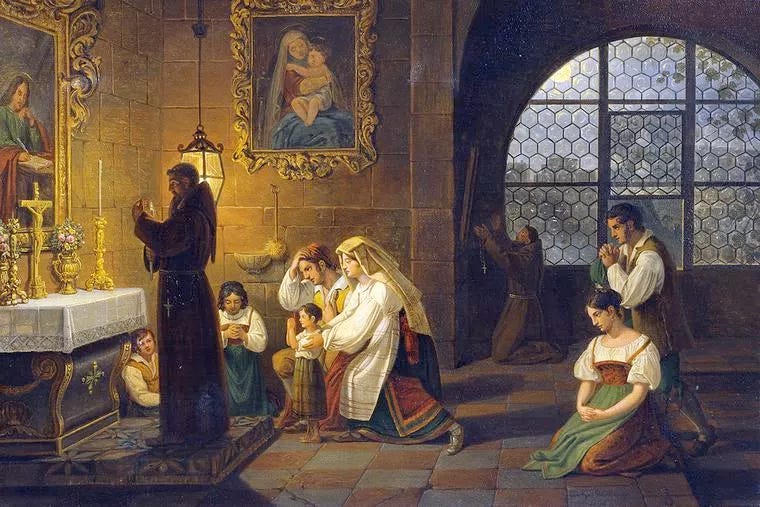
And young priests are also trending politically conservative, more so even than their new parishioners. Among those who have joined the priesthood since 2020, 80% identify as theologically “conservative” or “orthodox.” According to The New York Times, nearly all of these newly ordained priests identify as politically conservative as well — not one of the 3,500 surveyed new priests identified as “very progressive.” Between 2000 and 2009, only 44% of new priests self-identified as conservative, while 12% reported being liberal or very liberal. Although new priests have leaned conservative since the 1980s, this more pronounced trend toward conservatism threatens to turn a longstanding gap between the politics of priests and the politics of parishioners into a yawning and destabilizing divide that might alienate a moderate laity.
At this early stage, these trends leave us with as many questions as answers. It’s not certain that young men will continue gravitating to Catholic and Orthodox churches, nor that new priests will remain disproportionately conservative. If both trends continue, moderate parishioners may come to feel alienated and stop attending. And if the overlap between church and “manosphere” grows, even more women might abandon church.
Ruth Graham of The New York Times writes, “Changing attitudes will reshape parish life, where priests choose topics for homilies and have discretion over matters like whether girls can volunteer as altar servers and lay people can assist in the distribution of communion. It will also influence the leadership ranks of the American church, which already has a global reputation for conservatism... That gap is poised to harden as current bishops retire and die.”
These are critical concerns that will take time to work out.
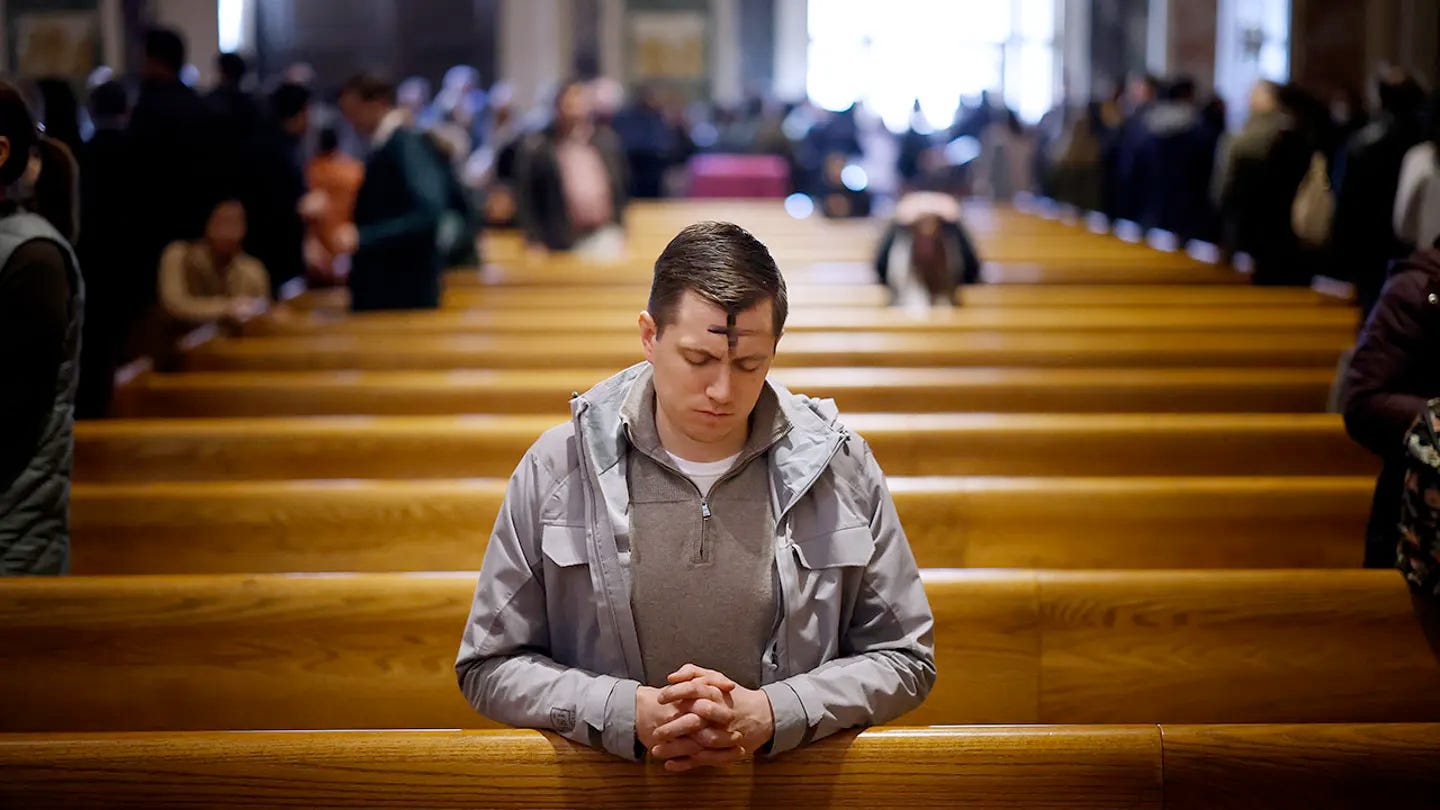
For now, it’s enough to say that although the country is not entering a new Great Awakening, this is a noteworthy moment in American religious history. Whether because Gen Z men are seeking strong community as an antidote to loneliness, longing for stability and tradition amid the uncertainties of modernity, expressing right-wing anger at woke culture, or even lashing out against a world perceived as hostile toward masculinity, a surprising number of young men are staying in the pews. In an age of instant gratification, we could even consider them a new counterculture.
Thank you. Such an enlightening article. We recently moved to another state and found our pastor hadn’t updated his operating system since before Vatican II. We found a progressive parish nearby. Our pastor marches in pro-immigrant rallies. It’s refreshing. If these “right” pastors, influencers and leaders followed Jesus’ true words, they’d be advocating for immigrants, women and those on the economic margins. Follow those corporal works of mercy straight to heaven.
Of course many men are flocking to a group that showers them with praise and tells them they're superior by default. Rather than accomplish anything that makes them actual leaders, they get to believe they are leaders simply for being born. Lazy.