You Can’t Hack Your Way Out of Being Human
Everyone I know is exhausted from productivity.
I see it in my clients all the time. In their efforts to feel better, they treat every spare moment as an opportunity to cram in as much as possible. They watch productivity videos while getting ready, listen to podcasts during their lunch break, and fall asleep reading self-help books. They can tell me everything that’s wrong with them and exactly what they need to work on. They just never have a moment to actually process any of it.
But it’s not just self-improvement. Everything has been gamified. We track our sleep, our steps, our morning routines, our meals. It’s easy to create a life where you never have a moment to sit with yourself or feel an emotion. We’ve been conditioned to see every inefficient moment as wasted time and sold this fantasy that if we just time-block enough, we’ll be able to fit in hobbies and relaxation.
In 1930, the economist John Maynard Keynes predicted that by 2030, we’d need to work only 15 hours a week because of how productive we would all be. Instead, technology just raises the bar. When washing machines became common, we didn’t save time, we started washing our clothes more often. Email didn’t reduce communication; it created the expectation of immediate response. We keep running faster but the finish line keeps moving.
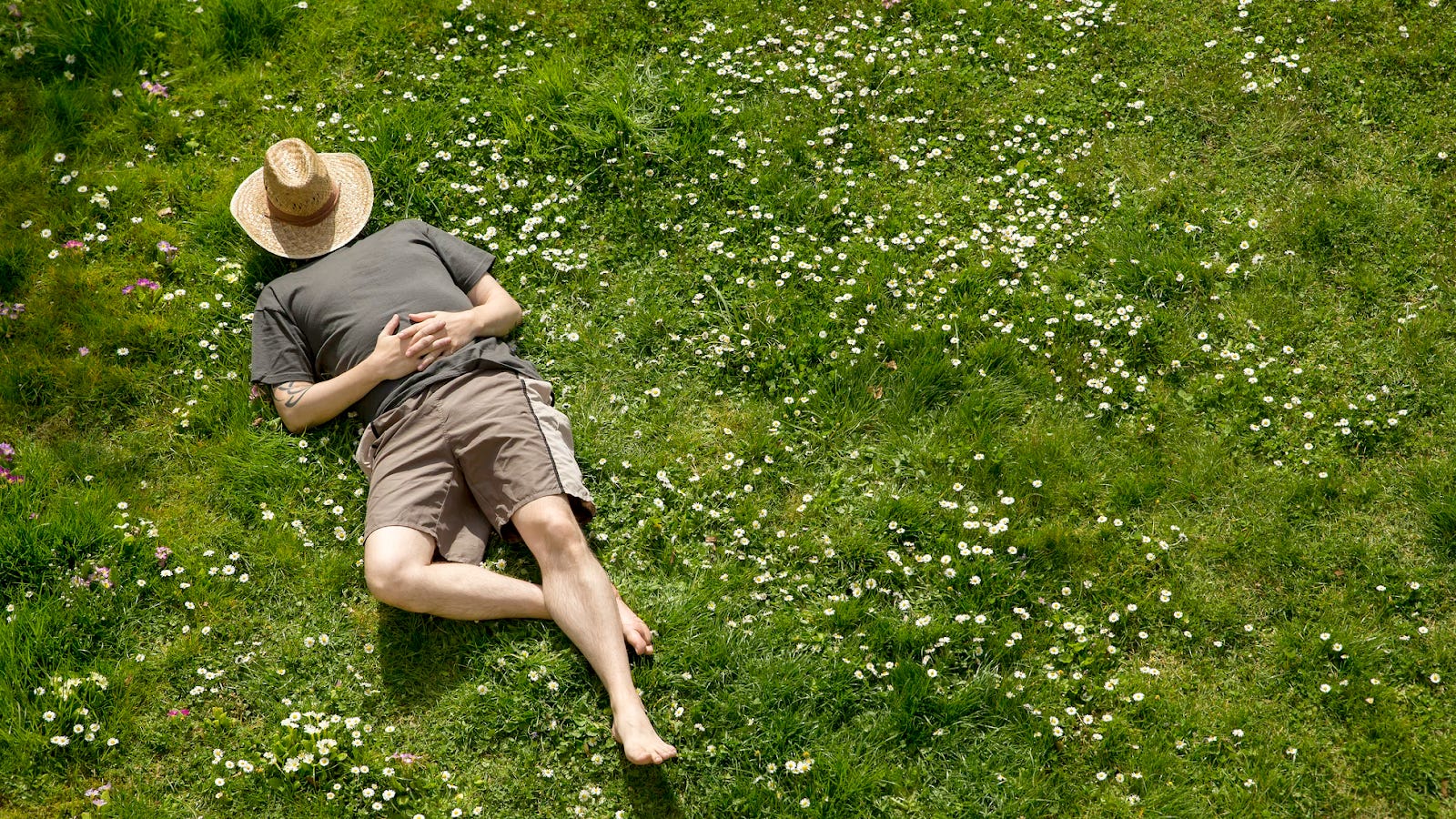
Your brain needs moments of nothingness. Research shows that to consolidate memories, it requires brief periods of rest. Without downtime, experiences pass through you but don’t stick. (This might be a reason why your days blur together.) Boredom helps with creativity and problem solving. When you’re not focused on a task, your mind makes connections it can’t make when it’s busy.
We’re losing the ability to do nothing. In a 2014 study, people were put in a room for 15 minutes and given the ability to administer an electric shock to themselves. About two-thirds of men and a quarter of women chose the shock over just sitting alone with their thoughts. And that was before TikTok reduced people’s attention spans even more.
What do we miss when we’re obsessed with utilizing every moment? When we treat ourselves like machines that need to be optimized 24/7? I think about how the most meaningful moments in my life (good and bad) were the most unpredictable and completely unplannable. The time my friends and I got lost on a hike without service, so we performed the entire soundtrack to Hamilton to pass the time. When my daughter said, “I love you, Mama,” for the first time. Early on in our relationship, when my husband and I stayed up all night talking about our obsession with serial killer documentaries. We can’t be so focused on improving our lives that we miss them… otherwise, what’s the point?
There is good news. Boredom, rest, and presence are actual skills you can rebuild. It is possible to expand your attention span. You can start by noticing how rarely you’re not consuming or doing something. What emotions or sensations come up for you when you leave your phone in another room or block certain apps? How nervous do you feel when you take off your apple watch? How long can you sit with your thoughts without wanting to crawl out of your skin or electrocute yourself?
I’m not saying it will be easy. It may even feel like withdrawal at first. But in a world where information overload is the default, it’s essential to give your brain more space.
You can start small. Leave your phone in another room for an hour, or ten minutes if that is too much. Take a walk without headphones. Pick something you already do — driving, waiting in line, getting dressed — and leave it empty. Resist filling the time with a podcast, scrolling, or even music, and notice the discomfort. If doing nothing seems unbearable, busy your hands. When you channel your restlessness into physical movement, your brain can settle and wander.
You can’t optimize yourself out of being human. To be alive is to be constantly in flux — dealing with emotions, pain, and frustration. But when we try to eliminate every “inefficient” moment from our lives, we miss a lot of the ones that actually make them worth living. These moments rarely fit into a calendar. They happen organically, if you are paying enough attention.


What a powerful and timely message. I read Unconnected by Carlos Whittaker (who I found on Instagram through Sharon). It's an interesting read about his journey, as a podcaster, to use his phone less and connect with people more. He starts with a visit to a neurologist and gets a scan, then another scan after 7 weeks of screen free time. Fascinating.
I love this. I'm a bit of an evangelist for taking walks without headphones or anything. I walk my dog daily and I like to be present with her, but to also just pay attention to the world around me, to nature, to the sounds of birds and squirrels, watch the sunrise, and just be alone with your own thoughts.