

Will the Filibuster Save Us From the SAVE Act?
Why Republicans don’t want to go nuclear to pass the bill

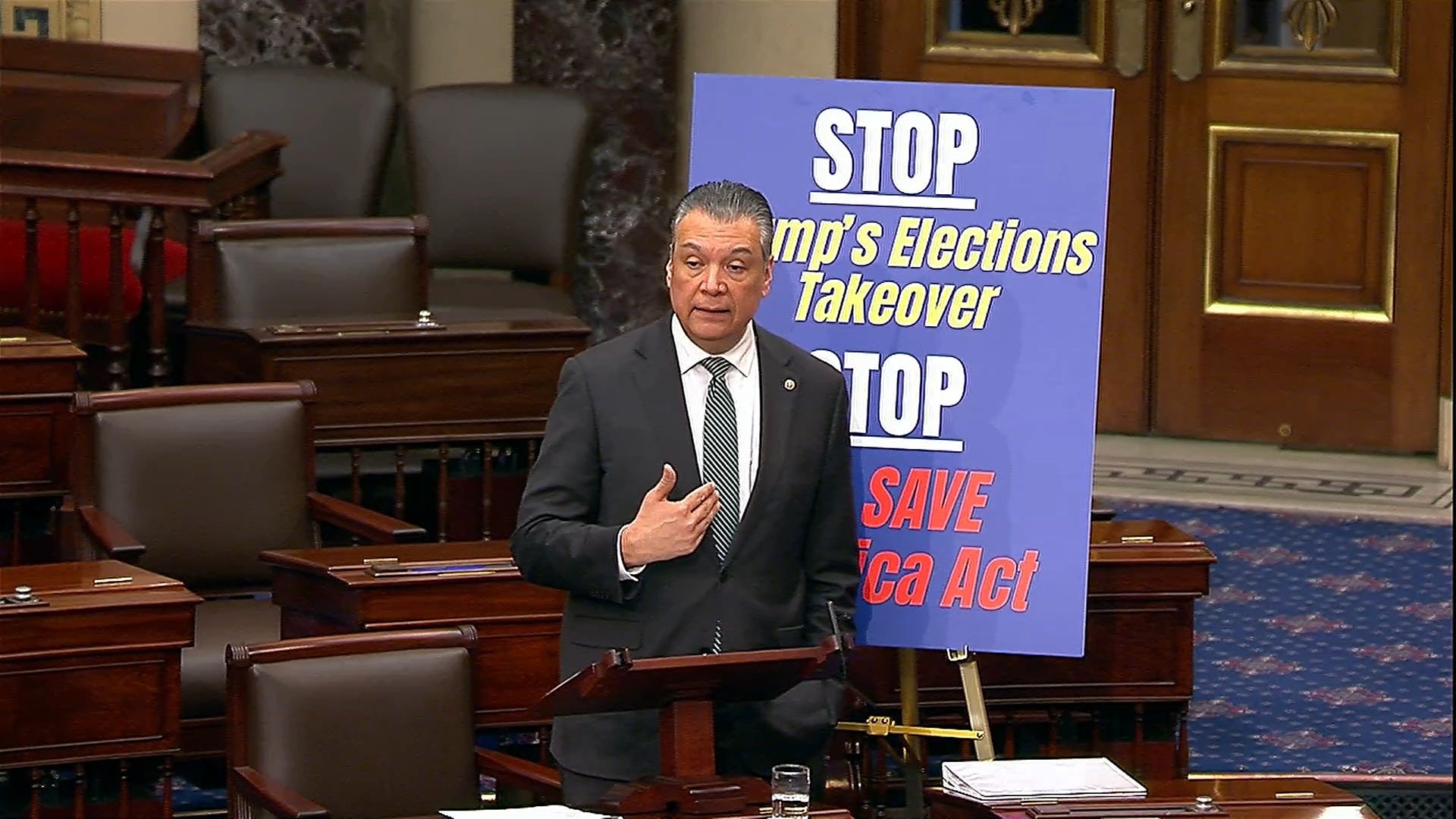
The SAVE America Act has already passed the House. At least a majority of senators support it. And yet it is likely never to receive a vote in the upper chamber.
That’s where the fight now stands.
After clearing the House in a narrow, party-line vote, the bill — which requires voters to present photo ID to vote and proof of citizenship to register, and states to turn over their voter rolls to the federal government — has moved to the Senate, where it has entered a kind of legislative purgatory. It has enough support to pass on a simple majority vote. But it doesn’t have enough support to get to that vote in the first place.
The reason is the Senate filibuster, which requires 60 out of 100 senators to agree to end debate so that they can then take a majority vote to pass a piece of legislation.
This week, senators began what is expected to be a multiday public debate on the bill after voting 51–48 to proceed to consideration (meaning that the full Senate debates it). But that step only underscores the bind. Senate Majority Leader John Thune has acknowledged that the votes aren’t there to overcome a filibuster and actually hold a vote. So even as debate unfolds on the floor — speeches, amendments, negotiations — the most likely outcome is that there will be no Senate vote at all.
Rather than abandon the effort, some Republicans are now exploring whether pieces of the SAVE Act — particularly provisions tied to immigration enforcement and funding — could be folded into a budget reconciliation package, which can avoid the filibuster altogether and be passed with a simple majority.
But that path comes with limits. Reconciliation rules restrict what can be included, meaning large portions of the SAVE Act would likely be left out. The result is a split strategy: pursue what can pass through reconciliation, while the broader bill remains stalled under standard Senate rules.
The drama, in other words, has shifted.
What began as a policy fight — over voter ID requirements, citizenship verification, and federal versus state control of elections — has become a procedural one. The central question is no longer just what should be in the SAVE Act. It’s how, if at all, the Senate can act on it.
That shift has revived a familiar, and increasingly urgent, proposal: bring back the “talking filibuster.”
That’s the filibuster most people picture, made up of dramatic, Mr. Smith Goes to Washington–style speeches. But it hasn’t governed the Senate for decades. In the Senate’s modern history, filibustering a piece of legislation has required only that 41 senators oppose a procedural motion to move to a final vote. The talking filibuster demands more: to block a bill, the filibustering senators would have to hold the floor and give continuous speeches.
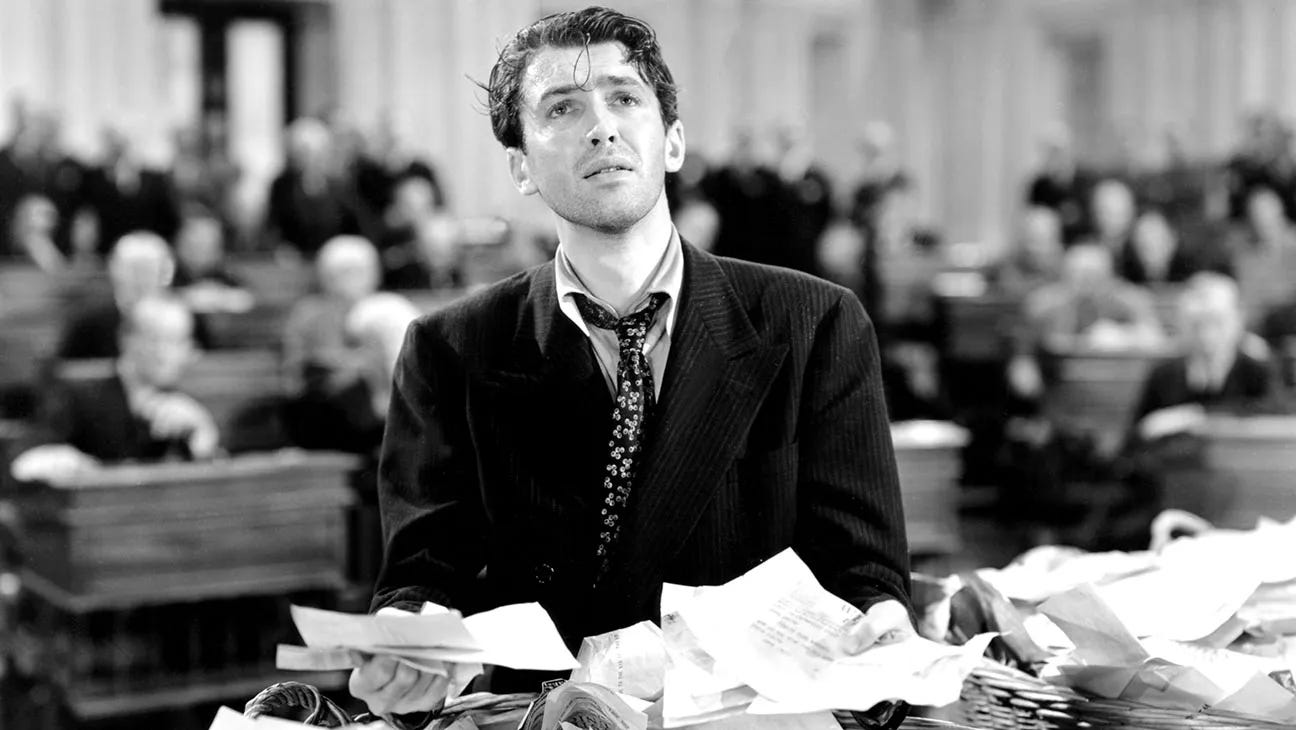
The argument is simple. If senators want to stop legislation, they should have to do it publicly, on their feet, for all to see and hear.
President Donald Trump has pushed that view directly, and multiple Republican senators have echoed the call, frustrated that a bill with majority support can be silently stopped without a single speech.
And it’s why this fight has grown beyond a single piece of legislation. It has become a live test of whether the Senate will return to being a chamber where obstruction must be visible, costly, and sustained.
The Filibuster Wasn’t in the Original Design
The Constitution is clear when it wants to be. It requires supermajorities for treaties, veto overrides, and amendments. But for ordinary lawmaking, the Framers chose simple majority rule — and they did so deliberately.
Having lived through the dysfunction of the Articles of Confederation, when supermajority rules produced paralysis, the Framers rejected minority vetoes outright. James Madison warned that requiring “more than a majority” would block what “justice or the general good” required. Alexander Hamilton called such rules a “poison” that would substitute the will of a few for that of the many. Doing so, he continued, would “destroy the energy of government.”
To the Framers, the Senate — with its staggered terms, equal representation of the states, and unlimited debate for all senators — was built to cool legislation, not to prevent it from moving forward at all.
The filibuster emerged anyway, and largely by accident.
In 1806, at the urging of Vice President Aaron Burr — yes, the same Aaron Burr who would later kill Alexander Hamilton in a duel — the Senate cleaned up its rulebook. One of the changes removed a rarely used motion called the “previous question,” which had allowed a simple majority to cut off debate.
At the time, it seemed trivial. Senators didn’t rely on procedural hardball. They relied on norms. If debate dragged on too long, senators expected one another to yield. If someone spoke excessively, colleagues would signal — sometimes subtly, sometimes not — that it was time to wrap up.
But in eliminating the previous-question motion, the Senate removed its only formal way to end debate by majority vote.
Nothing changed immediately. For decades, senators still yielded the floor after they had said their piece (and then some). But, without the previous question, unlimited debate was now possible — even if no one was quite ready to use it.
The Rule That Was Supposed to Fix Filibusters — Not Empower Them
For more than a century after Aaron Burr’s rules change, the Senate muddled along without a formal way to cut off debate. If senators wanted to hold the floor and talk — about legislation, the weather, literally anything — they had that right. Filibusters existed, but they were rare, exhausting, and usually temporary. Senators talked, delayed, made their point — and eventually the chamber voted. And, crucially, filibusters were typically individual efforts. One senator — or at most a small handful — would hold the floor, speaking for as long as they could. What the modern Senate treats as a coordinated minority strategy was, for most of its history, a personal act of endurance.
That balance broke in 1917.
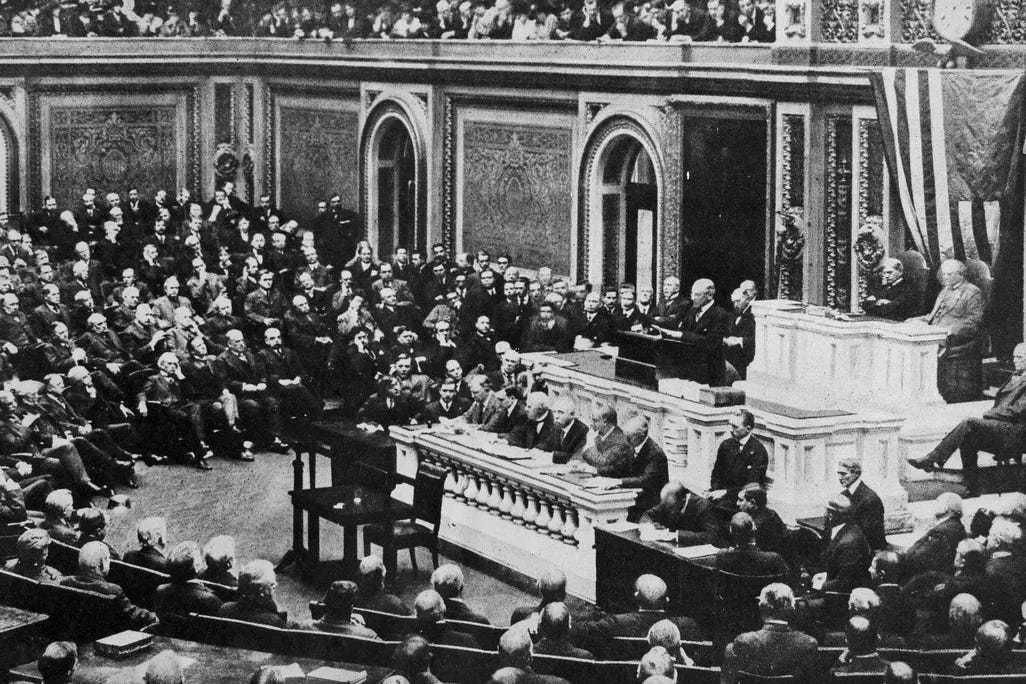
The United States was on the brink of entering World War I, and President Woodrow Wilson asked Congress for authority to arm American merchant ships against German submarines. The House moved quickly. The Senate did not.
A small group of senators launched a talking filibuster and ran out the clock on the legislative session, killing the bill despite broad support. Wilson was furious. He went public, blasting what he called a “little group of willful men” who had rendered “the great Government of the United States helpless and contemptible.” That phrase stuck — not just because of its sharpness, but because it captured something deeper: a growing sense that Senate rules were allowing a determined minority to override the will of the majority.
The backlash was immediate.
Within weeks, the Senate adopted its first formal mechanism to end a filibuster: Rule XXII, better known as the “cloture rule.” (For a helpful mnemonic device, think of cloture this way: a senator must “cloture” their mouth and stop talking. It’s time for a vote.)
For the first time in its history, the chamber created a procedure to force debate to a close. In simple terms, if 66 senators agreed that debate should end, they could vote to invoke cloture. If the vote passed, debate was cut off. (That threshold would later change. In 1975, the Senate reduced the requirement from two-thirds of those present and voting to three-fifths of all senators duly chosen and sworn — today’s 60-vote standard.)
That choice would echo for the next century.
At the time, however, senators did not see cloture as a new governing threshold. They saw it as a safety valve — a rarely used tool to deal with extreme obstruction. The expectation was not that every bill would need to clear a supermajority, but that in the rare case of a runaway filibuster, the Senate could muster overwhelming support to end it.
And for decades, that’s exactly how it worked.
Cloture was used sparingly — so sparingly that for much of the early and mid 20th century, the Senate averaged fewer than one cloture vote per year. In fact, cloture was invoked only five times in the 46 years after Rule XXII was established. Filibusters still happened, but they were not routine. Most legislation never came close to needing cloture. Senators debated, negotiated, and ultimately yielded the floor.
Even when filibusters occurred, they were understood as temporary obstacles, not permanent vetoes. The minority could slow things down, but it was not supposed to stop them entirely. Once the speeches ended — or once pressure mounted — the Senate would move to a final vote.
The stories from that era sound almost theatrical.
In 1935, Sen. Huey Long filled hours on the floor by reading recipes —“potlikker,” fried oysters, anything he could find — and turning obstruction into a kind of populist performance. Two decades later, in 1957, Sen. Strom Thurmond staged what was at the time the longest filibuster in Senate history, speaking for more than 24 hours to try to block the Civil Rights Act. He prepared by taking steam baths to dehydrate himself — an effort to avoid needing a bathroom break — and read everything from election laws to the Declaration of Independence.
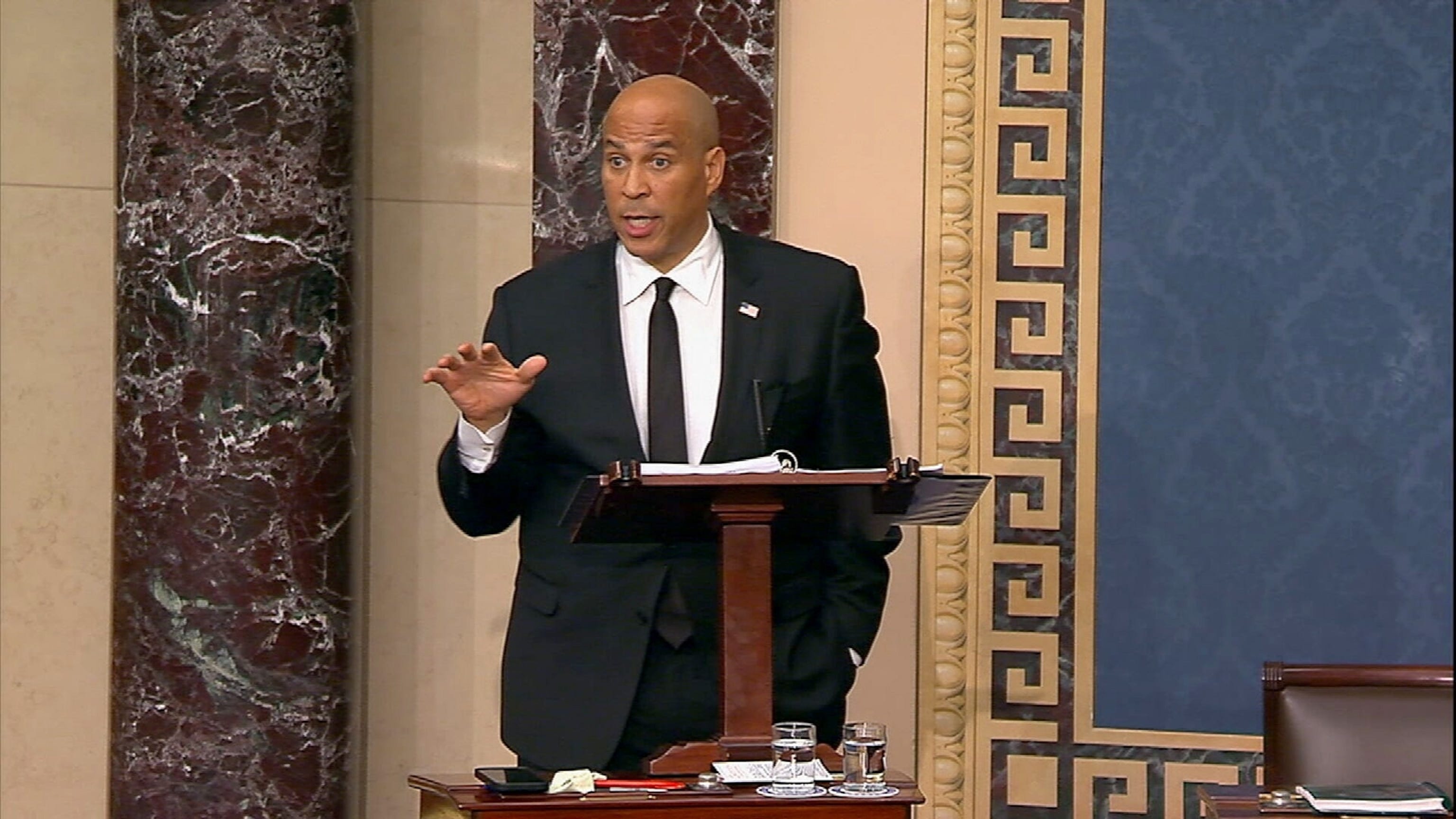
That record was broken by Sen. Cory Booker, who spoke for 25 hours and 5 minutes from March 31 to April 1.
Thurmond’s filibuster didn’t work. The bill passed anyway.
That was the pattern. Filibusters could delay legislation, sometimes dramatically. But they rarely stopped it outright. Eventually, the filibustering senator(s) ran out of energy — or public patience ran out with them — and the Senate moved to a vote. Majority rule still decided outcomes.
But beginning in the early 20th century and intensifying through the 1950s and ’60s, southern senators transformed the filibuster into something more coordinated — and more durable. They didn’t just hold the floor individually. They worked together, handing off speeches in shifts to sustain obstruction indefinitely.
The target was consistent: civil rights legislation.
Anti-lynching bills. Voting rights protections. Desegregation measures. Again and again, these proposals had majority support in the Senate, and often broad support nationally. But they could not overcome the supermajority threshold required to invoke cloture. The filibuster stopped being a tool of delay and became a tool of veto.
That shift came into sharp focus during the battle over a second Civil Rights Act, in 1964. Southern senators launched one of the longest coordinated filibusters in Senate history, determined to block the bill at all costs. For 60 working days, they spoke, stalled, and strategized.
This time, the majority pushed back.
After a sustained effort, the Senate successfully invoked cloture for the first time in history on civil rights legislation and broke the filibuster. The Civil Rights Act of 1964 was signed into law soon after.
It was a landmark moment — not just for civil rights but for the filibuster itself — because it demonstrated two things at once: that a determined minority could use the filibuster to block legislation for extended periods, and that overcoming it required assembling a supermajority.
The Rise of the Silent Filibuster
If the filibuster in that era looked like a senator gripping the lectern, voice cracking as the chamber watched him make a principled stand, today it looks like… nothing at all.
No speeches. No cameras. No exhaustion. Just an assumption.
That transformation didn’t happen overnight. It grew out of a procedural fix in the 1970s that, at the time, seemed both practical and necessary.
As the federal government expanded after the New Deal and Great Society, the Senate’s workload exploded — more bills, more nominations, more oversight. A filibuster brought everything to a halt. If one bill was being blocked, nothing else could move; the Senate floor shut down. That gave filibustering senators enormous leverage, but it also paralyzed the chamber.
So Senate leaders created a workaround: the two-track system.
Instead of grinding to a stop, the Senate could set aside a filibustered bill and move on to other business. It was a scheduling innovation that allowed the chamber to multitask.
But it also changed the nature of the filibuster, making it easier for a minority of senators to carry out.
Under the old system, a filibuster was painful because it required holding the floor, enduring public scrutiny, and disrupting everyone else’s work. Under the new system, those costs disappeared. A senator no longer had to speak to block a bill. They just had to signal that they would if the bill were put forward.
Now, before bringing a bill to the floor, party leaders “hotline” it — sending a message, often literally an email or text message, to every Senate office asking whether there are objections. If a single senator signals concern, that’s enough to trigger the expectation of a filibuster. The bill is either pulled, negotiated, or forced to clear the 60-vote threshold needed to end debate.
Today, filibusters are rarely performed. They are anticipated. And once the cost of filibustering dropped, its use exploded.
The data captures part of the shift. In the 1970s, the Senate filed fewer than 20 cloture motions per year to cut off debate. By the 1990s, that number had more than doubled. By the 2000s and 2010s, it routinely reached into the hundreds. And in the first year of the current 119th Congress, there have been 241 votes to invoke cloture.
But even those numbers understate what’s happening.
Cloture votes measure only the filibusters that are challenged — the ones where the majority takes an actual cloture vote. They don’t count the bills that never make it to the floor because leaders know they don’t have 60 votes; these bills are silently filibustered. In today’s Senate, many proposals die quietly — never debated, never amended, never voted on — because the outcome of the procedural hurdle is already clear. Simply put, if bills — just like the SAVE Act — don’t have 60 solid votes before going to the floor, the legislation will never get there.
And that shift has changed how senators behave.
In the earlier Senate, the majority had to build coalitions to reach 50 votes. That often meant negotiating across factions and, at times, across party lines. The incentive was to shape legislation so it could pass.
In the modern Senate, the minority doesn’t need to shape a bill to influence it. It just needs 41 votes to stop it. The incentive shifts from negotiation to obstruction: politically rational obstruction.
You saw that logic crystallize during the Obama years, when Senate Republicans, led by Mitch McConnell, made clear that denying bipartisan cover to major legislation was their entire strategy to achieve their goal of making Obama “a one-term president.” It didn’t work, but the Senate remains a chamber where the filibuster is no longer a last resort but a first move; where obstruction is quiet, constant, and often invisible; and where the practical threshold for legislating is not 51 votes, but 60.
The SAVE Act — and the Push to Bring Back the Talking Filibuster
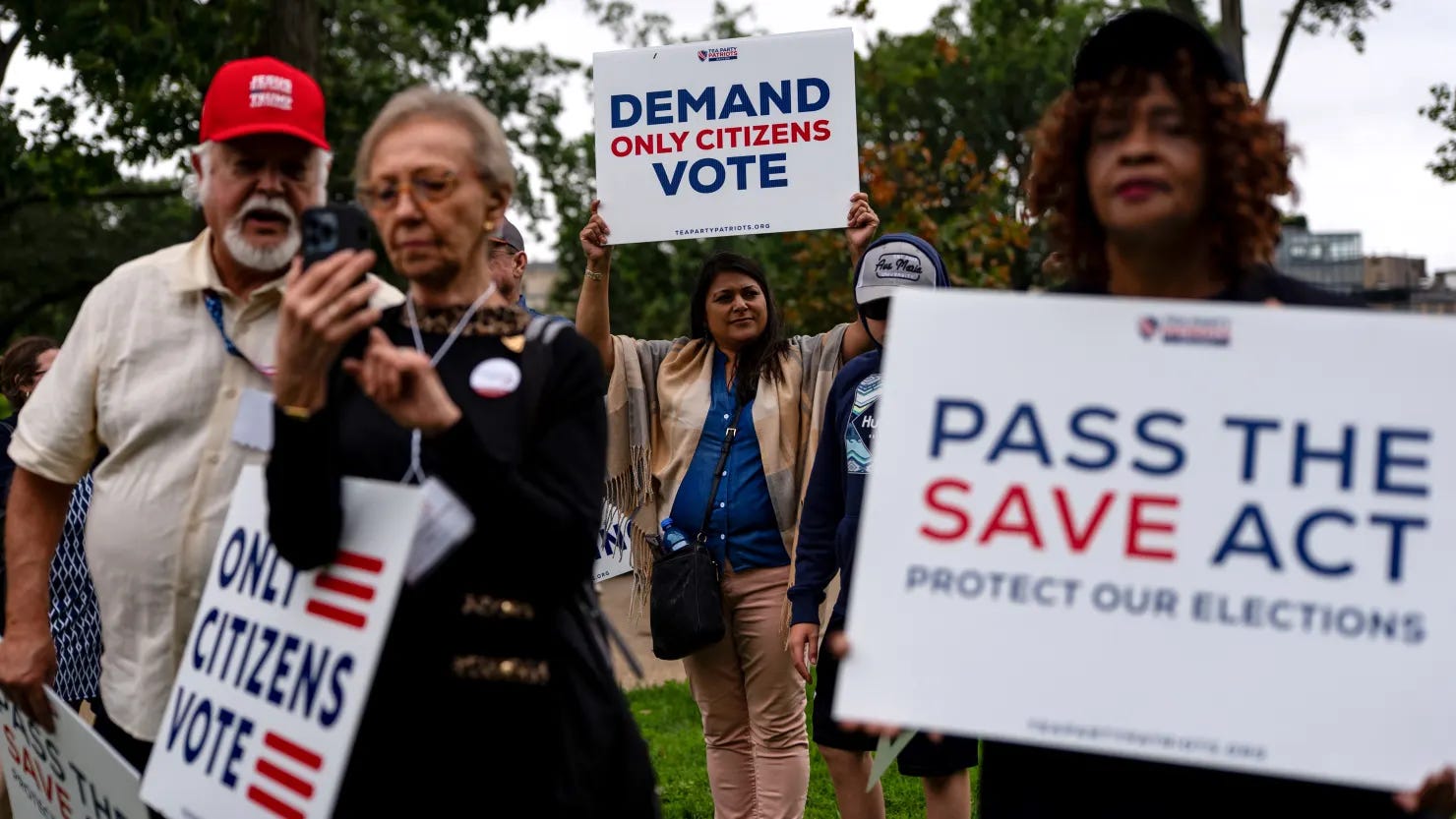
The SAVE America Act is where all those changes have come to a head. It isn’t just another bill caught in the Senate. It’s a case study in what the modern filibuster has become — and why some lawmakers now want to change how it works.
That’s exactly why the SAVE Act has revived calls — by many Republican senators — to bring back the “talking filibuster.” (And it has only made President Trump’s longstanding calls for the Senate to entirely ditch the filibuster grow louder.)
The idea is straightforward. If senators want to block a bill, they should have to do it the old-fashioned way — by holding the floor, speaking continuously, and sustaining debate in public. Once they stop, the Senate would move to a simple majority vote.
On its face, that makes intuitive sense. If blocking legislation is supposed to be difficult, then it should actually be difficult. But that logic comes with tradeoffs and a whole lot of uncertainty.
First, it would slow the Senate down in a different way. A true talking filibuster would consume floor time, potentially tying up the chamber for days or even weeks on a single bill. In an already crowded legislative calendar, that creates opportunity costs. Plus, invoking cloture is a very time-consuming process, taking upwards of 15 calendar days to check all of the procedural boxes to formally cut off debate. Time spent enduring a filibuster and invoking cloture is time not spent on nominations, appropriations, other legislation, or, perhaps most important, getting out of DC and campaigning.
Second, it would introduce unpredictability. The current system, for all its dysfunction, is highly predictable. Leaders know in advance whether a bill has 60 votes. A return to talking filibusters would make outcomes less certain. For how long would the minority hold the floor? Would minority senators offer amendments to the bill that would make the majority take tough votes? Would public pressure shift from one party or the other when they see a high-profile debate going on? Those questions would once again shape legislative strategy.
Third, it would create a new precedent that gives many senators — including Republicans — pause. Today’s majority will not be the majority forever. And when the roles reverse, lawmakers formerly in the majority may prefer the protections of the silent filibuster to a system that forces them to publicly sustain obstruction. Senate Republicans made that warning explicit in 2013 when Democrats eliminated the filibuster for lower court nominees. Then–Minority Leader Mitch McConnell cautioned, “You’ll regret this, and you may regret this a lot sooner than you think.”
He was right. Within a few years, Republicans extended that precedent to Supreme Court nominees and pushed through Justices Barrett, Kavanaugh, and Gorsuch on a simple majority vote, which they couldn’t have done before the rule change. Now, all nominations — from cabinet secretaries to SCOTUS judges — can be confirmed with a simple majority vote.
Despite the renewed interest, Thune has been clear: there aren’t the votes to bring back a talking filibuster. That reflects not just partisan division but institutional caution.
So the SAVE Act sits in a familiar place: debated publicly, negotiated privately, and likely blocked procedurally.
But the conversation around it is different. Because, for perhaps the first time in years, the focus isn’t just on whether a bill can get 60 votes. It’s on whether the Senate should continue requiring 60 votes in the first place — or should once again require senators to actively earn the power to stop legislation.
 | A guest post by
|
This was a very helpful explanation of the filibuster, cloture and the senate rules that have affected the legislative process so much. Thank you!