

Why Churches Are Losing Gen Z
Young Christians are rejecting exclusionary politics that ignore the words of Jesus

We were told to read the red letters. In a lot of Bibles, these are the words of Jesus — maroon, and stark, like blood on a page. Like the sacrifice we were told He made for our sins.
We did as we were taught, and that’s exactly why we aren’t in the churches that taught us those things.
Religion News Service reported a couple of weeks ago that half of Gen Z is staying out of church because of their church’s support of Donald Trump. And while some were shocked by this statistic, I categorically was not. I am not Gen Z, but only just — more of a “Zillennial” than millennial; I remember dial-up, but I had a cell phone in middle school.
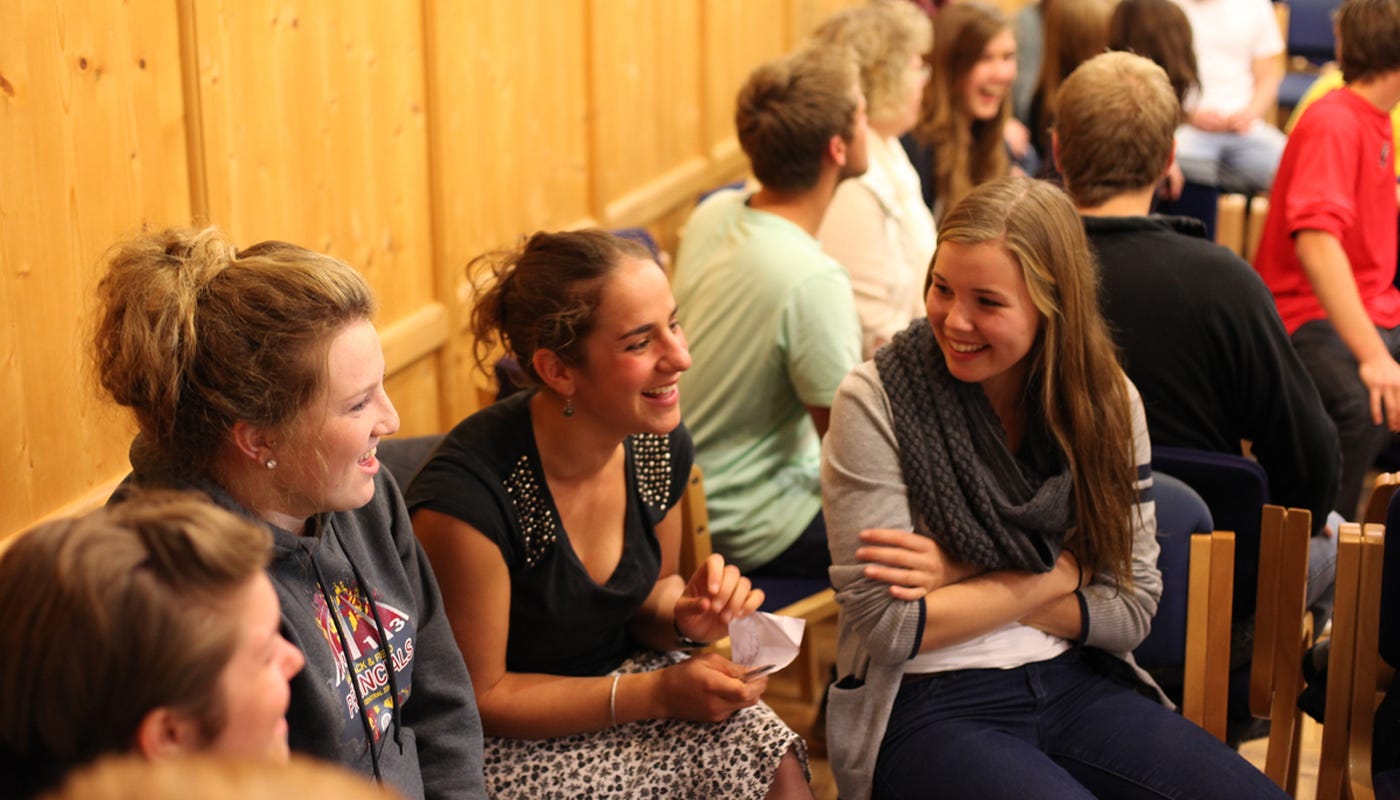
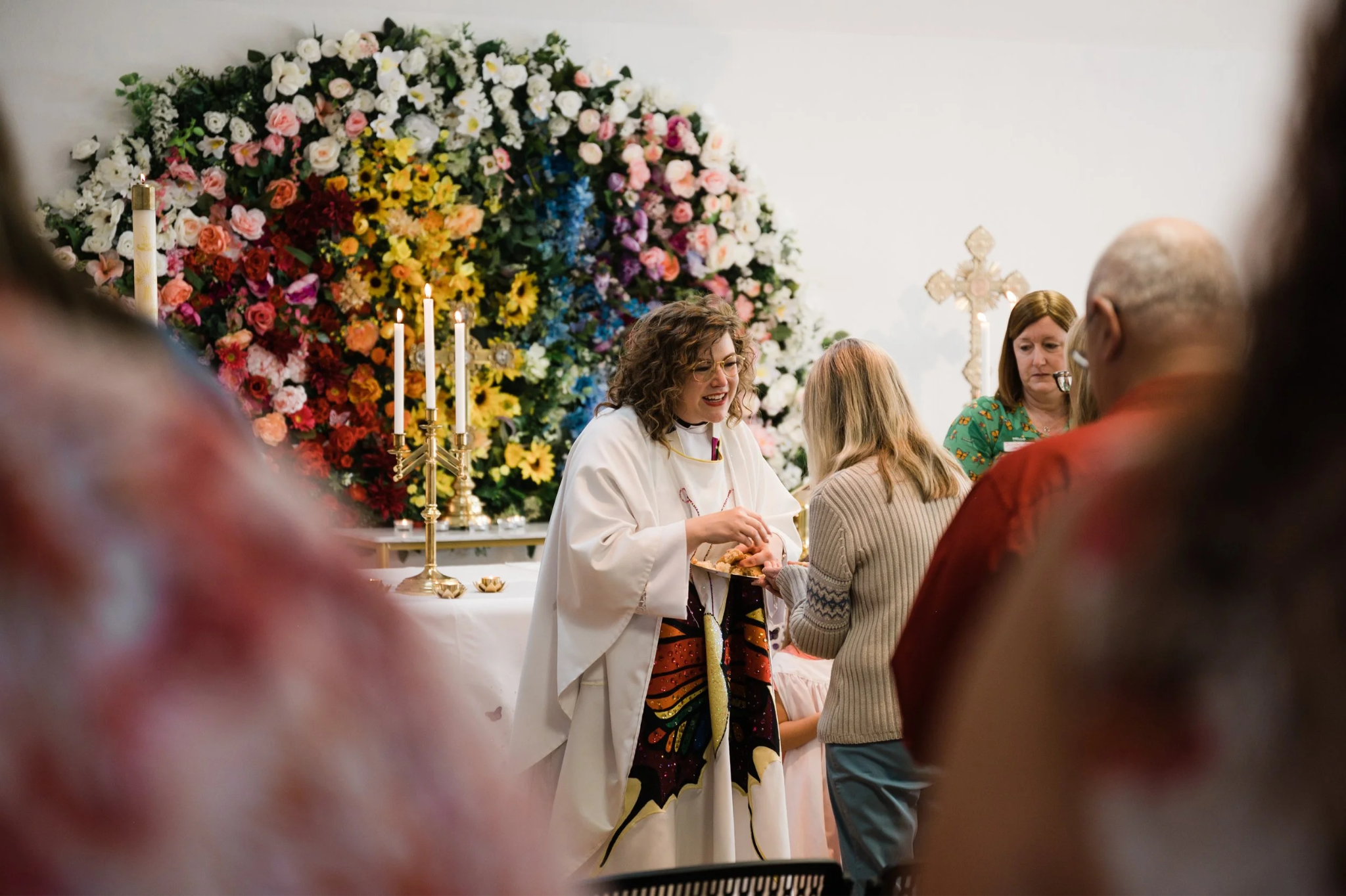
More to the point, I am a young mother of two little Gen Alpha girls, and an Episcopal priest of a thriving smallish church in Northwest Austin, TX, called Jubilee Episcopal Church. Fifty percent of my congregation are Gen Z and Gen Alpha. Our oldest parishioner is in her 70s. And we are loudly, and proudly, progressive. But the politics are not what keep our belief alive — Christ is. Young Christians want to actually follow Christ, not Christian nationalism. And I see how many more young Christians are leaving churches who have treated the two as synonymous.
What Christian nationalism promised
When Donald Trump was reelected in 2024, data showed that young voters had made a shocking turn to the right. Research pointed to social media as a potential cause, with algorithms feeding young people emotionally driven content targeted to their personal interests, often created by right-wing influencers. Now, I am not a political scientist who can speak to the appeal or power of MAGA Christian nationalism in those terms. What I can speak to is the theological pull of MAGA Christian nationalism, and how the same ideas that initially drew young people in may now be driving them away.
The theology of MAGA Christian nationalism has nuances, but the connective tissue is this: the world is not safe, and God must be defended from many, many enemies — and when God is defended on earth, God will reign over His chosen children with love, while exacting vengeance on everyone else. It is explicitly patriarchal even as it can empower women in positions of prestige and leadership, provided they are still “under” a man in some way. MAGA Christian nationalism creates communal identity based not so much on what Christian nationalists have in common, but on what they are against and, therefore, whom they must defeat.
Just down the road from me in Austin, a Christian Nationalist pastor preaches regularly about how masculine men must force the US away from democracy and toward white Christian authoritarian rule, by forcibly removing power from women, ethnic and religious minorities, and those who are not Christian nationalists. While some clergy were forming human chains to block ICE raids of houses of worship in Minneapolis, others were standing at the pulpit professing support for President Trump’s immigration crackdown, then flying into Washington, DC, for White House photo ops.
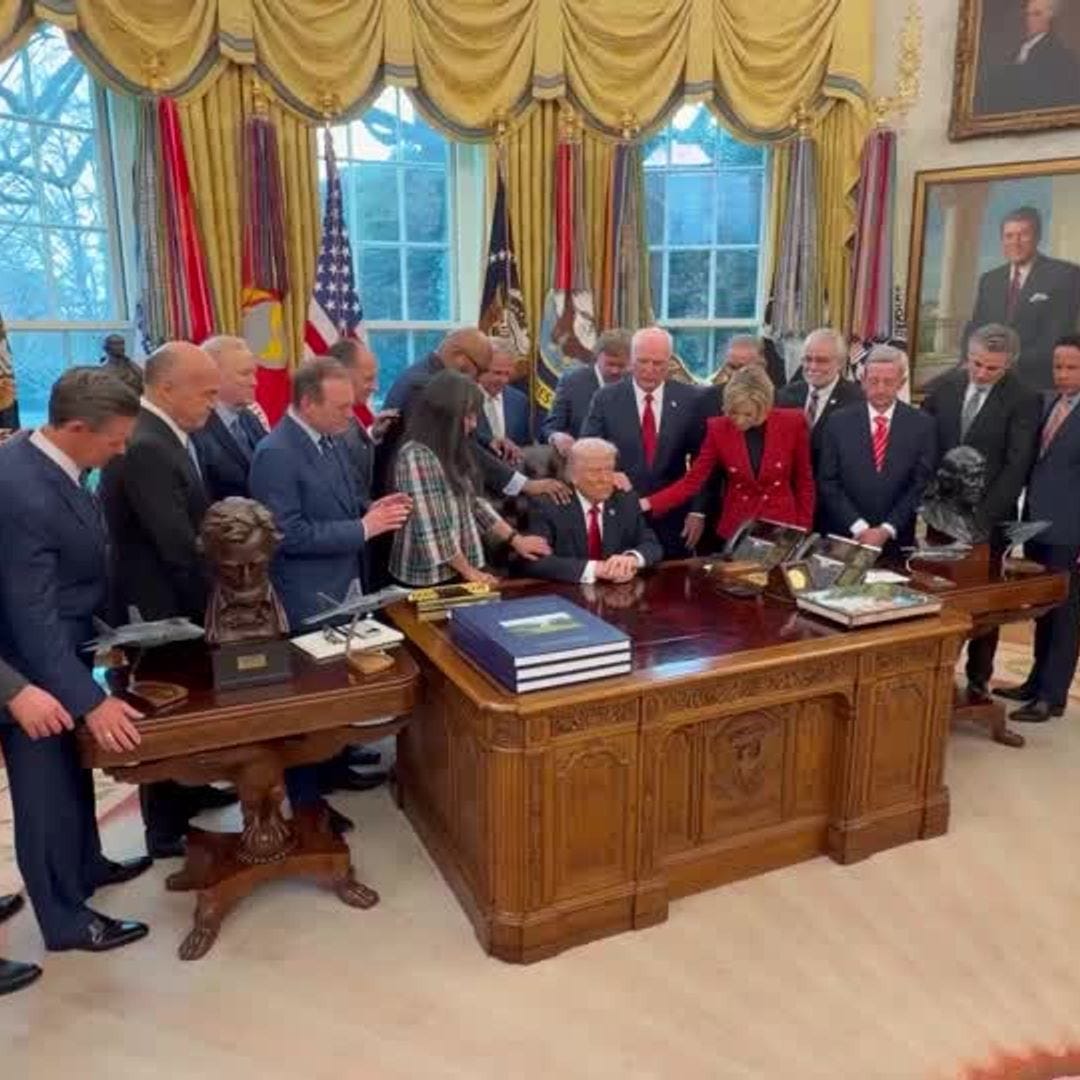
Regular sermon topics for high-profile pastors like Mark Driscoll involve filtering biblical texts through a Christian nationalist framework and defining secular American government as something demonic that needs to be brought under the dominion of Christian authority.
But these beliefs are not always coming from the pastors, or the official teachings of the church. Rather, they come from laity (people in the congregation) who consume “Christian” content that proclaims Christian nationalist theologies — theologies their pastor might even find reprehensible. I have too many colleagues who are in anguish as they try to pull parishioners away from purported pastors whose pulpit is social media and whose sermons are fearmongering. Fear can be addictive, and contagious.
Meanwhile, what’s circulating on social media often finds its way right back into church: the same high-octane emotional pull online that has drawn people into voting for Trump permeates church coffee hours and Bible studies. Churches that “pray for Israel,” while explicitly condemning Palestine, or at least stoking a fear of Muslims, are not explicitly calling for a Christian nation — but conflating the biblical people of Israel with today’s nation-state as a prerequisite for God’s providence is a hallmark of beliefs that fall under the broader Christian nationalist agenda. Many churches proclaim “male headship” as the “biblical way,” meaning that women must submit to men most especially in marriage and the household. This theology is certainly not exclusive to Christian nationalism, but it is a cornerstone belief taught by Christian nationalist pastors like Driscoll and Doug Wilson.
And I need to be clear: I denounce Christian nationalist theologies, but I do not think these beliefs entirely define the life of faith of ordinary people in these churches. My parishioners who have left churches that explicitly or implicitly supported Trump rarely describe their departure as an easy break from an exclusively horrible place. These were communities of people who were doing their level best to love, and to follow leaders whom they trusted to bring them closer to God.
But my parishioners saw too many things they couldn’t abide: whether the support for Trump was explicit or implied, they clocked sermons that preached on the evils of trans people but ignored clerical sexual abuse of minors. They saw unwavering support for Benjamin Netanyahu even as Christians descended from the Apostles died at his hands in Gaza. Those threads started to illuminate Christian nationalism’s internal contradictions.
Domination over community
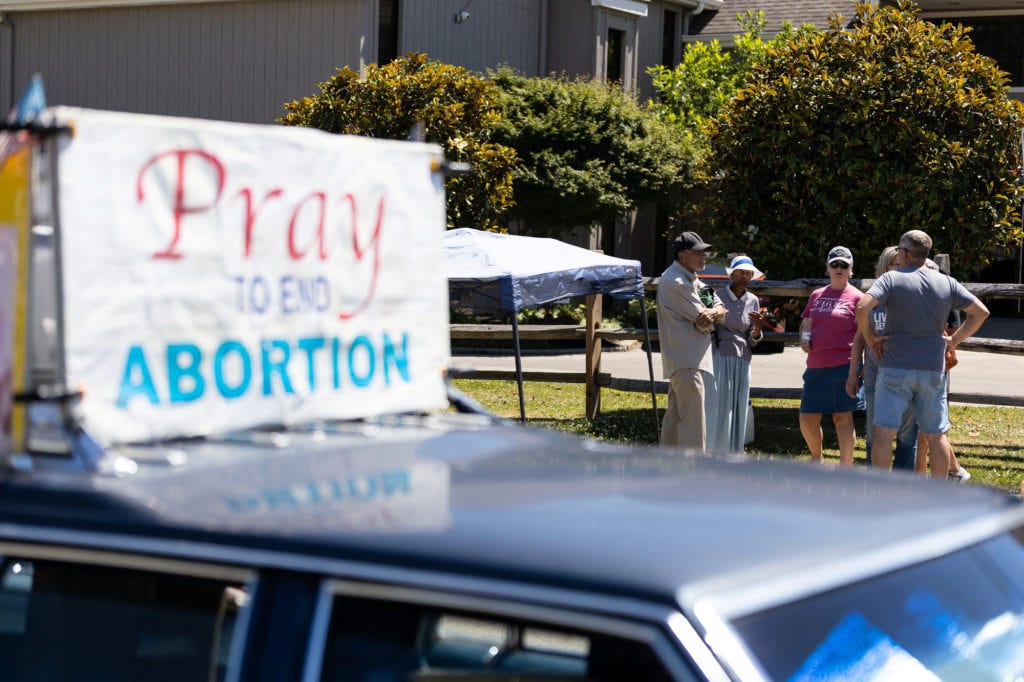
The paradox of the freedom touted by Christian nationalism is that it is not freedom, but domination. Christian nationalism sees any identity or expression besides itself as antithetical to freedom. This is what is so baffling to the outsider; for example, why ban abortion if you, personally, do not want one? Pastors celebrating extremely harsh bans like SB8 in Texas (the so-called “Heartbeat Bill”) are not just caring for the nebulous “unborn.” It comes down to exacting control that fits within their narrow vision of what Christianity is about. It’s about defining the terms of who is free.
And this is where it gets especially tricky: this notion that what a complete stranger can or cannot do affects you is a Christian idea — and not just a MAGA one. In 1 Corinthians 12, St. Paul writes that we are all members of one body, the Body of Christ. That represents a theology of beautiful, inextricable interconnection that rejects the modern notion of “you do you, and I’ll do me” for even the non-nationalist Christian. And while this theology is twisted by Christian nationalist discourse to see every connection as a threat, the theology is still there.
So for a generation of young people feeling starved for real-world connection, this promise of belonging can be intoxicating — whether it arrives while you’re sitting in the pews or while you’re scrolling 30-second clips of Christian nationalist content for hours on end.
But while MAGA Christian nationalism offered a tempting promise, its popularity is actually the self-consuming dragon. The very reasons it appealed are now why it is withering and driving Gen Z out of the churches that embraced it: constantly defining the community by who you are not is not a cure for loneliness. Eventually, it alienates more people than it invites in.
Teachings untethered to Christ
What’s more, many young people are appalled by what Christian nationalism considers Christlike. That same pastor near me in Austin claimed it “makes Jesus smile” when Christians join ICE, but Jesus was not teaching about being connected in one Body so that children could be sent to detention camps.
This is the irony of insisting children read the Bible in public schools: there are a lot of teachings in the Bible that clearly map onto more progressive politics, and young Christians can see that. Before Jesus is even born, his mother, Our Lady Mary, sings a triumphant song called the Magnificat that itself stands in an ancient biblical tradition of women like Judith and Yael and Deborah tearing down oppressive kings from their thrones. What’s more, the lowly, meek, and overlooked are not only seen by God in their misery but lifted up and filled with good things (Luke 1:46–55).
In his ministry, Jesus heals and dines with tax collectors and sex workers alike, offending everyone with his willingness to see the humanity in people who work for the government and in people whom society has shunned and shamed.
And then there’s all that MAGA Christian nationalism labels anti-Christ: trans people, critique of oligarchy, and immigrants. When Jesus speaks of eunuchs — who lived a somewhat parallel experience to modern-day gender nonconformity — he describes them as people who glorify the very Kingdom of God (Matthew 19:12). The beatitudes proclaim blessing over the poor and woe to the rich (Luke 6:20–26).
In Matthew 25, Jesus paints a parable that makes service to the vulnerable — feeding the hungry, welcoming the stranger, clothing those in need, caring for the sick — central to the faith: “I assure you that when you have done it for one of the least of these brothers and sisters of mine, you have done it for me,” he said. Again: one Body. Poor people, immigrants, trans people — every body is part of the Body of Christ.
Jesus is not weaving this story without precedent, either. Repeatedly, throughout the Hebrew Bible/Old Testament, God has commanded people to ensure provision and care is provided especially for the orphan, the widow, and the foreigner. God cares about the intimate, material needs of people whom the world is quick to discard, ignore, or exploit.
That is why it is transparently not Christ-like to cut SNAP benefits for 3.5 million people and counting as Donald Trump’s Big Beautiful Bill did, or to frame public assistance as “theft” the way conservative Christian influencer Allie Beth Stuckey has done.
I have helped parishioners try to get SNAP benefits. It is an incredibly complex system that is absolutely not theft. More to the point, God does not add caveats to the commands to feed hungry people — God simply says feed them, whether they “deserve it” or not. In response, churches like mine in the Episcopal Diocese of Texas are stepping into the gap by supporting the interfaith, nonpartisan Call to Feed the Hungry campaign to fight for a fully funded SNAP program. We who have read the Bible and taken it seriously are not willing to commit idolatry by continuing to worship earthly kings whose behavior is anathema to Christ.
A different type of church
For the past decade, I have had innumerable conversations with my clergy colleagues about the impact of Christian nationalism on our churches, in the public discourse, and on our parishioners. We have lamented how much uphill work we have to do to distinguish our ancient, liberatory faith from the machinations of this modern idolatry.
But now, nearly every colleague I know has seen growth in their parishes — as have I. Young people are leaving Christian nationalism because they are seeking the perfect love that casts out fear (1 John 4:18). And to be clear, not all of these churches in my network are wildly liberal — though many are. But they are faithful and earnest, defined by the love of God that is here for all people, and working with our human foibles and hopes to walk alongside all in the great mystery of that love.
Because we, too, feel the instability of the world. But the easy answers Christian nationalism offered have not held up. What drew folks in also disillusions: where is God when nothing feels safe? The theology of MAGA Christian nationalism is sharp-edged fear that claims God must be defended for the world to feel safe; but the theology of true Christian faith knows God does not need defenders, God desires to be with us even in the muck of this volatile and terrifying world.
So we who hunger for the great mystery of God — we who live with the reality of climate disaster as a fact for the rest of our lives, we who face economic upheaval unlike that which our parents and grandparents knew, we who are simply humans enduring the everyday trials of heartbreak and sickness and loneliness — we are already weary of defending ourselves against insurmountable odds. Why then would we want to defend a God who seems unable to protect us unless we do His cruel, dirty work?
Because young Christians want to worship God. Young Christians long for a God who is truly Sovereign, and who mysteriously is deeply with us in our suffering and the ache of the world’s grief, but is not bound by its anger or fear. Christian nationalism ultimately fails to preach a fearless God and a fearless faith because it is knotted around its own fears. And so young people are refusing to stay afraid.
As I wrote in my book, God Didn’t Make Us to Hate Us, life is weird and hard to understand. Love is weird and hard to understand. God, perhaps most of all, is weird and hard to understand — “God’s ways are not our ways,” we hear, over and over. So we crave a faith that makes generous room for this strange and beautiful wrestling.
Christianity is not meant to be a faith of fearmongering. It is about following a God who beholds the worst of humanity and says: but there is so much more to you than this. That is what we hunger for. This is what feeds us.
Named one of Sojourner Magazine’s “12 Women Shaping the Church” in 2025, Rev. Lizzie is known for her passionate, fierce, and colorful reclamation of Christianity as an award-winning writer, Episcopal priest, online creative, and proud mom of two. Her debut book, God Didn’t Make Us to Hate Us: 40 Devotions to Liberate Your Faith from Fear and Reconnect with Joy won the Gold Medal for Best Devotional in the 2025 Illumination Book Awards. She cohosts a weekly podcast, And Also With You, on reclaiming Christian faith, and she honored to serve as the founding pastor and Vicar of Jubilee Episcopal Church in Austin, Texas. Her home is filled with love with her husband, Rev. Jonathan, and their two wild and wily daughters — who are often found underfoot while she preaches!
 | A guest post by
|