

Why Are Public Lands Being Handed Over to Corporate Developers?
Trump is dismantling protections across millions of acres

America’s national monuments are shrinking. Last month, President Trump signed two proclamations dramatically reducing the size of two national monuments in southern Utah: Bears Ears and Grand Staircase-Escalante. Until now, each monument contained well over a million acres of protected land, with Grand Staircase-Escalante at 1.87 million and Bears Ears at approximately 1.36 million. Both will be shrunken now to less than 10% of the terrain they previously spanned.
The change affects far more than lines on the map. The land contains thousands of archaeological sites, ancestral villages, burial grounds, and petroglyphs that are culturally significant or even sacred to Native American tribes. “From a Navajo perspective, Bears Ears is not simply a piece of federal public land,” said Davina Smith-Idjesa, a citizen of the Navajo Nation and co-chair of the Bears Ears Inter-Tribal Coalition. “This is a living cultural site that holds our histories, our ceremonies, our traditional foods and medicines and our ancestors’ footprints.”
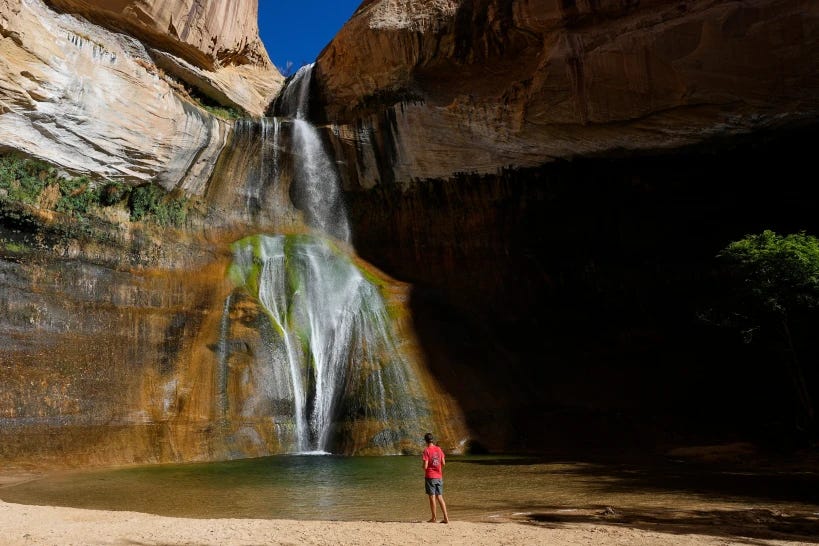
The monuments are also habitats for hundreds of species like bighorn sheep, elk, and mule deer. And underneath them are coal and uranium deposits that many Utah officials and Washington Republicans have long wanted to open for development.
Reducing the size of these monuments is part of a larger pattern for the Trump administration. During the president’s second term, he and congressional Republicans have been systematically rewriting how America manages its public lands — shrinking monuments, opening protected waters to commercial fishing, and reopening millions of acres to drilling and coal development.
At the same time, the administration has weakened the agencies charged with managing these lands, and has leveraged a little-known law to make it nearly impossible for future administrations to reverse the changes being made. The change in approach not just to national monuments but to many protected spaces raises a fundamental question about the 640 million acres of land belonging to the American public: What are these lands for?
Creating national monuments
The Antiquities Act of 1906 grants presidents the authority to establish national monuments by executive order. Unlike national parks, which require congressional approval, monuments can be created by the president alone to protect federal lands that contain historic, prehistoric, or scientifically significant resources. Eighteen presidents have used that power to establish 168 protected areas, beginning with Theodore Roosevelt’s designation of Devils Tower in 1906. The monument is a free-standing butte that looms over the Black Hills of eastern Wyoming. It was recognized both as an astounding geologic feature and because it’s considered sacred by the Northern Plains Indians and other indigenous people. One hundred twenty years after its creation, it maintains an annual visitation rate of 500,000.
In practical terms, monument status means that places like Devils Tower can no longer be used for hard-rock mining and oil, gas, and coal leasing, and makes protecting the designated resources the priority for any land-management decisions.
These designations have not been without controversy. The Antiquities Act says that the president is to reserve “the smallest area compatible with the proper care and management of the objects to be protected,” and critics have argued that some designations are overbroad. In fact, Trump made that argument in 2017 when he cut Bears Ears and Grand Staircase-Escalante by roughly 85%, calling their previous boundaries a “massive land grab.” President Biden restored both monuments to their full size in 2021, and now the pendulum is swinging back in the other direction. But “smallest area” has never necessarily meant small: presidents have used the law to protect everything from individual historic sites like the Stonewall National Monument in New York City to the nearly 2.3 million acres of Misty Fjords National Monument in Alaska.

It’s also legally disputed whether a president can shrink a national monument under the Antiquities Act. Presidents including Woodrow Wilson, Harry Truman, and Dwight Eisenhower all issued proclamations that diminished monuments, and recent executive branch legal opinions argue that presidents possess an implied authority to diminish and even revoke national monuments since they have the authority to create them in the first place. Conservation groups and many legal scholars, however, maintain that the text of the 1906 law reserves reduction and revocation powers exclusively for Congress. The Supreme Court has never ruled on the question.
In any case, Trump’s reductions are unique in their scale. Prior to his administration, the largest reduction in a monument’s size by percentage came from President Dwight D. Eisenhower, who diminished the Colorado National Monument by 211 acres in 1959, less than 2% of its original approximately 13,883-acre size. Notably, on the same day, Eisenhower enlarged the monument by 120 acres in a separate proclamation, so the ultimate impact was even more minor. In the relatively few other instances when monuments were diminished before Trump, the total acreage lost rarely exceeded even 1% of the original boundaries, meaning that his recent actions fall far outside the norm. But shrinking federal monuments is just one piece of a project with a much wider scope.
Opening protected land for business
The reductions at Bears Ears and Grand Staircase-Escalante are part of a broader shift toward allowing more commercial activity on public lands and in waters that previous administrations had protected from development and extraction.
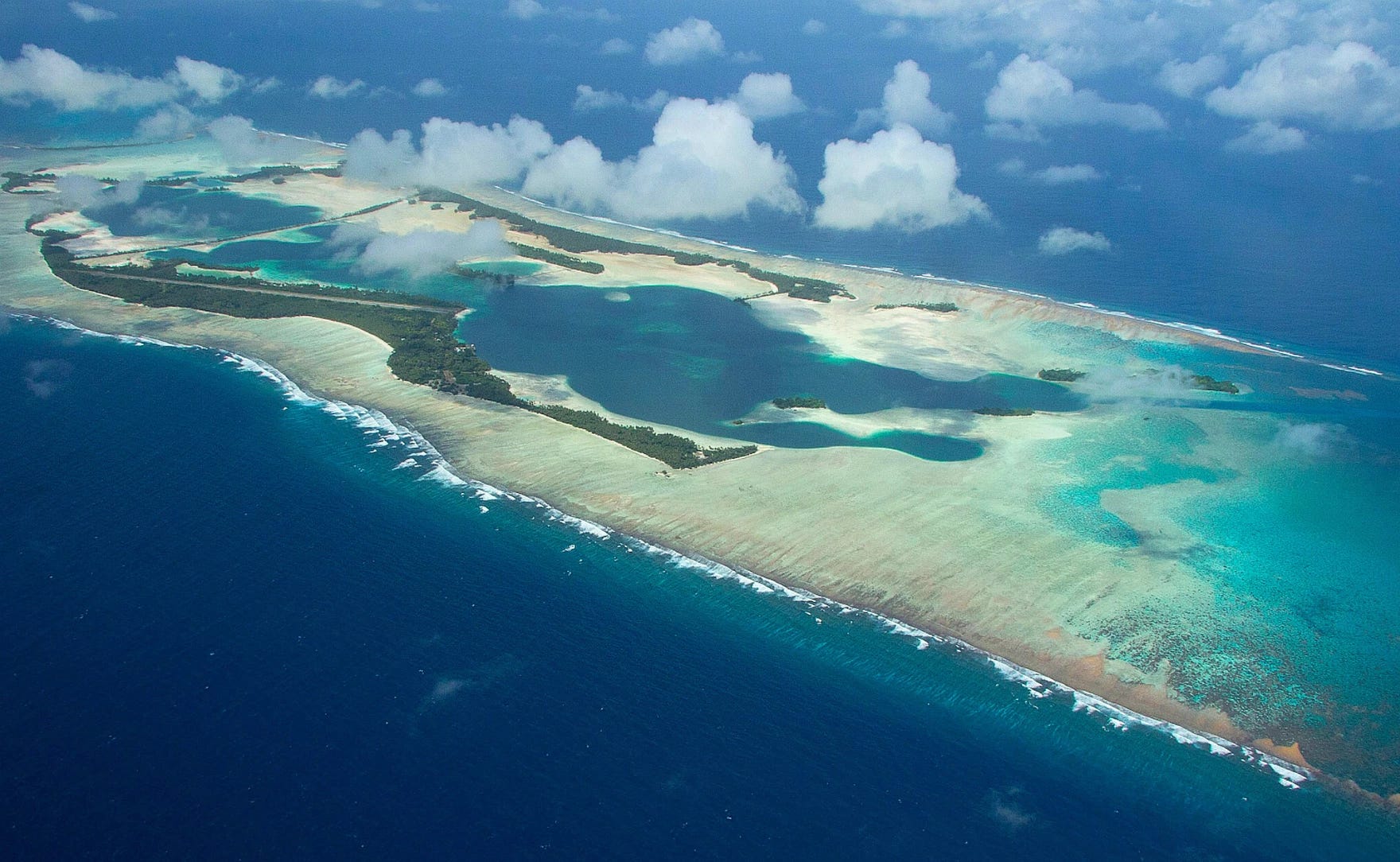
The same shift is happening offshore. Trump has lifted bans on commercial fishing in all five national marine monuments: Pacific Islands Heritage Marine National Monument (formerly known as Pacific Remote Islands Marine National Monument) in April 2025; Northeast Canyons and Seamounts Marine National Monument in February 2026; and the Mariana Trench, Rose Atoll, and Papahānaumokuākea Marine National Monuments in June 2026. Lifting the bans doesn’t eliminate the monuments themselves, but it does change what their protected status means.
And fishing is only one example. Across the West and Alaska, the administration and congressional Republicans have also moved to reopen public lands to coal leasing, oil and gas drilling, mining, and other development. Congress rescinded the Miles City Resource Management Plan Amendment, which had blocked new federal coal leasing across roughly 2 million acres in Montana.
It also nullified the statewide North Dakota Resource Management Plan, reopening over 4 million acres to energy development and drilling. While proponents lauded the move for restoring regional energy production and securing state tax revenues, tribal organizations and conservation groups warned that it threatened local water sources, accelerated climate impacts, and set a disruptive and potentially destructive precedent for public lands management.
Taken together, these actions reveal a consistent policy choice: where previous administrations and Congresses placed greater weight on conservation, habitat, cultural resources, or limits on extraction, the current government is shifting the balance toward commercial use.
The agencies managing the land
Changing what can happen on public lands is only part of the story. Those lands still have to be managed — permits reviewed, environmental rules enforced, and competing uses balanced. But the federal agencies responsible for that work have themselves been undergoing massive disruption.
In 2019, during Trump’s first term, the Bureau of Land Management’s headquarters were relocated from Washington, DC, to Grand Junction, CO. The administration claimed the move would place decision-makers closer to western public lands; opponents protested that the vast majority of the agency’s employees were already located in the West. By the time the Biden administration moved the headquarters back to Washington in 2021, hundreds of employees had already resigned and the agency had lost substantial institutional knowledge. “When you lose all that knowledge, you lose the knowledge of the processes and how to work them effectively,” said Joe Tague, who retired as a BLM division chief in early 2020. In 2024, Biden administration BLM director Tracy Stone-Manning said the agency was “still piecing it back together.”
Earlier this year, a similar “reorganization” plan was implemented at the US Forest Service, which also oversees public lands. It now faces the prospect of leadership and staff losses combined with stoppages in research projects and loss of conservation protections. These changes are happening even as the agencies responsible for managing the transition have fewer people and less institutional capacity to do the work.
Changing the rules
While personnel and agency capacity are at least reversible under a future administration, Trump and other Republicans are making other changes designed to entrench their policy approach long after they’re gone. Republicans in Congress have begun using an obscure piece of legislation — the Congressional Review Act (CRA) — in a novel way to overturn land-management decisions and potentially prevent future administrations from simply restoring them. The CRA gives Congress a 60-day window to overturn new rules issued by federal agencies, and also allows Congress to prohibit “substantially similar” rules from being put in place in the future without their authorization. This means that the CRA can permanently close the door on entire areas of policy, including some aspects of land management.
The CRA itself isn’t new — it was passed in 1996 — and it isn’t specific to land management rules. Trump has used it aggressively before: during his first term, Congress and the administration invalidated 17 Obama-era rules, including a rule limiting coal-mining waste near waterways and a set of BLM requirements meant to reduce methane waste from oil and gas operations. In 2025, Trump signed another 22 CRA repeals.
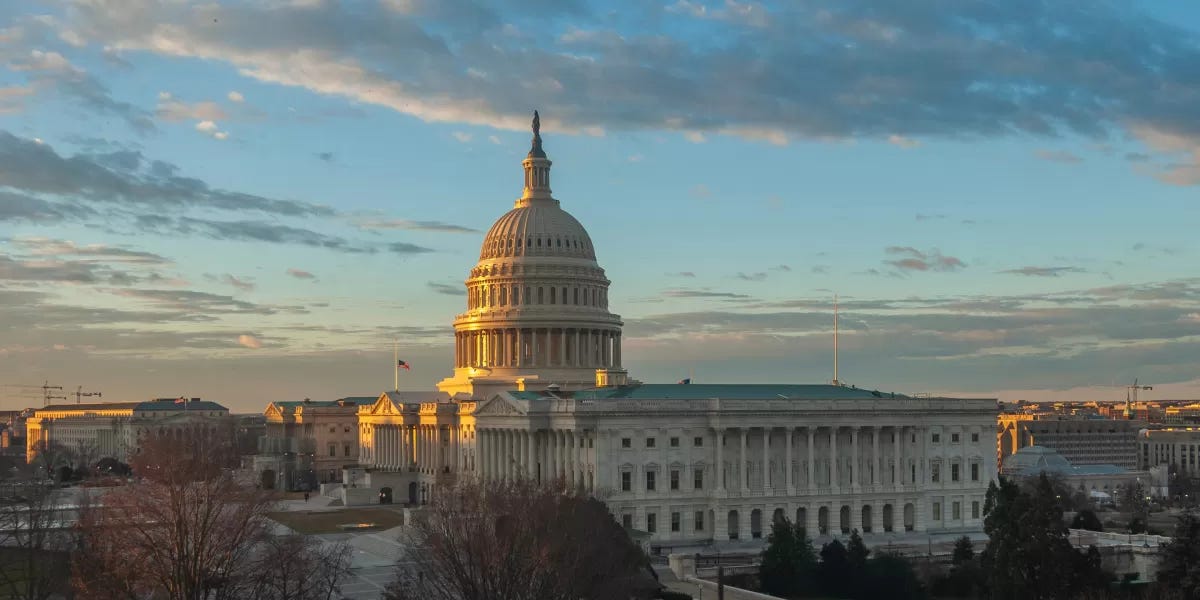
As Trump and Republicans have expanded use of the CRA in his second term, they are increasingly targeting a new type of land management decision. Last September, they overturned the Bureau of Land Management’s Central Yukon Resource Management plan, a science-based framework covering 13.3 million acres in Alaska that was developed through 13 years of federal and tribal collaboration. Critics warn that reverting to the old rules will remove protections for subsistence hunting and fishing and caribou habitats, while streamlining permitting for industrial development.
Until now, resource management plans like these and the ones governing lands in Alaska, Montana, and North Dakota had not been treated as “rules” subject to the CRA. They set parameters for balancing multiple uses on public lands, including energy development, grazing, conservation, and recreation. They can take years to develop, incorporating input from numerous stakeholders, and then they govern those lands for years. Now that lawmakers have started overturning them, scholars warn that hundreds of plans could become subject to the partisan swings of Congress and the White House. A group of legal experts wrote to Congress that its new approach could create an “endless cycle of litigation,” calling it a “Pandora’s Box moment.”
And because the CRA can be used to bar agencies from adopting “substantially similar” rules without congressional approval, its current use means that Trump and Republicans’ approach to public lands could far outlast their time in office. But that’s not what the American people want.
Widespread support for public lands
Public lands comprise approximately 640 million acres in the US (nearly one-third of the country’s total land area) and receive nearly one billion recreational visits annually. They are widely supported, and the Trump administration’s approach runs counter to public opinion.
According to the annual Conservation in the West Poll conducted by Colorado College and assisted by New Bridge Strategies, a Republican public opinion research group, 91 percent of all voters in Western states wanted existing national monuments kept in place as of January 2026. The poll also found that voters from both parties wanted to prioritize “conservation, recreation, and renewables over fossil fuel development,” according to a statement accompanying the results. National polling points in the same direction, with nearly three-quarters of Americans strongly opposing the closure or reduction of public lands.
President Trump has set a record of dismantling protections across the country’s public lands that no other US president has come close to. If unchecked, his administration’s actions to erase millions of acres of protections will permanently alter entire landscapes and seascapes, possibly impeding future generations’ understanding and enjoyment of the nation’s public lands and waters. While some changes can be reversed by another president, others — particularly those made through Congress and the CRA — may prove much harder to unwind.
In this year of its 250th birthday, many Americans are reflecting on what elements of the country’s history and legacy they want to see preserved and carried forward into the next 250 years. The fight over public lands ultimately poses that same question in very literal terms: Which parts of America do we want to preserve and carry forward, and which are we willing to give up?
 | A guest post by
|