


In moments of crisis in our country, I’ve always found it grounding to look back at the work of generations past, and think about how they lived, thought, and strived for change in times like these. That’s why this piece by Rahaf Harfoush resonates so much — it invites us to adopt a mindset that even if we aren’t around to see all the good things we’re hoping and fighting for, the work is still worthwhile. Give it a read.
—Sharon
As we continue to live through a period of immense change, I’ve been grappling with my own very human-sized grief in the face of such enormous problems. I’ve been doing my best to not just navigate this change but to understand it, and in facing the rage, the discomfort, and the grief, a truth has emerged that I’ve had to sit with for a while: many of the problems we’re facing right now won’t be resolved in my lifetime.
We’re standing at a threshold moment where multiple crises are converging: demographic pressures, geopolitical realignment, the civilizational stakes of artificial intelligence, a climate whose feedback loops are beginning to outpace our models, and the social unraveling that’s been quietly accelerating beneath the surface of every institutional structure we inherited. Each of these alone would be a generational challenge. Together, they constitute something closer to a civilizational reckoning. Such a moment calls for something hard to name — a willingness to work without a finish line, to care without a guarantee, and to act in service of a future we’ll never inhabit.
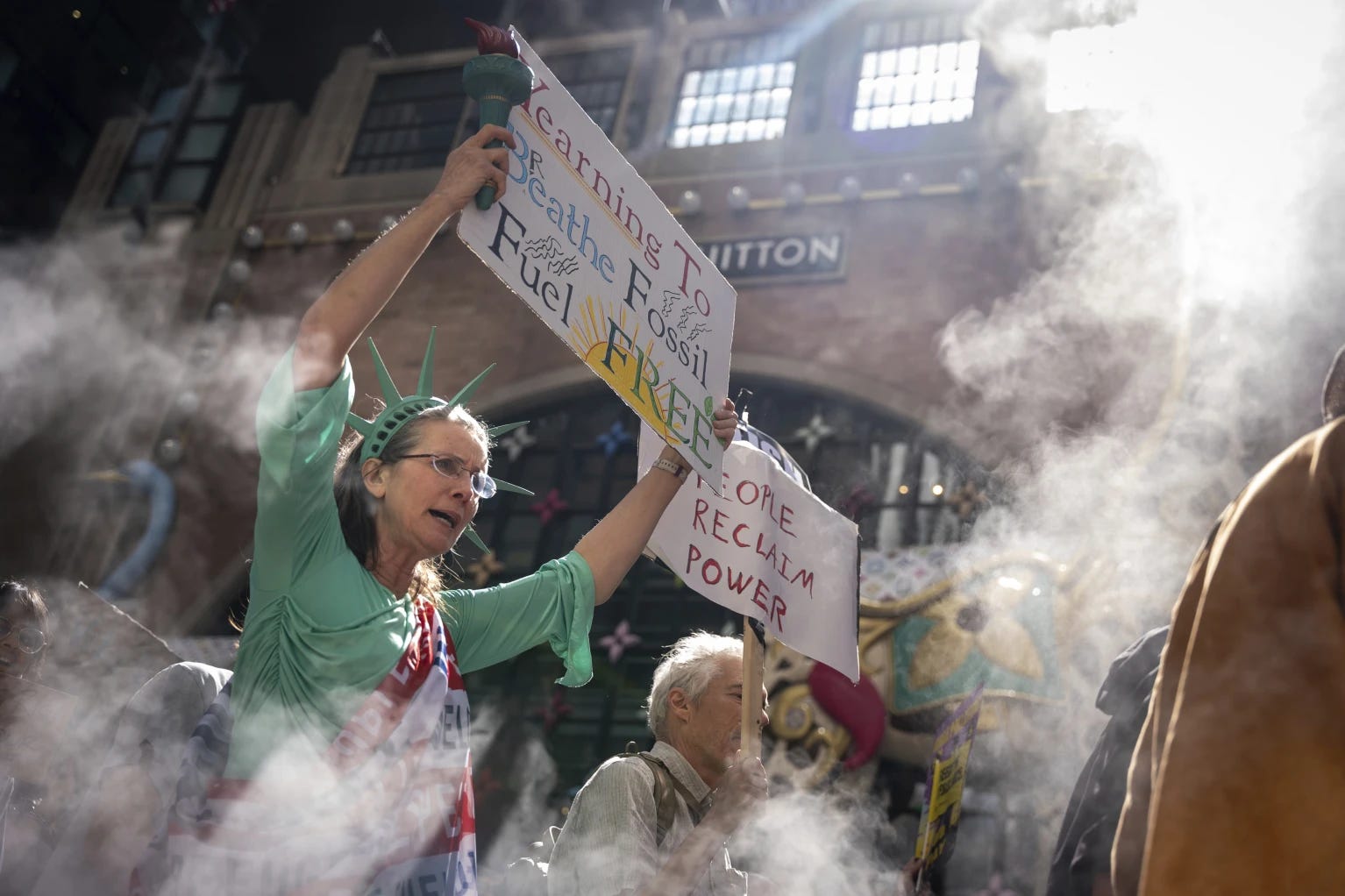
That’s an uncomfortable thing to sit with, especially now. Collapse, when it comes, doesn’t arrive all at once. It moves slowly at first, almost imperceptibly, and there’s a particular kind of suffering in watching it — in being able to see the trajectory clearly before enough people have woken up to name it. And yet the urgency still hasn’t fully landed for most people. We’re waiting for the moment when the slow-motion becomes undeniable, and the waiting itself is a kind of grief.
Into this grief, our culture offers a particularly unhelpful response: speed. We’ve been trained, systematically and relentlessly, to optimize for immediacy. You can see these cultural fingerprints in our expectations of same-day delivery, instant feedback, and the dopamine architecture of platforms that reward visible output and measurable results. Productivity culture has quietly convinced us that we’re only as valuable as our most recent accomplishment, that effort which doesn’t convert to outcome within a visible timeframe is effort wasted. This goes beyond personal dysfunction: It’s a structural assumption — the invisible grammar through which we evaluate whether something is worth doing at all.
Alongside this, through our movies and books, we’ve absorbed a cultural story about how change actually happens — and that story is almost always wrong. In North America and Western Europe we’ve popularized the hero narrative. One person, one movement, one decisive moment. Rosa Parks. Nelson Mandela. A single speech, a single march, a single act of resistance, a singular figure who arrives to fix what’s broken. This myth is seductive because it offers the thing we most want right now: a protagonist to follow and a narrative arc that cleanly resolves. But it’s a profound distortion of how transformation has worked throughout history.
