

What Happens When Rule-Breakers Are Running the Country
High level officials can pay a price for corruption, but it’s complicated

When controversy swirls around the president, Americans grow accustomed to the drama. But when the scrutiny shifts to the president’s officials — including those running the FBI, the Pentagon, or major economic portfolios — the stakes feel different. These are the people entrusted with national security briefings, intelligence authorities, multibillion-dollar contracts, and regulatory power. When allegations surface at that level, the question is not just political — it’s institutional.
That dynamic has played out most recently with the ouster of former Secretary of Homeland Security Kristy Noem. Her firing followed months of reports of alleged abuses of power, misuse of department funds, and poor administration of the president’s immigration enforcement agenda.
But the final straw for Trump reportedly came from her two recent appearances in congressional oversight hearings. In successive days on Capitol Hill, Noem gave contradictory answers regarding a no-bid $220 million advertising contract that prominently featured Noem; a contract that was awarded to a brand new firm run by individuals with personal connection to the secretary. Noem testified that Trump was aware of the contract. The next day Noem was cleaning out her office.
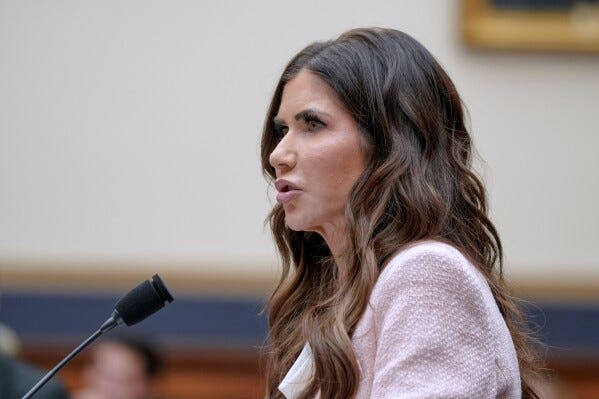
Noem’s downfall was dramatic, but it was hardly isolated. Across the executive branch, a steady stream of allegations has raised questions about how senior officials wield power once they reach the top of government.
FBI Director Kash Patel has faced intense scrutiny over his use of government aircraft for travel that appeared to blur official and personal purposes — including a trip to the Winter Olympics, where he partied with the US men’s hockey team after they won a gold medal. The optics of the trip reportedly irritated President Trump, who was said to view the episode as unnecessary political baggage.
Separate scrutiny has centered on Patel’s reported use of FBI security resources in connection with his girlfriend. News accounts indicate that agency personnel have been involved in providing protective services beyond what critics argue is justified by official threat assessments.
Meanwhile, questions have arisen about the leadership of Labor Secretary Lori Chavez-DeRemer, including the possible mishandling of agency funds and an alleged affair with a member of her security team.
Oh, and don’t forget that a Pentagon watchdog found that Defense Secretary Pete Hegseth’s use of a personal account on the messaging app Signal to discuss sensitive information put US personnel at risk and raised concerns about federal recordkeeping laws. Commerce Secretary Howard Lutnick has faced renewed attention over a decades-old photograph linking him socially to Jeffrey Epstein. And Jared Kushner’s recent role in Middle East negotiations revived longstanding concerns about potential conflicts of interest tied to his family’s international business dealings.
These situations are not identical. Some involve security protocol. Others involve conflicts of interests or simply bad behavior from senior leaders in the administration. Some may ultimately prove inconsequential; others could escalate. But collectively they raise a pressing civic question: If senior executive officials cross ethical lines — or worse — what actually happens next?
Can they be fired? Investigated? Impeached? Prosecuted? Jailed?
The answer depends less on headlines and more on how the accountability machinery is designed to function.
Corruption: a spectrum, not a slogan
In Washington, “corruption” often becomes shorthand for “behavior I find outrageous.” But legally — and historically — it spans very different categories of conduct, each with very different consequences.
At the most serious end are unmistakable crimes, such as bribery, fraud, kickbacks, or obstruction of justice. These actions violate federal statutes and can lead to indictment and prison.
In 1973, a federal investigation uncovered that Vice President Spiro T. Agnew had accepted cash bribes dating back to his time as Baltimore County executive and later as governor of Maryland. Contractors seeking public works projects had allegedly paid him kickbacks in exchange for favorable treatment — payments that, according to investigators, continued after he became vice president. Facing the prospect of indictment while in office, Agnew pled no contest to a felony charge of tax evasion for failing to report the illicit payments as income. He resigned the vice presidency as part of the agreement and was fined and placed on probation.
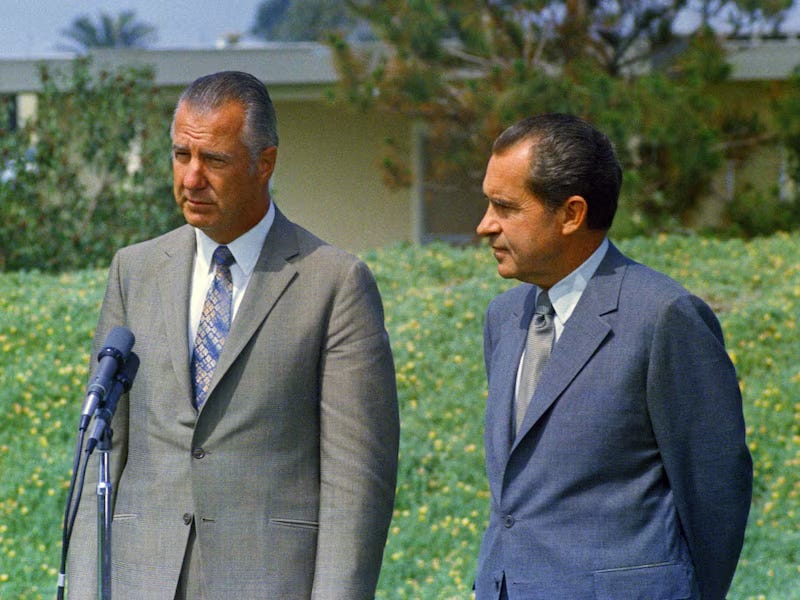
Less severe but still damaging are ethics violations — conduct that may not be criminal but still breaks rules or abuses public trust. Health and Human Services Secretary Tom Price resigned in 2017 after reporters found that he had chartered private jets for official travel instead of booking less expensive commercial flights, and that his trips mixed business and pleasure. EPA Administrator Scott Pruitt stepped down amid investigations into first-class flights, questionable security spending, and a below-market condo rental from a lobbyist’s spouse.
The American accountability system is layered. Criminal courts require proof beyond a reasonable doubt. Ethics violations can trigger internal discipline or political pressure without prosecution.
Not every act that feels corrupt is a crime. But neither is every technically legal abuse of power beyond reach. The type of conduct determines the lane of accountability — and the speed and severity of the consequences that follow.
The simplest tool: presidential removal
The fastest accountability mechanism in the federal government doesn’t involve subpoenas, special counsels, or Senate trials. It involves a phone call.
Executive officials serve at the pleasure of the president. If the president decides an official has become a liability — politically, ethically, or operationally — that official can be asked to resign immediately.
Modern history is filled with examples.
In the current Trump administration, National Security Adviser Mike Waltz was pushed out after internal and external criticism over his handling of sensitive foreign policy deliberations, particularly his accidental inclusion of a reporter in the same Signal messages that embroiled Hegseth controversy. According to reporting, President Trump had grown frustrated with Waltz’s management style and the perception that internal disagreements were spilling into public view. Rather than allow the turbulence to fester, the White House opted for an exit.
Similarly, Alex Wong, a senior official with deep experience in Asia policy, was removed after outside pressure campaigns questioned his past professional ties and prior engagement with institutions connected to China. While no formal wrongdoing was established, the administration chose to remove the distraction rather than litigate the optics.
This dynamic is bipartisan. In the Biden administration, White House science adviser Eric Lander resigned in 2022 after an internal investigation found he had bullied and demeaned staff, violating the administration’s workplace conduct standards. Earlier in Biden’s term, Deputy Press Secretary T. J. Ducklo resigned after it was revealed he had threatened a reporter who was covering his personal relationship with another journalist. The conduct was not criminal, but it violated internal standards and looked unprofessional.
Presidential removal is often the cleanest exit ramp. It allows an administration to signal accountability without inviting prolonged congressional warfare or criminal proceedings. It contains damage quickly and keeps control inside the executive branch.
But the mechanism works only when the president decides it should.
If an official remains personally loyal, ideologically aligned, or politically useful, resignation becomes less likely — even in the face of controversy. In those moments, removal is no longer a management decision. It becomes a political calculation.
And when a president chooses not to act, the burden shifts outward — to Congress, to inspectors general, and, in rare cases, to prosecutors willing to test whether the controversy crosses from troubling into unlawful.
Congress and the power of oversight
When the president chooses not to remove an official — or when allegations demand independent scrutiny — Congress becomes the primary arena for accountability.
Article I of the Constitution gives Congress the power to oversee the actions and behaviors of the executive branch; it’s one of the primary means to keep the president and his sprawling agencies in check. Oversight of spending, implementation of laws, and internal agency operations help inform not only the legislative process, but also help (in theory) deter the departments from straying too far off the straight and narrow. To aid their oversight efforts, Congress has many tools at its disposal, including the power to request documents, issue subpoenas, compel testimony, and hold public hearings under oath.
History offers vivid examples of what that looks like in practice.
In the 1980s, congressional investigations into the Iran-Contra affair forced senior Reagan administration officials — including National Security Council staff — to testify publicly about covert arms sales and diversion of funds to Nicaraguan rebels. The hearings exposed internal communications, revealed chains of decision-making, and reshaped public understanding of executive power in foreign policy.
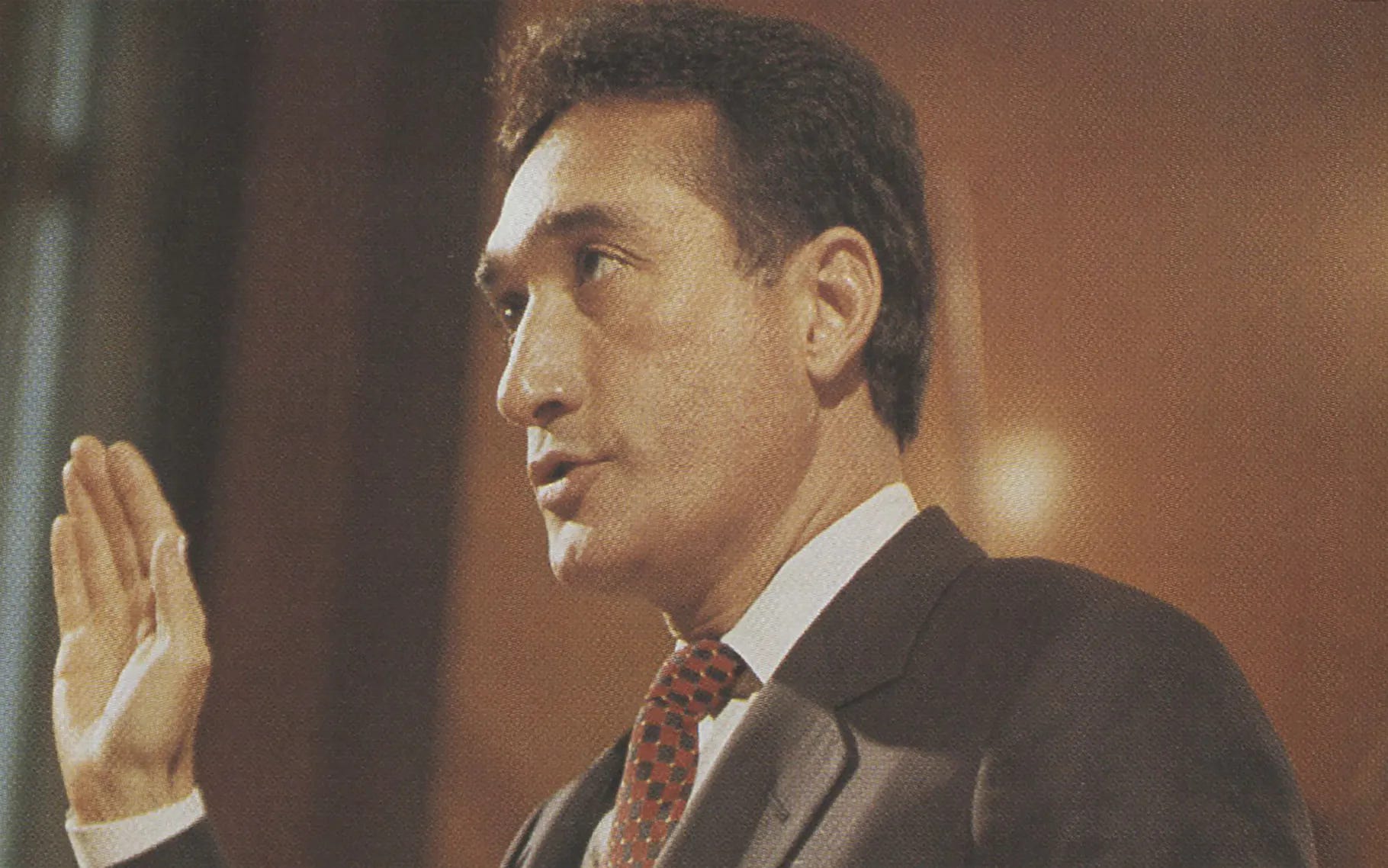
In the 1990s and early 2000s, congressional oversight of Housing and Urban Development Secretary Henry Cisneros led to scrutiny of payments made to a former mistress during his background check for a security clearance. Cisneros ultimately pled to lying to the FBI, underscoring how oversight can intersect with criminal accountability.
More recently, Congress has investigated Cabinet-level conduct ranging from the handling of classified materials to misuse of official resources. House committees scrutinized former Interior Secretary Ryan Zinke over travel spending and potential conflicts of interest. Lawmakers demanded records from former Commerce Secretary Wilbur Ross regarding his financial ties to shipping companies with Russian connections.
But oversight is not self-executing; the lawmakers have to want to do it. Often, the intensity of the oversight depends on who controls Congress and how much political appetite exists for confrontation. When the president’s party holds a chamber, investigations may go slow or not happen at all. When the opposition is in power, hearings can escalate quickly — sometimes blending fact-finding with partisan theater.
Even so, sustained congressional scrutiny has repeatedly served as the catalyst for deeper accountability. Iran-Contra became nationally understood through televised hearings. Watergate unraveled in committee rooms long before it reached the Supreme Court.
But, despite common perceptions, most congressional oversight is routine, procedural, scheduled. Boring even. For every Watergate or Epstein investigation, there are hundreds of investigations, audits, document reviews, and congressional hearings happening within committees that never enter the public’s view.
And it’s at these quieter, unseen steps where large scale accountability often begins. Staff and lawmakers — often motivated by the stories of investigative reporters — begin to request documents of agencies and their leaders; they host meetings about program administration; they follow up on a whistleblower complaint to get the agency’s side of the story. Most of the time, the oversight ends there.
But occasionally, the typically quiet process of congressional oversight can escalate overnight. Requests become subpoenas, meetings become depositions, and questions get asked in televised committee hearings, under oath, rather than over the phone.
Inspectors General: the quiet engine of accountability
Behind nearly every major executive branch scandal, there is usually a less visible but decisive player: the inspector general.
Every major federal department — Defense, Justice, Homeland Security, Interior, Health and Human Services — has an independent inspector general charged with rooting out waste, fraud, abuse, and misconduct. IG offices are staffed with auditors, investigators, and career lawyers. They subpoena records, interview agency employees under oath, review contracts line by line, and reconstruct decision-making timelines from emails, travel vouchers, and security logs. Their work often supplies the receipts that transform political controversy into documented fact.
IGs cannot indict. They cannot fire cabinet officials. But when they refer potential criminal violations to the Department of Justice, prosecutors take those referrals seriously. And even when cases do not result in prosecution, IG reports frequently lead to resignations, policy reforms, or tightened compliance rules.
It was a recent inspector general investigation that led to the controversy, mentioned above, that currently surrounds Labor Secretary Lori Chavez-DeRemer. The inspector general’s report has already resulted in the resignations of two top aides. Inspectors general also set in motion the investigations that led to the resignations of Scott Pruitt and Ryan Zinke in Trump’s first term.
Inspectors general serve as critical conduits for whistleblowers. Federal employees who believe rules are being broken can bring complaints to IG offices with statutory protections against retaliation. That process matters in agencies and departments like the FBI or DHS, where internal pressures might otherwise discourage dissent.
But inspectors general themselves are not immune from politics. In the first week of his second term, President Trump dismissed 17 inspectors general — an extraordinary move that drew bipartisan concern from former oversight officials and ethics advocates who warned it could weaken independent watchdog capacity across agencies. While presidents have the authority to remove IGs, the scale and timing of the firings underscored how oversight infrastructure can itself become part of the accountability struggle.
Criminal prosecution: rare but real
The possibility of prison for a cabinet official is not theoretical. It has happened.
The most famous example remains the Teapot Dome scandal of the 1920s. Secretary of the Interior Albert B. Fall secretly leased federal oil reserves to private companies in exchange for loans and gifts. Congressional investigators uncovered the scheme. Evidence mounted. Public outrage grew. Ultimately, Fall was convicted of accepting bribes and became the first former cabinet member to serve time in prison.
Teapot Dome demonstrates that high office does not guarantee immunity. But it also illustrates how extraordinary the evidentiary threshold is. There was a paper trail. There were financial transfers. There was sustained investigation. Criminal prosecution requires more than controversy. It requires strong and admissible evidence, evaluated by prosecutors, of a specific statutory violation. Many scandals never cross that line.
Impeachment: the constitutional hammer
The Constitution authorizes the impeachment of “civil Officers of the United States,” a category that includes cabinet secretaries and other senior executive officials. The House may impeach by a simple majority vote. The Senate then conducts a trial, and conviction — which results in removal from office — requires a two-thirds vote.
That supermajority requirement reflects the framers’ intent that impeachment be difficult, reserved for extraordinary circumstances. It is also important to remember that impeachment is a political remedy, not a criminal one. It does not require proof beyond a reasonable doubt. It does not result in prison. It is Congress’s constitutional mechanism for declaring that an official is unfit to hold office.
For more than a century, only one Cabinet official had been impeached: Secretary of War William Belknap, in 1876. Belknap was accused of accepting kickbacks in exchange for lucrative trading post appointments. He resigned just before the House vote, but the House impeached him anyway. The Senate held a trial and ultimately failed to reach the two-thirds threshold required for conviction.
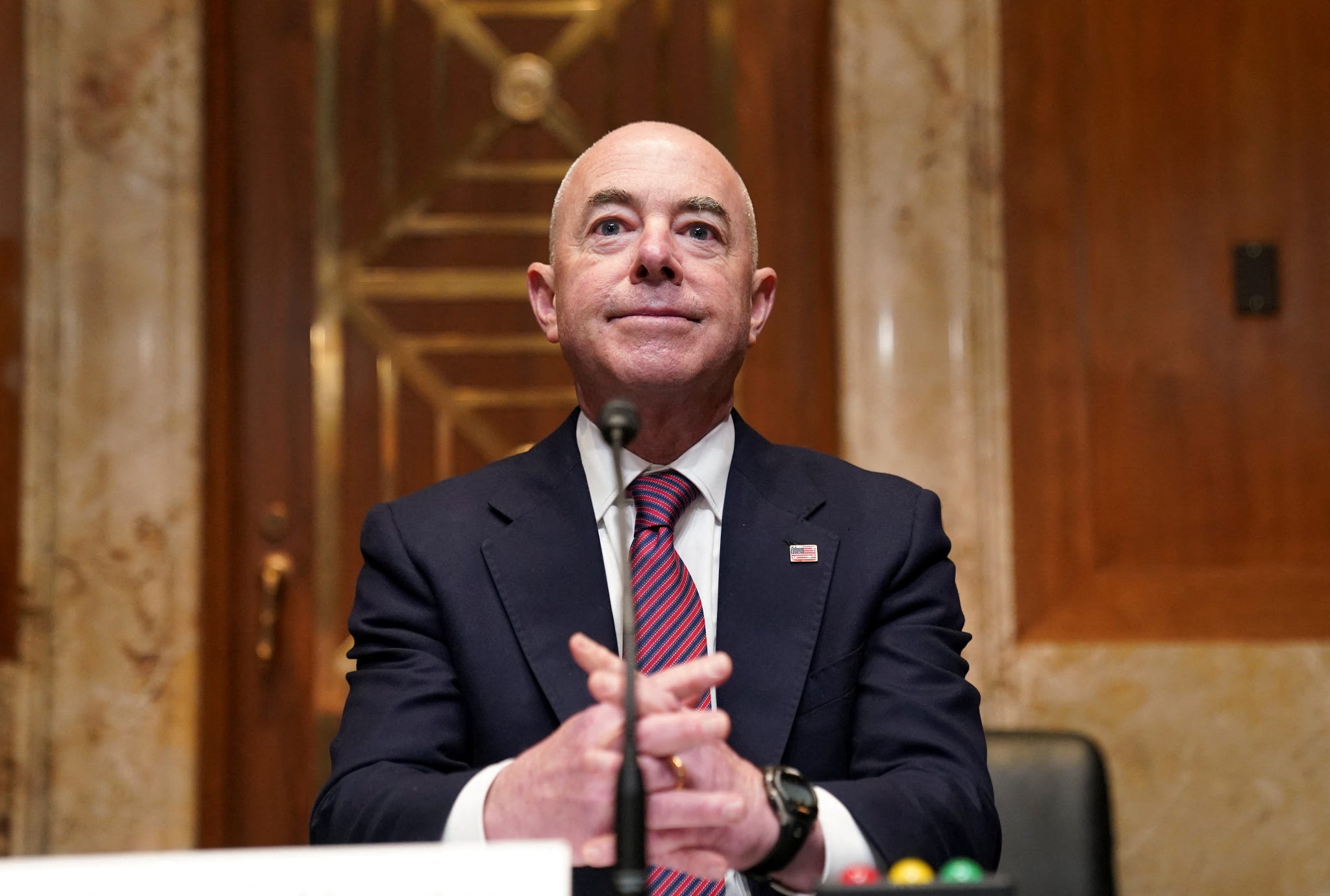
That historical rarity changed in 2024, when the House impeached Homeland Security Secretary Alejandro Mayorkas. House Republicans charged Mayorkas with “willful and systemic refusal to comply with the law” in his handling of immigration enforcement at the southern border, as well as breach of public trust. When the case reached the Senate, however, senators voted to dismiss the articles without a full trial, effectively ending the effort.
The Mayorkas episode underscored that the viability of impeachment depends entirely on political math. Conviction by a bipartisan supermajority in the Senate is a tall order.
For that reason, impeachment by the House is usually a dramatic statement rather than a true disciplinary measure. It signals that the representatives believe an official has committed extraordinary misconduct but rarely leads to that official’s removal.
How accountability actually unfolds
When Americans hear the word corruption, many imagine handcuffs. In reality, most modern controversies involving executive officials play out in a far more political register.
The most common outcomes are not indictments. They are resignations under pressure. Loss of credibility. Budget restrictions quietly inserted into appropriations bills. Reputational damage that reshapes — or ends — careers.
That pattern is not accidental. The framers built a system that distributes accountability across institutions. Each layer slows the process. Each layer demands agreement among actors who may not share incentives.
The design protects against impulsive purges. But it also means that allegations do not automatically trigger consequences. Instead, they initiate a sequence.
First comes scrutiny — reporting, whistleblower complaints, inspector general inquiries.
Then oversight — document requests, hearings, testimony under oath. Then political calculation — does the president stand by the official? Do members of Congress want to escalate?
Only in rare cases does the matter come to impeachment or criminal referral.
Historically, the most enduring accountability has often taken the form of reform. Teapot Dome prompted tighter controls on public resource leasing. Watergate reshaped campaign finance law, strengthened transparency requirements, and expanded oversight norms. Scandal can become a catalyst for institutional strengthening — but only when lawmakers conclude that the problem reflects systemic weakness rather than partisan grievance.
Accountability in the American system is rarely immediate and rarely theatrical. It is incremental. It depends on documentation. It depends on political incentives aligning with institutional responsibility.
The mechanisms exist. The question, as always, is whether the actors inside the system decide to use them.
 | A guest post by
|
While there are huge differences between the two parties' views, one thing that seems to bond them is their desire to protect the system from which they all benefit. Just consider last week's vote on whether to release details behind the Congressional slush fund used to pay victims of alleged sexual assault.
John Dalberg-Acton said it well: ""Power tends to corrupt, and absolute power corrupts absolutely."
Casey, just how busy are the IG's in todays happenings within the Trump regime and are there any impeachment procedures being considered now ? Is it wrong for us to say that there has not been any illegal activity that has happened since Trump was made president? It seems to me that he has done many things that would be considered potentially illegal and wrongheaded like the invasion of Venezuela , the murder of several American citizens via ICE happenings , the War on Iran presumably at Netanyahu's bidding, to name a few.