

We Want Workers, Not People
Immigration raids, visa rollbacks, and shrinking labor forces are pushing American farms — and food prices — to the brink.

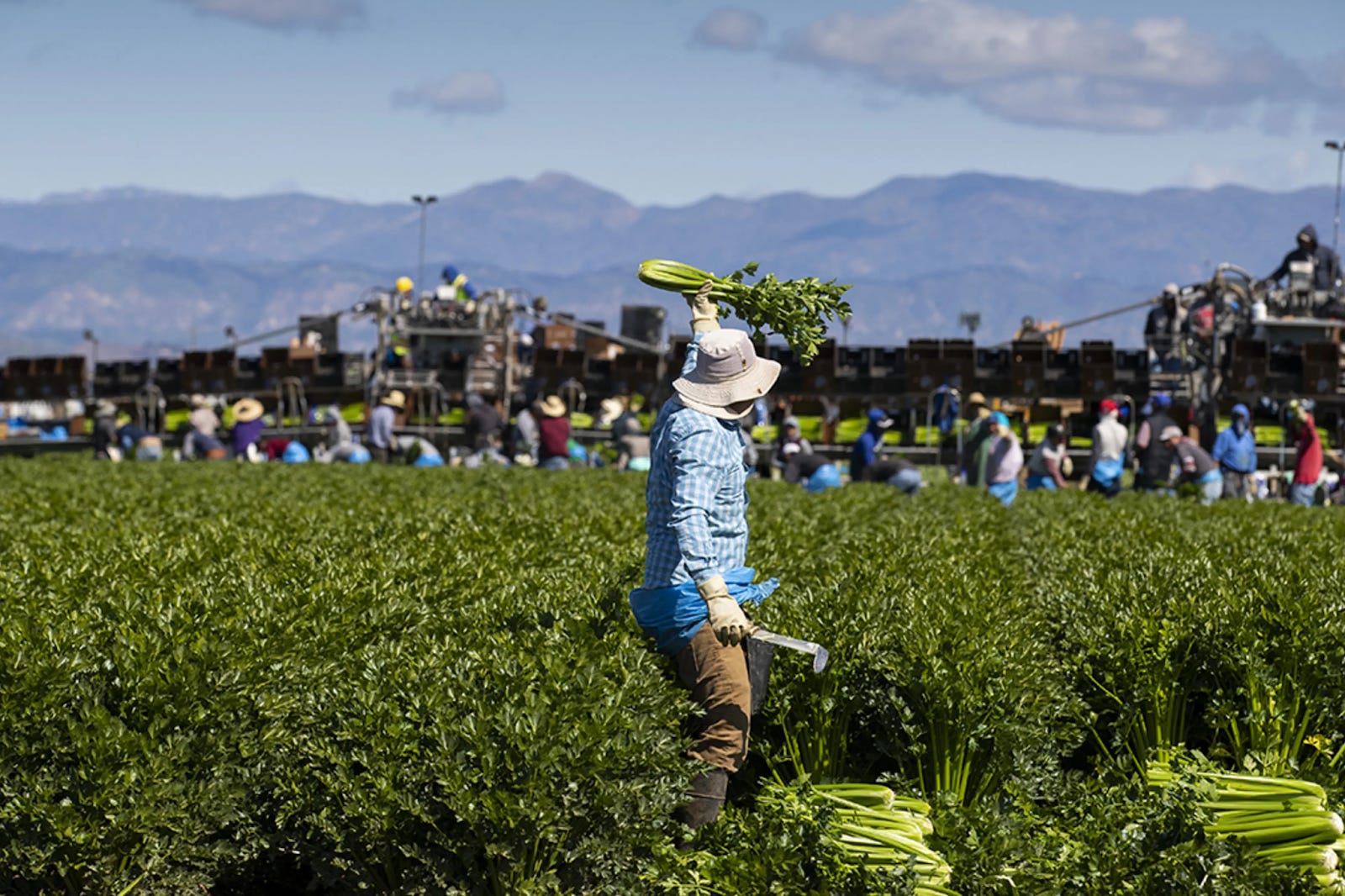
“Seventy percent of the workers are gone,” said Lisa Tate, whose family has farmed the citrus groves of California for six generations. “If 70% of your workforce doesn’t show up, 70% of your crop doesn’t get picked… Most farmers here are barely breaking even. I fear this has created a tipping point where many will go bust.”
It’s a problem that’s all too familiar to many farmers across the country. Sweeping immigration raids are unsettling farms, causing uncertainty among growers and fear among workers — resulting in labor shortages and upward pressure on food prices.
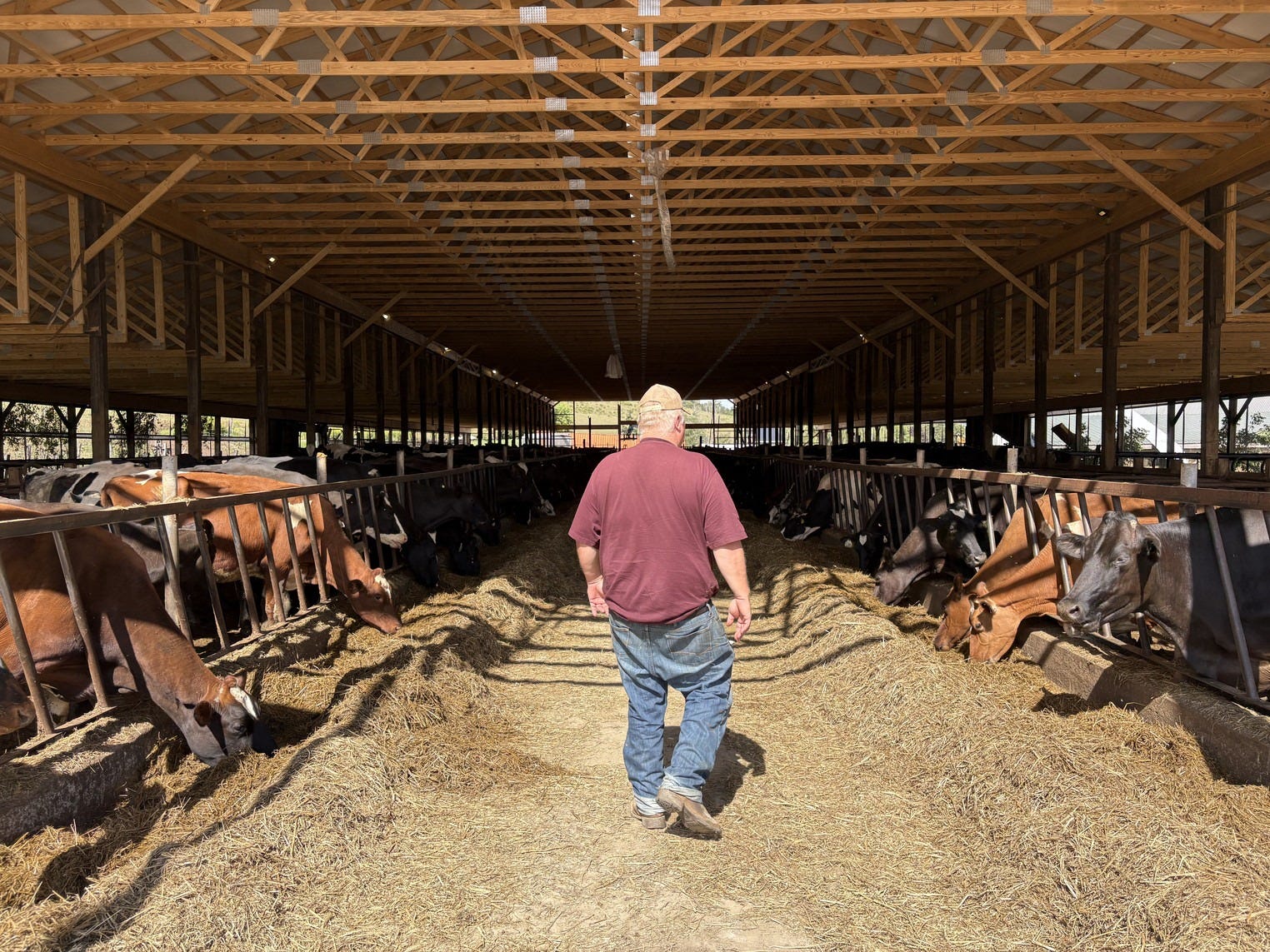
In Pennsylvania, a multigenerational dairy farm was recently forced to sell all its cows after being unable to find workers. Owyhee Produce, a family owned agricultural business in Idaho, worries about finding the workers needed to get their onions to market. And in New Jersey, an unstable workforce has reduced the yield on Brandon Raso’s blueberry farm to only 36 million pounds, instead of its usual 60 million pound bounty. Overall, the number of farmworkers fell by 155,000, or 7%, between March and July.
To ease the burden on farmers, the Trump administration recently announced changes to the H-2A visa, which for nearly 40 years has allowed farmers to hire foreign farmworkers on a temporary basis. While the H-1B visa for highly skilled workers receives abundant news coverage, its low-skill sibling, the H-2A, is rarely mentioned, leaving many wondering what it is and where it comes from. We’ll take a look at the history behind it, and at what the changes today could mean.
The United States has endured farmworker shortages before. Attempting to address a particularly acute shortage during World War II, President Roosevelt negotiated an agreement with Mexico called the Mexican Farm Labor Program, better known as the Bracero Program. Lasting until 1964, the Bracero Program was the largest guestworker program in American history to date, bringing millions of foreigners to farms across the US.
Under the program, farmers could hire Braceros (as the foreign workers were known) after receiving certification from their local Employment Service office that they had first tried hiring local workers at prevailing wages. The program grew dramatically in the 1950s, as the federal government encouraged hiring legal Braceros amid the deportation of more than a million people (some of them in fact US citizens) in Operation Wetback. But as the Bracero Program grew in the 1950s, so did the scale of the injustices associated with it.
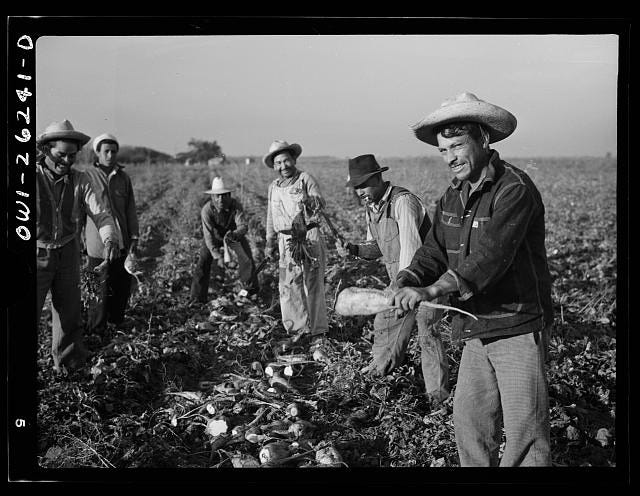
Rather than receiving the local minimum wage, sufficient food, and basic housing, as legally required under the program, Braceros reported malnourishment and substandard housing, overcharges for food and clothing, and exposure to dangerous chemicals like DDT. Many complained of wage theft and overwork, while some died on the job, treated like “work mules.”
And through the 1950s, growers sought to protect and expand the program because its cheap seasonal workers served as a cudgel against domestic unionization.
The Bracero program ended amid growing opposition from labor unions and civil rights organizations, most notably Cesar Chavez and the United Farm Workers (UFW). In response, employers increased their use of the H-2 section of the 1952 Immigration and Nationality Act, which was designed to allow companies to meet their labor needs with seasonal foreign labor. By 1986, when the Reagan administration tried to increase oversight by splitting the H-2 program into H-2A and H-2B — for agricultural and non-agricultural jobs, respectively — it had brought an average of only 12,000 workers into the country each year.
But in the decades since the H-2A visa was created, its use has skyrocketed, increasing from 44 visas in 1987 to 384,900, representing 17% of the total agricultural workforce, in 2024. Farm organizations argue that farmers would request even more H-2A workers if not for costly program requirements, including worker housing as well as pay.
The payment rate — known as the Adverse Effect Wage Rate — is set by a complicated formula that often lands just above minimum wage. Under the Biden administration, financial penalties for growers who violate housing-standard regulations were increased and guestworkers were given greater rights, including protection from illegal fees, a prohibition on retaliation against workers who organize, and the ability to seek new employment without leaving the country.
Today, the Trump administration is undoing policies from the Biden era to address the farmworker shortage — a shortage exacerbated by its own immigration enforcement activities.
Trump’s changes to the H-2A program have been praised by farmers. In addition to easing the guestworker application process, the administration reduced hourly wages by $1 to $3, in alignment with the wage formula under President George W. Bush. In perhaps the biggest change to a program that has historically expected employers to provide either housing or a housing reimbursement for workers, the Trump administration is now allowing employers to deduct pay for guestworker housing. The Department of Labor projects these changes will together save farmers $24 billion in the next decade.
But some see them as an unworkable and inhumane solution. Farmworker unions, including the United Farm Workers (UFW), are against H-2A expansion. They say that because guestworkers lack collective bargaining rights under the National Labor Relations Act, overuse of H-2A visas makes it harder to organize local workers and thereby serves as a cap on efforts to increase pay and improve working conditions.
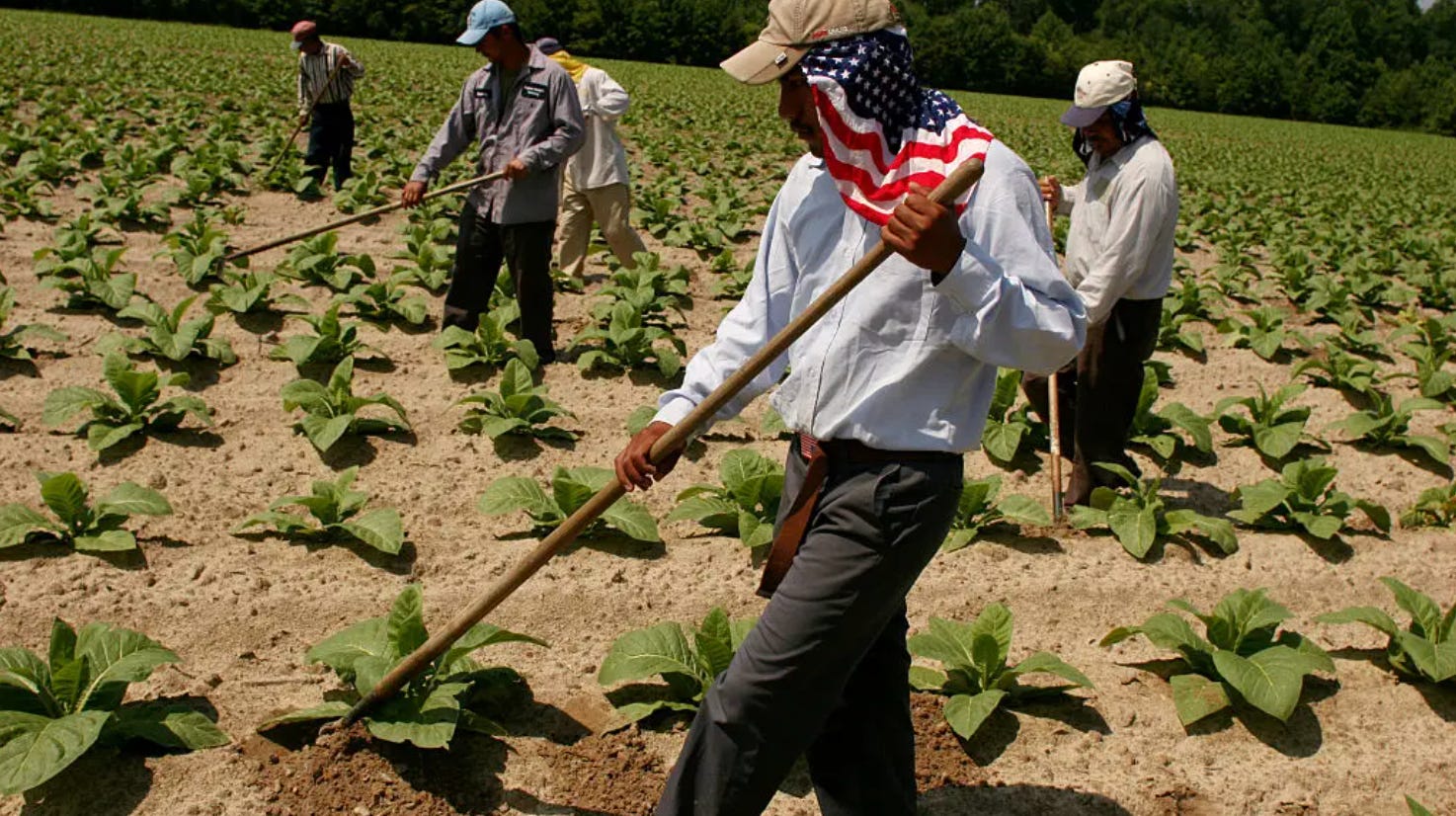
Certainly, employers will submit more H-2A visa applications in the coming year. But it’s unclear whether an increase in applications will offset the workers lost due to immigration raids, including both deported workers and those who remain but aren’t working for fear of deportation. In fact, it’s not even certain that all those applications will be reviewed.
In addition to being left understaffed because of DOGE cuts, the Department of Labor was completely unable to process H-2A applications for the first month of the government shutdown, even as ICE continued raiding farm communities. As a result, the farmworker shortage is unlikely to be resolved this year, and upward pressure on food prices will continue until the administration either halts deportation efforts or fast-tracks unprecedented numbers of H-2A applications.
Daniel Costa, an immigration policy researcher at the Economic Policy Institute, says that the H-2A changes appear aimed at replacing American workers with seasonal foreign workers. Speaking to Investigate Midwest, he summarized the policy as “We want workers but we don’t want people.”
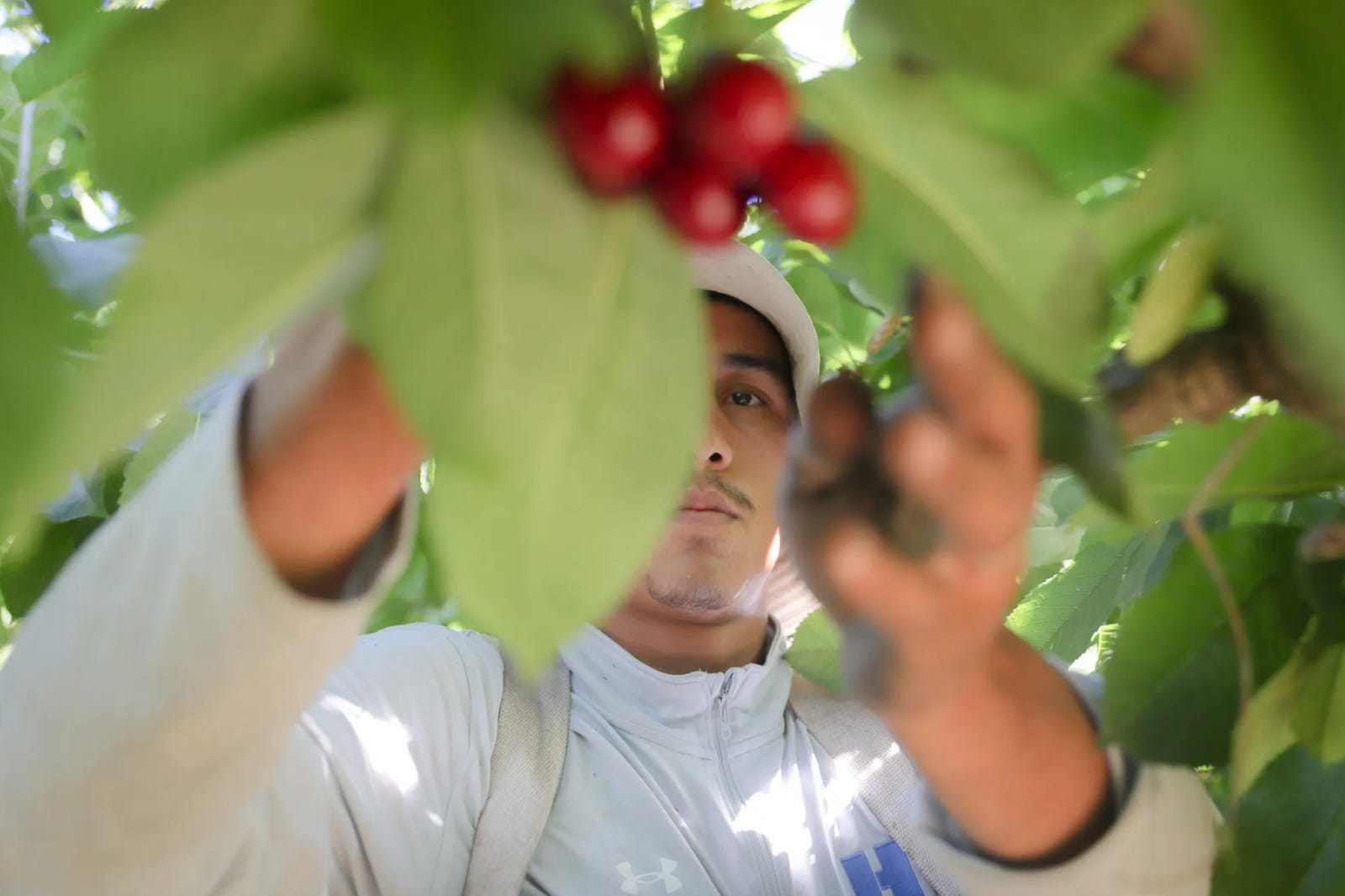
Those workers will likely be an increasingly invisible foreign workforce, hidden in the fields and tucked into the hollows, isolated in worker camps rather than immersed in American communities — and never far from being sent home.
 | A guest post by
|
This primer on the history of ag worker visas is so helpful. I don’t think I even knew there was still a visa specifically for ag work. I thought it ended with the Bracero program. Is the H-2A visa only for seasonal work? So workers are allowed (and expected) to go home in the off-season? Also, if this visa program exists then why do so many people seeking to work ag jobs cross the border without legal status? Is it because the number of H-2A allowed is far less than what is needed & employers are willing to fill the gap with undocumented workers? The whole thing seems like such a mess!
It breaks my heart to hear of the labor crisis that exists in our country over the use of foreign "workers" being hired under the H-2A program instead of Americans ( people). So, the Trump approach to farm labor right now is to deport undocumented "workers" and allow them to re-enter the USA as H-2A "workers" because of the rules that allow the employers to use their labor at a reduced cost allowing for less benefits to the laborer ,thus increasing the likely hood of greater profits to benefit the employer at the expense of the poor "worker". This will continue to exacerbate the lives of the "workers " and most likely shorten their lives in the process because of harder working conditions than what was originally intended by the W. Bush administration now modified by the Trump bunch . Just another prime example of the greedy, heartless mentality of the rich over the poor that hasn't changed for as long as I can remember.
Oh, to have more leaders who want to help "the least of these. " I can think of one who does think like this and his name is James Talarico and is running to unseat John Cornyn in Texas in 2026. He's definitely got my vote and may more like him join the fight against the oligarchs in America today.