


A political autopsy is supposed to answer one basic question: What went wrong for the party in the previous election?
The Democrats’ 2024 autopsy does something more awkward. It arrives late, incomplete, covered in disclaimers, and accompanied by the party’s own warning label. On every page, the report says it reflects the view of the author, not the Democratic National Committee (DNC), and that the DNC “was not provided with the underlying sourcing, interviews, or supporting data” for many of the claims inside it.
That is not usually how an institution sounds when it is confidently diagnosing itself and planning to right the wrongs of the recent past.
As political science professor Seth Masket put it in a sharp review, the report often reads like a document still waiting for someone to prove its claims. His title captured the strangest feature of the whole thing: “No evidence provided for this claim.” The phrase appears so often in the report’s margins that it becomes less a comment than a mood.
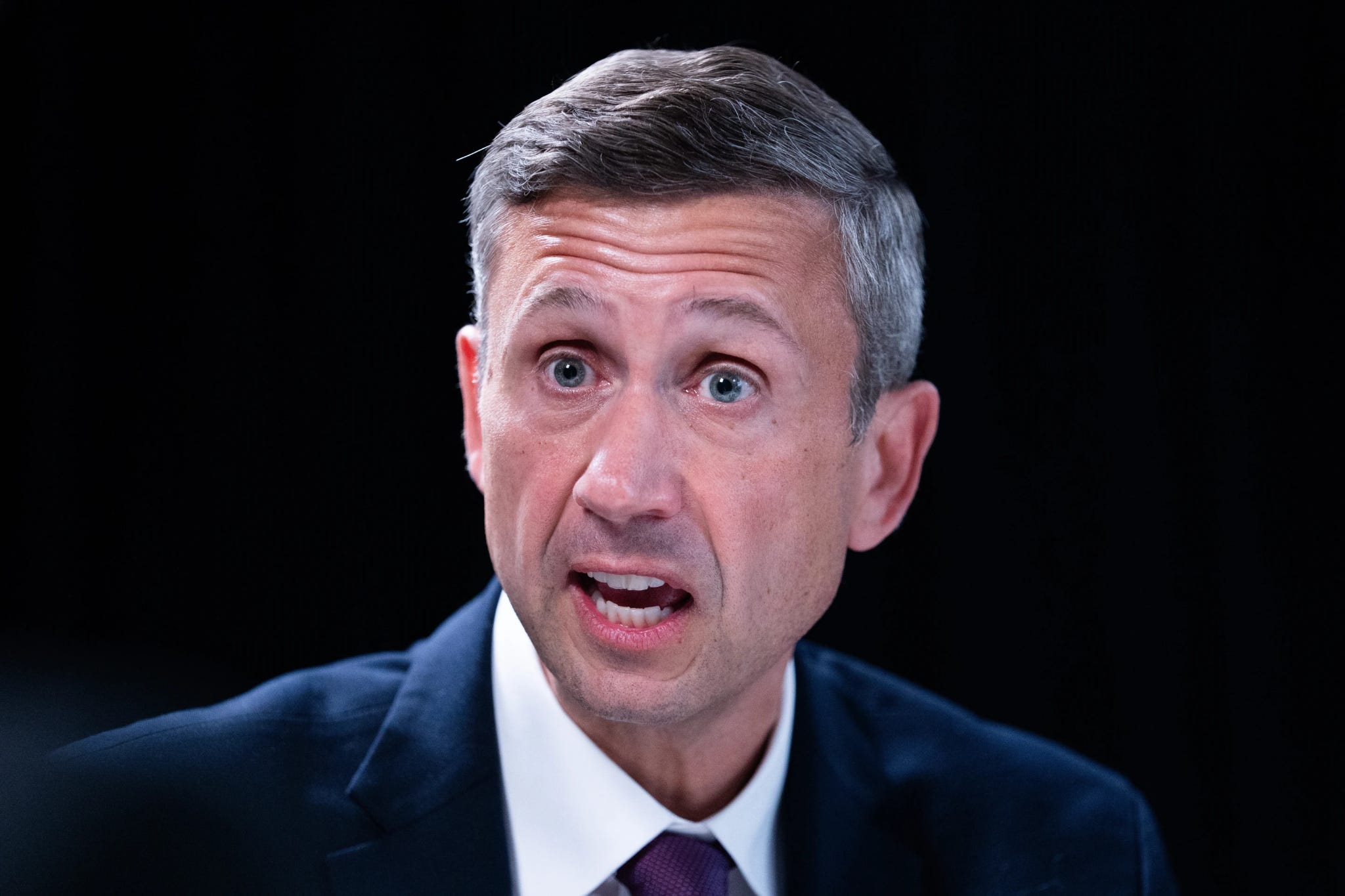
The rollout only made the story stranger. The DNC released the long-suppressed 192-page document, but then quickly distanced itself from the findings. DNC Chair Ken Martin said the report did not meet his standards or those of its readers, even as he released it amid pressure for transparency. The handling of the report — as well as its lack of substance — triggered calls for Martin to resign, with critics arguing that he mishandled a report that was supposed to help the party understand its 2024 loss.
So, yes, the report is flawed. Deeply. But that may be why it is useful.
The document may not fully explain why Democrats lost in 2024, but it does reveal a party struggling to say out loud what it fears might be true: its old coalition no longer behaves like a coalition.
The coalition is sending warning signs
The report’s strongest material is not buried in one stunning revelation. There is no secret switch to flip, no magic chart, no hidden smoking gun explaining how Donald Trump returned to the White House. Instead, the report keeps circling the same uncomfortable problem from different directions.
Democrats are losing trust with voters they long assumed to be reachable, winnable, or reliably theirs.
The report argues that Democrats have suffered from “a persistent inability or unwillingness to listen to all voters,” and says the party has lost relationships with working Americans, local communities, state parties, rural voters, and parts of the country Democrats tend to ignore.
It calls for a ten-year strategy to “organize everywhere to Win Anywhere,” with a renewed focus on Middle America and the South. The report says many voters in those places do not see themselves reflected in the Democratic vision of America.
That is consultant-speak, but the underlying problem is real enough.
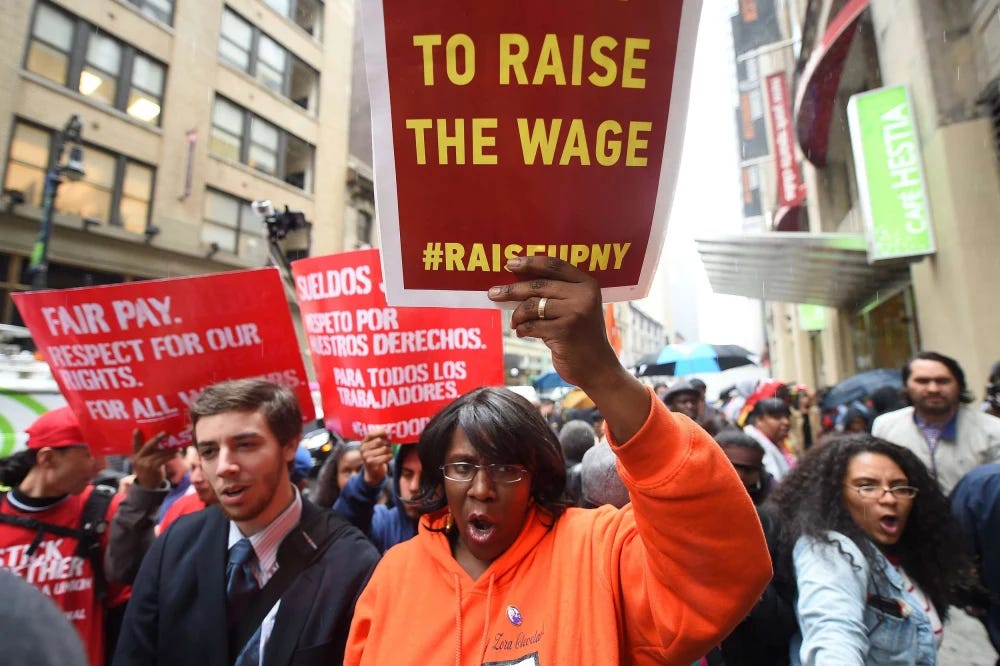
The Democratic Party still has many broadly popular policy positions. Voters have supported Democratic-aligned ballot measures on abortion rights, Medicaid expansion, minimum wage increases, paid leave, and redistricting reform, sometimes in states where Democratic candidates keep losing. The report points to this gap directly, arguing that Democratic policies can win even when Democratic candidates cannot.
That should terrify party leaders more than a bad poll.
A voter who rejects your policy is one kind of problem. A voter who likes your policy but does not vote for your party is another.
The warning signs are scattered across the report. It describes a “male voter problem.” It says rural losses are mathematically insurmountable if Democrats want to win beyond a shrinking map. It warns that irregular voters need persuasion, not just last-minute turnout reminders. It says Democrats cannot assume Latino voters, especially younger Latino men, are automatically part of the party’s base.
The report makes several of these claims without enough evidence, which is exactly the problem Masket and others flagged. But the broader pattern is hard to dismiss. Trump improved with Latino voters in 2024, particularly Latino men. Republicans continued making gains with non-college voters. Democrats remained strong with college-educated voters, especially in metropolitan and suburban areas. The old demographic bargain that powered so much Democratic optimism after Barack Obama’s elections has become much less automatic.
For years, many Democrats operated with an implicit theory of the future: hold the Obama coalition, add suburban voters repelled by Trump, wait for younger and more diverse generations to expand the map.
That theory was not crazy. It helped Democrats win the House in 2018. It helped Joe Biden win in 2020. It helped Democrats perform better than expected in 2022.
But a theory can work perfectly until it doesn’t.
