

The New Propaganda Playbook
The videos are AI, but the casualties are real

Propaganda has changed. And while world leaders post increasingly alarming messages on social media, there’s an unofficial messaging battle running parallel. Trolling messages from embassy accounts, viral AI videos, and other kinds of content have become an influential part of the communications strategy. Foreign affairs expert Elise Labott takes a look at what happens when war gets the meme treatment.
—Sharon
The video looks almost childish at first glance: yellow plastic figures, blocky missiles, a cartoon skyline collapsing into flames. A Lego version of Donald Trump — hair exaggerated, expression frozen somewhere between defiance and panic — paces as the soundtrack builds. Then the scene cuts to explosions, victory graphics, and an ending in which Iran appears to prevail.
It is easy to dismiss the images as absurd. It is harder to ignore what they represent.
Over the past several weeks, a steady stream of AI-generated videos like this — many produced in Lego-style animation by a channel called Explosive News — has circulated on social media platforms linked to Iranian networks and their affiliates. The clips are fast, visually striking, and designed to travel: short enough to hold attention, provocative enough to be shared, and familiar enough in style to blend seamlessly into the feeds of Western audiences.
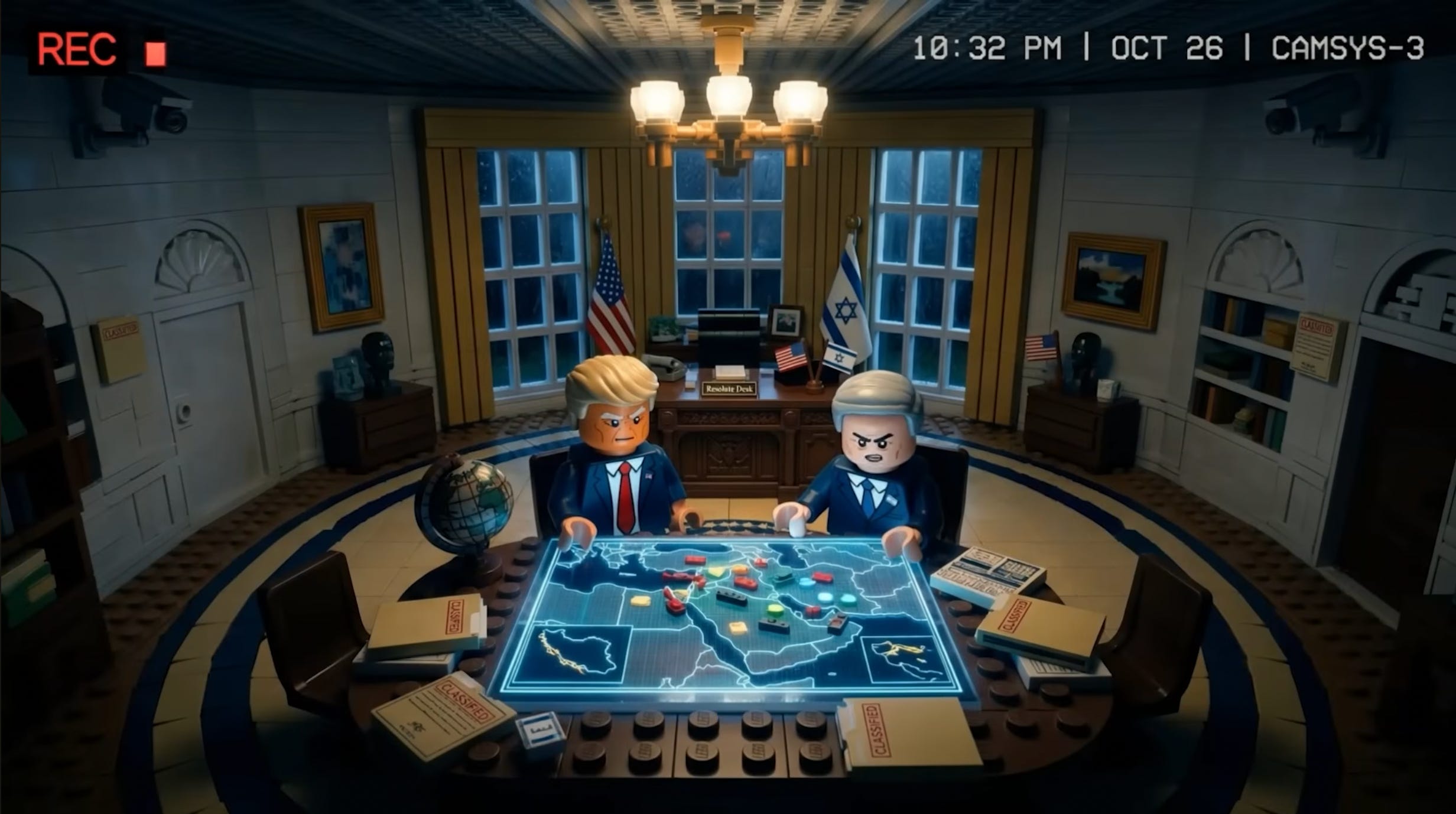
Many of the videos are set to rap music — a seemingly deliberate choice. Not only does it speak to an American audience, but the genre’s swagger and defiance translate across language barriers, and its associations with resistance fit with Iran’s self-image in the conflict.
At the same time, Iranian officials have adopted a tone that would have been unrecognizable in earlier eras of statecraft. On the 23rd day of the war, Ebrahim Zolfaghari, a uniformed spokesman for the Revolutionary Guard, delivered a dry message into a camera: “Trump, you are fired,” he said, borrowing the tagline from The Apprentice. “Thank you for your attention to this matter,” he added, echoing one of the president’s favorite sign-offs.
It was not an isolated moment. When Trump posted a profanity-laced threat on Easter about the Strait of Hormuz — warning Iran it would face “hell” if it didn’t allow passage through the waterway — official Iranian accounts did not respond with formal diplomatic language. They responded with mockery. “Take it easy, tiger,” the account of one Iranian embassy wrote.
Taken together, these posts are something larger than a series of viral videos or clever jabs. Iran is not simply broadcasting propaganda outward. It is operating in the same information ecosystem as its adversary, using many of the same formats, references, and rhythms that shape political discourse in the United States. The result is a shift away from traditional propaganda and toward something more adaptive, more participatory, and more difficult to contain.
 | A guest post by
|