

The Election Fight the President Keeps Losing
Trump is 0 for 21 in lawsuits seeking state voter rolls

Donald Trump’s Justice Department keeps walking into federal court with the same request: Give us the state’s voter rolls.
And federal judges keep giving the same answer: No.
On August 6, a judge in Washington, DC, dismissed the DOJ’s attempt to compel DC’s Board of Elections to turn over its voter registration list, including sensitive information like dates of birth and driver’s license numbers. That ruling gave the Trump administration a record of 0 for 21 in federal courts across the country in their quest for state-level voter databases.
More specifically, 21 federal district courts have outright dismissed the DOJ’s cases on the merits, meaning that judges appointed by Republican and Democratic presidents have all looked at the DOJ’s claims, evidence, and legal grounding and ruled they are so lacking that they didn’t need to hear any more. One of these cases has already been appealed by the DOJ, and the federal appeals court judge upheld the dismissal.
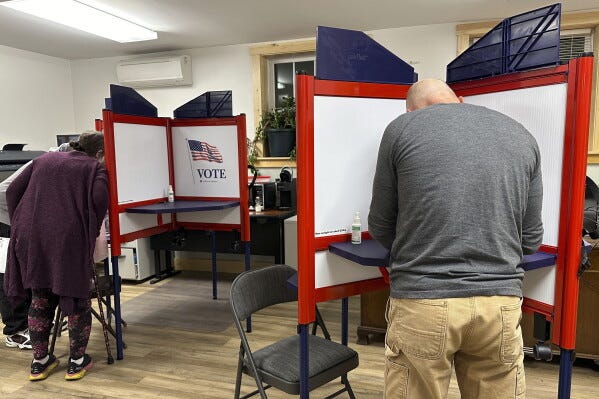
Twenty-one losses and zero victories is incredibly telling, especially since federal access to state voter rolls has clearly been such an important campaign for the DOJ (and Trump, for that matter). To date, 48 states have received requests from the administration for their complete voter databases. For 30 states plus Washington, DC, those requests have escalated into full lawsuits in an attempt to compel the states to hand them over. A few states — notably GOP-friendly states — voluntarily handed over their data, and Oklahoma “settled” its lawsuit with the DOJ by doing so.
But plenty of others, including conservative states, have outright refused.
So why exactly is Trump after states’ voter rolls, and why are federal judges uniformly telling him that the federal government doesn’t have the power to force states to provide it?
Those questions became much more urgent after Trump’s July 16 prime-time address on election integrity. During the speech, Trump warned that American elections were dangerously vulnerable to fraud from both domestic and foreign actors. He claimed his administration had found over 275,000 noncitizens who were registered to vote and directed his Department of Homeland Security to work with states to identify suspected illegal voters. And, finally, he told Americans all of this fraud necessitated Congress’s passage of the SAVE America Act — which would require proof of citizenship and photo ID to vote, as well as require states to turn over voter records to the federal government — as soon as possible.
For many, the speech was less about the fraud claims the president can’t seem to let go and more about providing a pretext for the feds to gain access to state voter rolls, and ultimately more power over elections.
What does Washington actually want?
Simple — it wants the databases. Each state maintains a list of all registered voters — this is how they verify who is eligible to vote in their respective elections. The database maintains all of the obvious stuff, including your name, address, and age, but it also may contain uber-specific information like partial Social Security numbers and full driver’s license numbers. The DOJ is attempting to force states to turn over everything.
Michigan provides a useful example. After the DOJ demanded the full voter files, Michigan offered its public registration database with the sensitive information removed. The DOJ said that wasn’t enough and took Michigan to federal court.
For those wondering, the federal government does not already maintain a master list of all this information. Driver’s licenses, for example, are issued by the states, and federal law dictates that a lot of these unique identifiers must be siloed to prevent the creation of a single repository of information that is then used to disenfranchise voters in the name of election integrity.
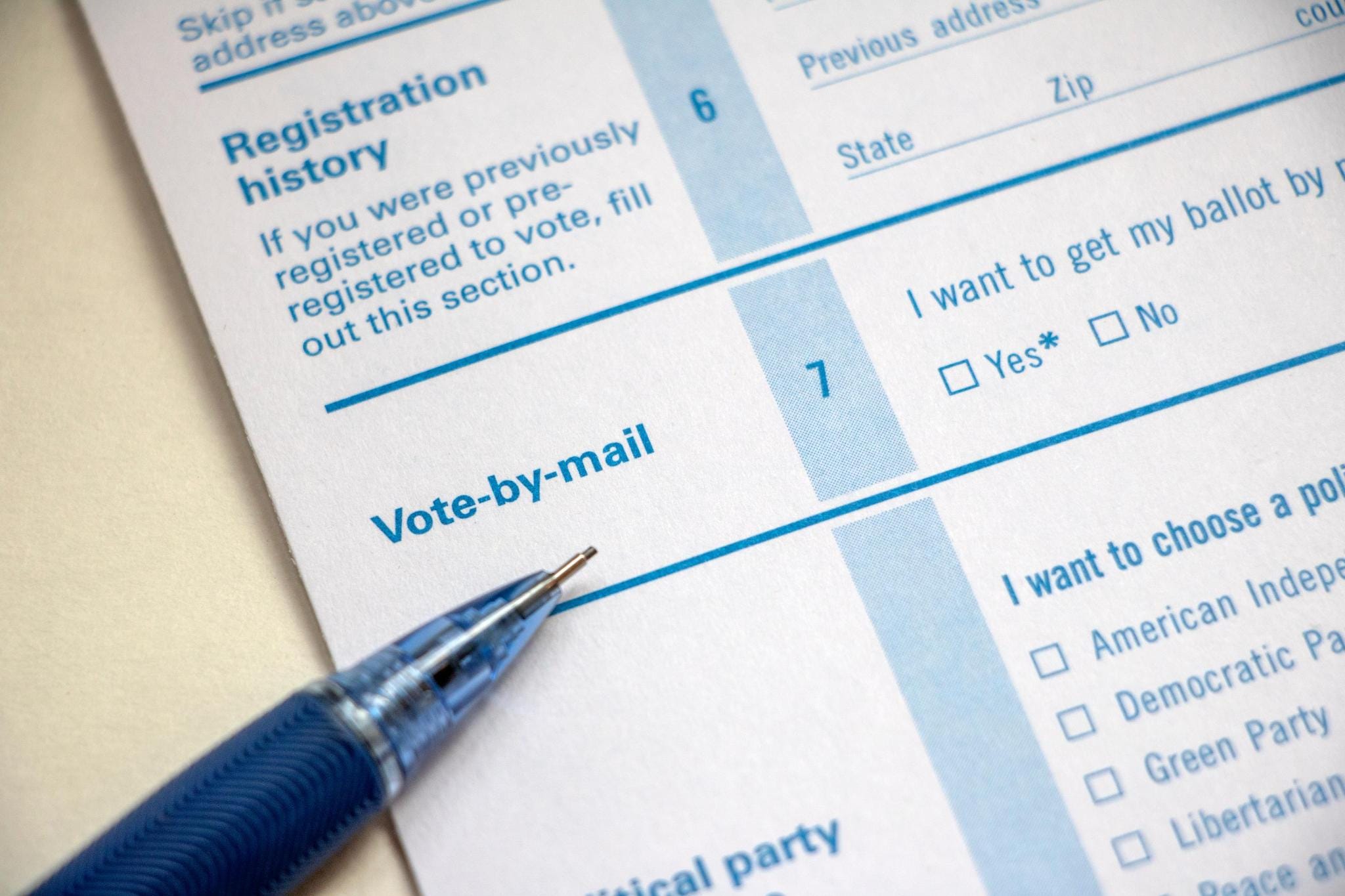
Lawyers for the Department of Justice argue the unredacted database is required so they can properly verify whether states are cleaning up their voting rolls. Federal election law requires that each state make concerted efforts to remove folks who have died, moved, or let their registration lapse, and that it prohibit noncitizens from voting in federal elections. The DOJ has argued that it must have access to state databases so it can compare the voter files with the federal SAVE immigration database to identify noncitizens who registered to vote.
And to be fair, there is a legitimate government interest here. Voter rolls should be kept up to date, duplicate registrations should be identified and corrected, and noncitizens should not vote in federal elections. The vast majority of Americans agree, and nobody in these lawsuits is arguing otherwise.
The legal question at play in these dozens of cases is much more fundamental: Does the attorney general have the authority to compel states to turn over their voter registration databases to the federal government?
The DOJ says yes. Federal judges, 21 and counting, say no.
The states have some thoughts
States have not responded to the DOJ’s demands with a collective voice.
Democratic governors, in particular, have argued that the DOJ wants access to voter rolls only to scour for irregularities in blue states it can later use to discredit elections results. “They’re trying to say that in the next election, that there will be fraud because they know they’re going to lose,” Illinois Gov. JB Pritzker said. Illinois voluntarily provided the DOJ the voter database it makes available to political parties and government agencies but cited state privacy laws in denying access to the rolls that contained sensitive voter information.
The pushback has been bipartisan, as well. Republican officials, like Utah Lieutenant Governor Deidre Henderson, have resisted the DOJ’s demands because turning over state-level voter information would constitute a violation of her state’s voter privacy laws. Republican election officials in Kansas, Alaska, and Florida have also resisted giving the DOJ the full private files it requested.
In conservative Kentucky, Democratic Governor Andy Beshear has resisted the DOJ’s efforts, warning that Trump had “already tried to take steps to prevent free and fair elections” and that Americans would revolt politically if Washington tried to “get between” them and their votes. And the person actually responsible for Kentucky’s voter files, Republican Secretary of State Michael Adams, has been equally resistant in declaring, “I will not voluntarily commit a data breach.” Absent a court order, the voter rolls will stay in Kentucky.

Unsurprisingly, perhaps, not every Republican has stood up to Trump’s DOJ. After a South Carolina voter sued the state to prevent it from handing over its files, Gov. Henry McMaster went to court to officially allow their release. “The federal government does have the authority to ask for these things,” he argued. The SC state supreme court agreed with McMaster.
Then there is New Jersey.
In July, 2026 Gov. Mikie Sherrill announced that a software glitch at the state motor vehicle agency had improperly registered about 6,600 noncitizens to vote. (Fewer than 400 actually cast ballots.) An investigation was conducted, the erroneous registrations were removed from the rolls, and a new voter registration vendor was sought. Sherrill admitted the error was “reckless” but also accused the Trump administration of trying to “weaponize elections for political gain.” Republicans argued that such an error is even more reason that the DOJ needs to maintain its own federal database of registered voters.
Which brings us all the way back to the basic legal question running through all 21 cases: Does the Justice Department have the power it claims?
The 1960 law doing a lot of work
Here is where things get wonderfully congressional.
The DOJ’s central argument in their lawsuit relies on Title III of the Civil Rights Act of 1960. The voting rights law was enacted at a time when white Southern elections officials were consistently denying Black Americans the right to vote and sometimes hiding or destroying the paperwork that could prove it.
In response, Congress required elections officials across the country to preserve for 22 months records that “came into” their possession relating to a voter’s record and registration paperwork. (Remember the phrase “came into” — it’s key!). The law also gave the attorney general the power to inspect those records so long as they had a legal basis and purpose for doing so. The Trump DOJ has argued that the administration has the legal authority to inspect those registration records under the authority granted in the 1960 law.
To further support its argument, the DOJ has also leaned on the National Voter Registration Act and the Help America Vote Act, two federal laws that require states to maintain accurate and legal voter registration lists. Its legal theory contends that because Congress charged the federal government with enforcing elections laws — from anti-discriminatory practices to maintenance of accurate voting rolls — the feds need states’ voting databases to ensure they are actually following them. And, importantly, the 1960 law grants them the power to demand the databases.
Despite the DOJ’s racking up losses in courts all over the country, one federal appellate judge has agreed with much of its legal theory.
In Michigan, the Sixth Circuit considered the DOJ’s argument. Judge John Nalbandian, a Trump appointee, wrote in an opinion that because Michigan’s database is made up of individual voter registration records covered by the Civil Rights Act of 1960 and the DOJ sufficiently explained why they were demanding them, he believed Michigan elections officials had to hand them over.
Nalbandian’s opinion, however, was the minority, as the case was decided 2–1 against the DOJ.
The majority’s opinion concentrated on those two consequential words from the 1960s law: “come into.”
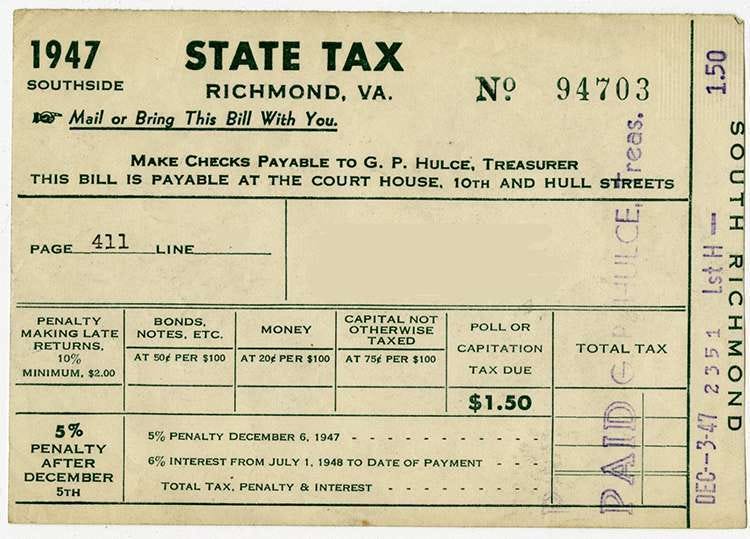
The two majority judges reasoned that the Michigan secretary of state did not “come into” the records making up the state’s voter database the way Congress was thinking about when it wrote the statute six decades prior. The 1960s Congress was worried about preserving voter-registration applications and poll-tax receipts that proved minority voters weren’t being given the right to vote. And it added the provision that state officials preserve these records to protect against their being destroyed.
The key difference is that Michigan itself creates its voter database and continually updates it.
The judges offered a wonderfully helpful analogy to help underscore their reasoning. A baker comes into possession of flour and eggs. Nobody says the baker “came into” possession of the cake she made with them. She built it herself, just as Michigan did with the state voting records.
Federal judges across the country have agreed with the same basic point that the DOJ is asking the 1960s civil rights law to give the feds more power over elections than Congress intended. California Judge David Carter wrote in a January decision that “the Department of Justice seeks to use civil rights legislation which was enacted for an entirely different purpose to amass and retain an unprecedented amount of confidential voter data.” Pennsylvania Judge Cathy Bissoon labeled the DOJ reasoning a “fishing expedition.”
The judges aren’t contending that state voting rolls can be inaccurate, nor are they arguing that the DOJ isn’t a key player in enforcing federal election laws. But they are saying that the DOJ does not have the authority to compel states to hand over protected voter information that the states themselves created.
Trump has a much bigger election plan
Finally, let’s go back to Trump’s July 16 address on election integrity.
For over 25 minutes — longer than an episode of Seinfeld — the president of the United States made sweeping and unsubstantiated claims of fraud in American elections. He alleged China has obtained 220 million US voter files, said that ballot-counting machines are susceptible to foreign interference, and declared yet again that “hundreds of thousands” of deceased and undocumented citizens are registered voters.
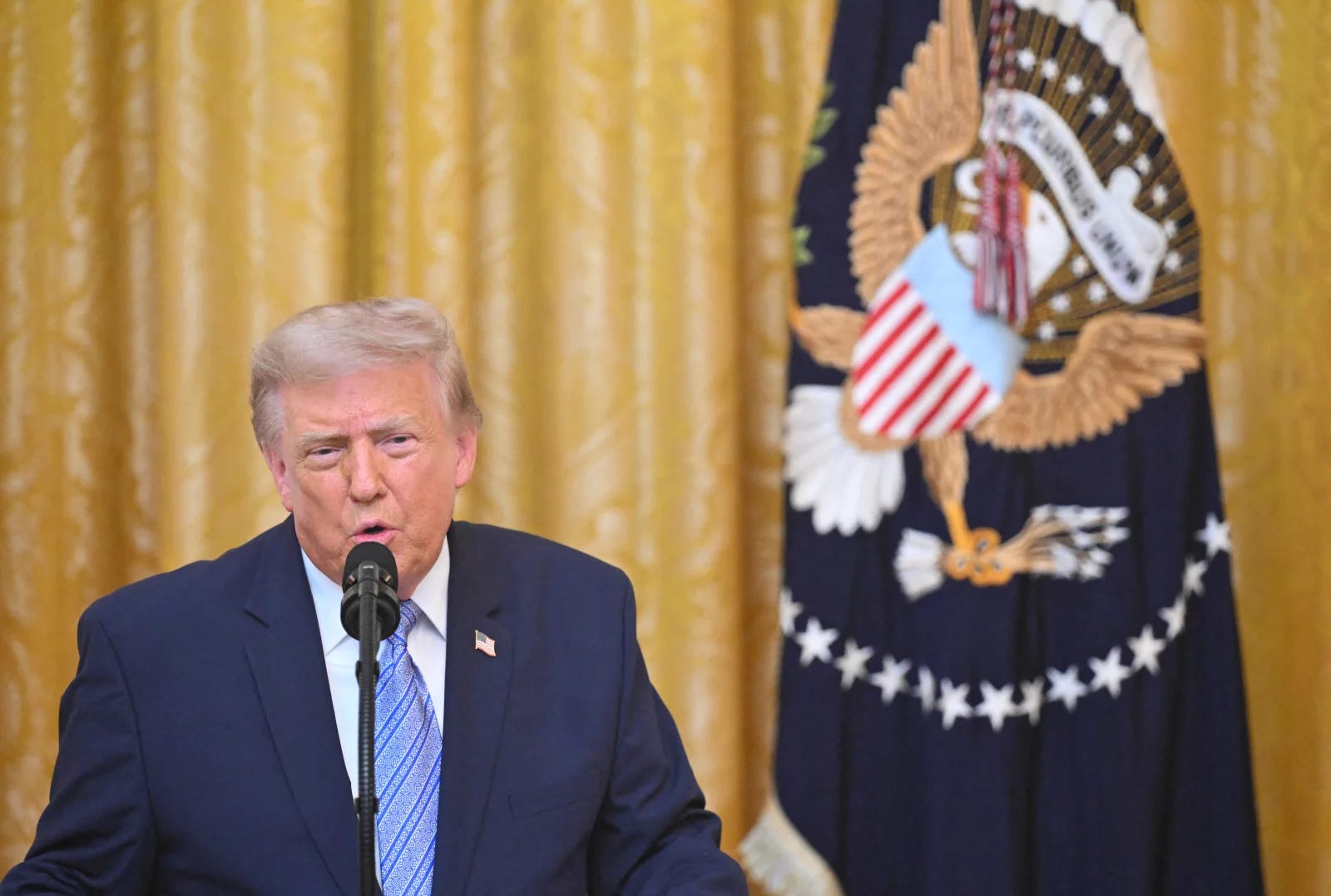
Trump used these assertions to call for a much larger and more aggressive federal role in our elections. He directed states to use DHS’s lists of ineligible voters to clean up their own rolls and said he wanted mail-in voting limited to those who could prove illness, disability, travel, and military service. And he demanded Congress pass the SAVE America Act. Trump needs the law because he knows — and the lawsuit losses are reminding him — that only Congress has the constitutional authority to regulate federal elections. Only a Congress-passed bill can require states to provide voter data to DC or establish national voter-ID rules.
Congress, so far, has proven unwilling or unable to turn Trump’s demands into statute. So the administration has tried to squeeze some of that authority out of laws already on the books. Judges, however, have interpreted those statues to mean that the power the administration seeks simply isn’t there.
Hidden beneath the DOJ’s losing streak is an important reminder about federalism, especially when it comes to elections in the US. Federal elections are purposefully decentralized. State and local governments are tasked with carrying them out in adherence to the federal protections and requirements Congress has deemed necessary. As we’ve seen, it can be a messy arrangement, but one that protects all of us from a federal government — and president — who wants to take over the process.
And as 21 courts have reminded him, if Trump wants his executive branch to run elections, that authority can come from only one place: the United States Congress.
 | A guest post by
|