

The Daily Brief - Feb. 20, 2026
The latest on rising tensions between the US and Iran, the Supreme Court's decision on President Trump's tariffs, and more

These are today’s top stories, delivered straight to your inbox. Read below to catch up on all the news you might’ve missed.
Iran Escalation
Tensions between the United States and Iran have escalated, as diplomatic talks made little progress, and the US has built up its military presence considerably.
Iran’s foreign minister, Abbas Araghchi, said Friday that the US had not actually asked Iran to stop enriching uranium during indirect talks held this week in Geneva — contradicting the administration’s public stance that zero enrichment is a “red line.” A White House official pushed back, saying Trump had been clear that Iran cannot have the capacity to enrich uranium or build nuclear weapons.
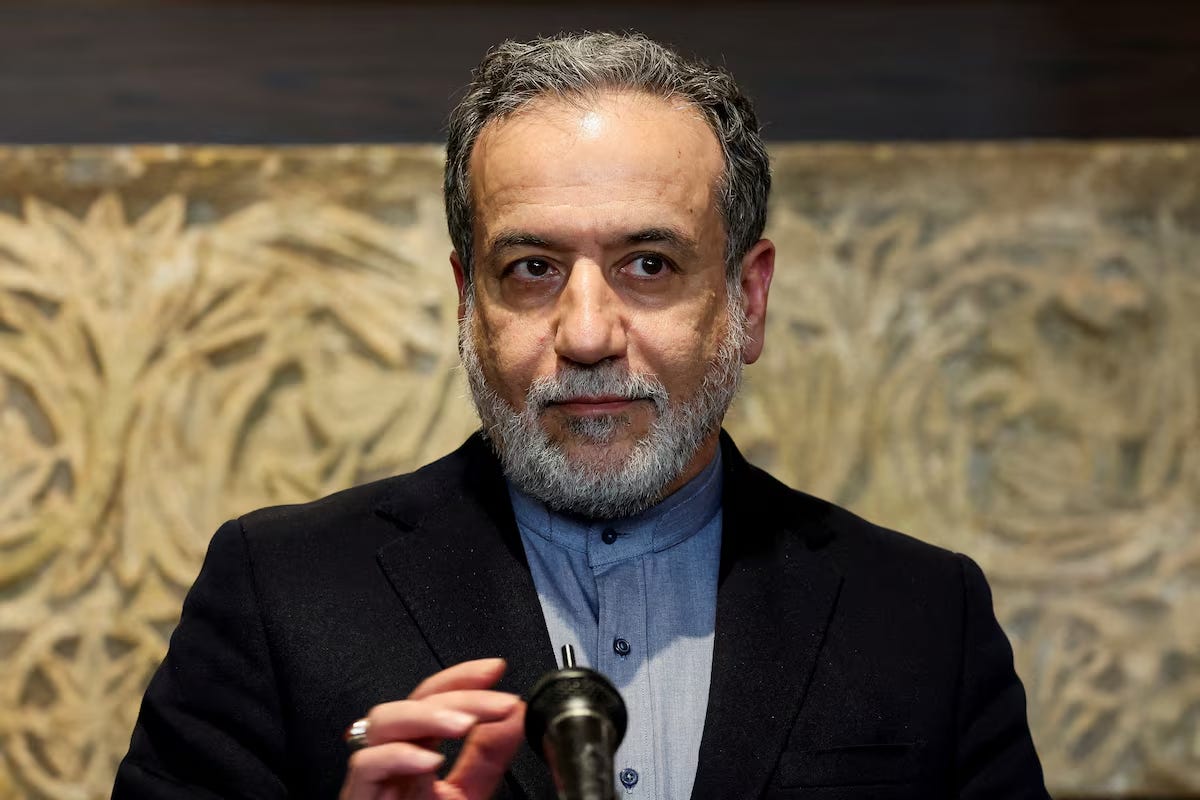
Three Iranian officials told The New York Times that Iran had signaled a willingness to suspend enrichment for three to five years in exchange for the US lifting sanctions. The talks ended with an agreement on guidelines and plans to exchange drafts on a potential deal.
Meanwhile, the Pentagon has assembled its largest Middle East force in two decades, including two aircraft carrier strike groups and dozens of fighter jets. Trump gave Iran 10 to 15 days to reach a deal, warning that “bad things happen” otherwise, and said today he was considering a limited military strike.
Iran warned the UN it would respond “decisively and proportionately” to any attack, calling all US bases in the region “legitimate targets.” Ali Vaez, an Iran expert at the International Crisis Group, warns that unlike after the US’s previous strike on Iran’s nuclear facilities, when Iran’s retaliation was limited in scope, Iran has concluded that “the only way that they can stop this cycle is to draw blood,” and that they might not hold back this time.
Supreme Court Tariff Decision
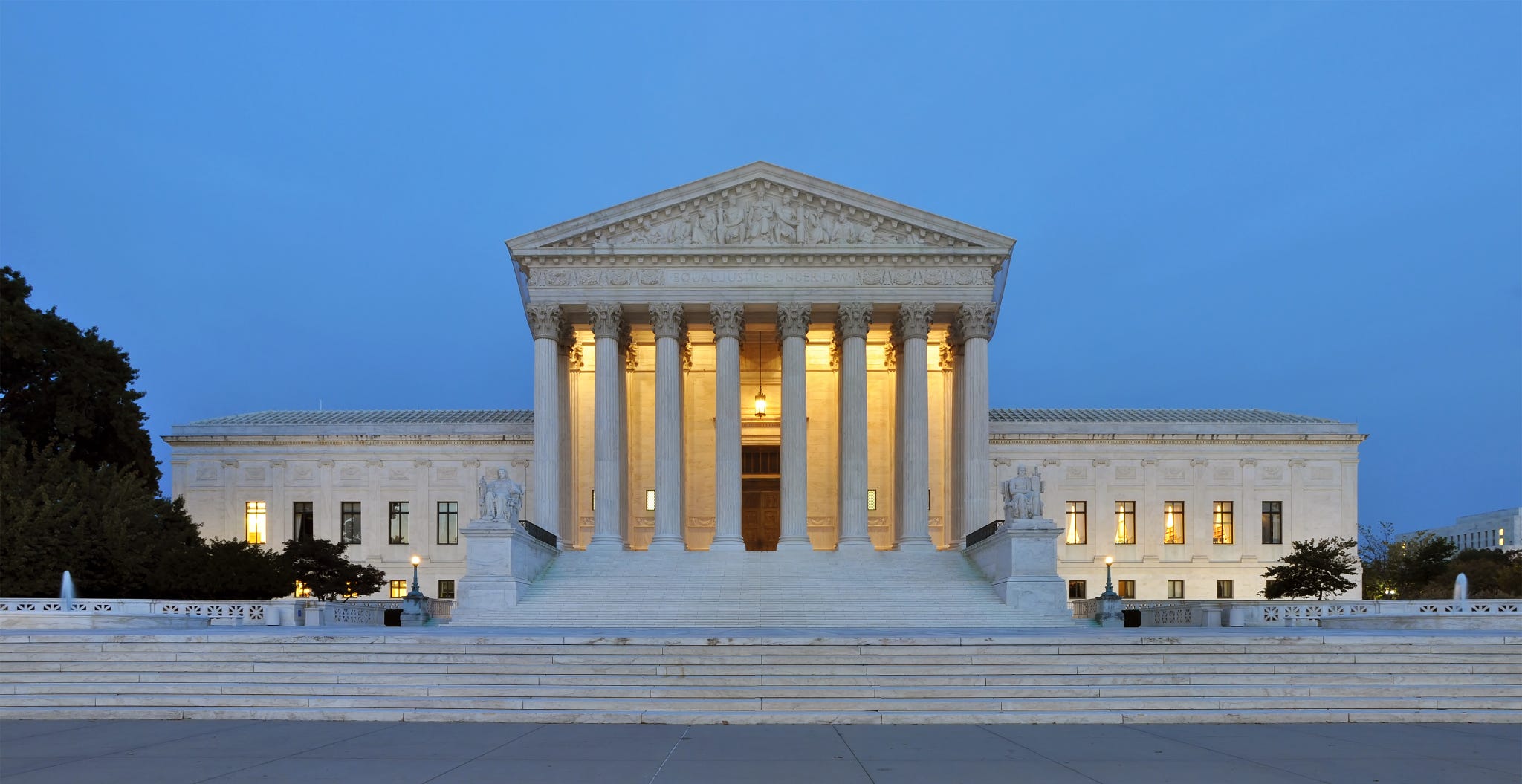
In a 6-3 decision, the Supreme Court struck down President Trump’s wide-ranging tariffs. Tariffs are a tax on businesses that import goods.
When President Trump returned to office in 2025, it was with the promise that he was going to enact broad tariffs to raise funds and to counter what he viewed as unfair trade practices. Because the Constitution gives the power to tax to Congress alone, the president relied on delegated authority, in the form of a federal law called the International Emergency Economic Powers Act (IEEPA). (Delegated authority in this context is power that Congress has voluntarily given away to the executive branch.) In the case of IEEPA, that authority was delegated to deal with economic emergencies. It gives presidents the ability to regulate imports during national emergencies, but up until the Trump administration, IEEPA has never been used to impose tariffs.
To impose tariffs under IEEPA, President Trump declared a national emergency based on trade deficits and what he described as an influx of illegal drugs from Canada, Mexico, and China. On the basis of that emergency, and the fact that the president has the Constitutional role to regulate foreign affairs, Trump then imposed sweeping tariffs on nearly all US trading partners.
In response to these tariffs, a number of different groups sued including small business owners’ whose bottom lines were hurt by the tariffs, and a group of attorneys general from Democratic-led states. In the case that made its way to the Supreme Court, Learning Resources, Inc. v. Trump, the groups argued that IEEPA doesn’t give the president the authority to impose tariffs, because neither a plain reading of the text of the law nor the historical application of the law indicates that it does.
In the majority opinion, written by Chief Justice John Roberts, the court ruled that Congress did not delegate its power to impose tariffs when it passed IEEPA. While the majority agreed on the result, there were some differences in the reasoning justices took to arrive there. One part of the majority opinion, joined by Justices Amy Coney Barrett and Neil Gorsuch, said that Trump’s argument that IEEPA delegated Congress’s tariff-setting authority violated the “major questions” doctrine, which says that if Congress wants to delegate its authority on matters of major political or economic significance, it has to state that clearly. “When Congress grants the power to impose tariffs, it does so clearly and with careful constraints. It did neither here,” Roberts wrote.
Justices Elena Kagan, Ketanji Brown Jackson, and Sonia Sotomayor concurred in the judgment and agreed that IEEPA doesn’t give President Trump the authority to set tariffs, but they reached that conclusion without invoking the major questions doctrine. Instead, they used standard rules for interpreting statutes, and noted that while there is a lot of legislation that gives the President the authority to “regulate” something, but that the power to “regulate,” or make rules about, does not mean “the power to tax.” Imposing tariffs, they concluded, is not a form of regulation, but a form of taxation, which is authority controlled by Congress.
Justices Brett Kavanaugh, Clarence Thomas, and Samuel Alito dissented. Written by Justice Kavanaugh, the primary dissent argued that IEEPA gave the president the authority to impose tariffs because they “are a traditional and common tool to regulate importation,” and agreed with Trump that there’s a foreign affairs exception to the major questions doctrine. The dissent also warned of potential chaos if the US government is forced to issue refunds for the tariffs it has already collected, though the court didn’t make any decision on that.
Justice Thomas dissented separately to argue that the power to impose tariffs isn’t within Congress’s “core legislative power,” and therefore it can be delegated.
Expect further legal action as companies file suits to get their tariff money returned to them.
Tariff Response
President Trump lashed out at the Supreme Court after it struck down his sweeping global tariffs, calling the justices who ruled against him “unpatriotic,” “disloyal,” “an embarrassment to their families,” and “a disgrace to our nation.”
According to the Wall Street Journal, the president first found out about the ruling while in a meeting with the National Governors Association. According to attendees, Trump said to them that he “looked calm but was seething inside.” He then exited the meeting early.
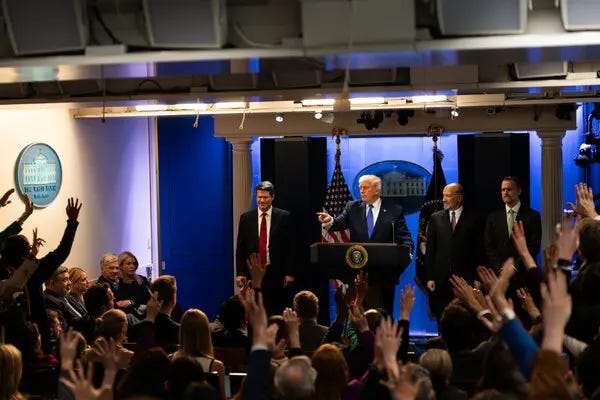
Trump vowed to press forward immediately, announcing he would sign an executive order imposing a new 10% global tariff under Section 122 of the Trade Act of 1974, a statute designed to address trade deficits that allows the president to impose tariffs of up to 15% for up to 150 days. It would be the first time this authority has been used to impose tariffs, and they cannot be extended without congressional approval.
“Their decision is incorrect,” Trump said. “But it doesn’t matter because we have very powerful alternatives.” He claimed there are “methods, practices, statutes and authorities” that “are even stronger than the IEEPA tariffs.”
Trump also warned that the ruling would lead to years of litigation over refunds, since the Treasury had collected more than $133 billion from the tariffs as of December. SCOTUS did not address whether companies that paid those tariffs could get their money back.
DHS Stalemate
As the shutdown of the Department of Homeland Security (DHS) heads into its second weekend, negotiations appear to be at a standstill. Senate Democrats are seeking limitations on federal immigration enforcement agents — including a ban on mask-wearing and restrictions on the use of force — before they will agree to help pass legislation to fund DHS, which manages agencies including ICE, CBP, the Secret Service, and FEMA.
The White House rejected Democrats’ most recent proposal as “very unserious.” So far the shutdown has disrupted some FEMA operations, and if it continues it may lead to airport delays as TSA is impacted too.
Democrats are reportedly considering proposing a bill to fund all DHS agencies except ICE and CBP, which would allow operations to normalize while negotiations continue.
State of the Union Boycott
Several Democratic members of Congress have decided to boycott President Trump’s State of the Union address next Tuesday.
This will be the first State of the Union speech of his second term. The tradition dates back to George Washington, though his speech, and several after, were simply known as an “Annual Message.” The requirement is outlined in the Constitution, which says the president “shall from time to time give to the Congress Information of the State of the Union, and recommend to their Consideration such Measures as he shall judge necessary and expedient.”
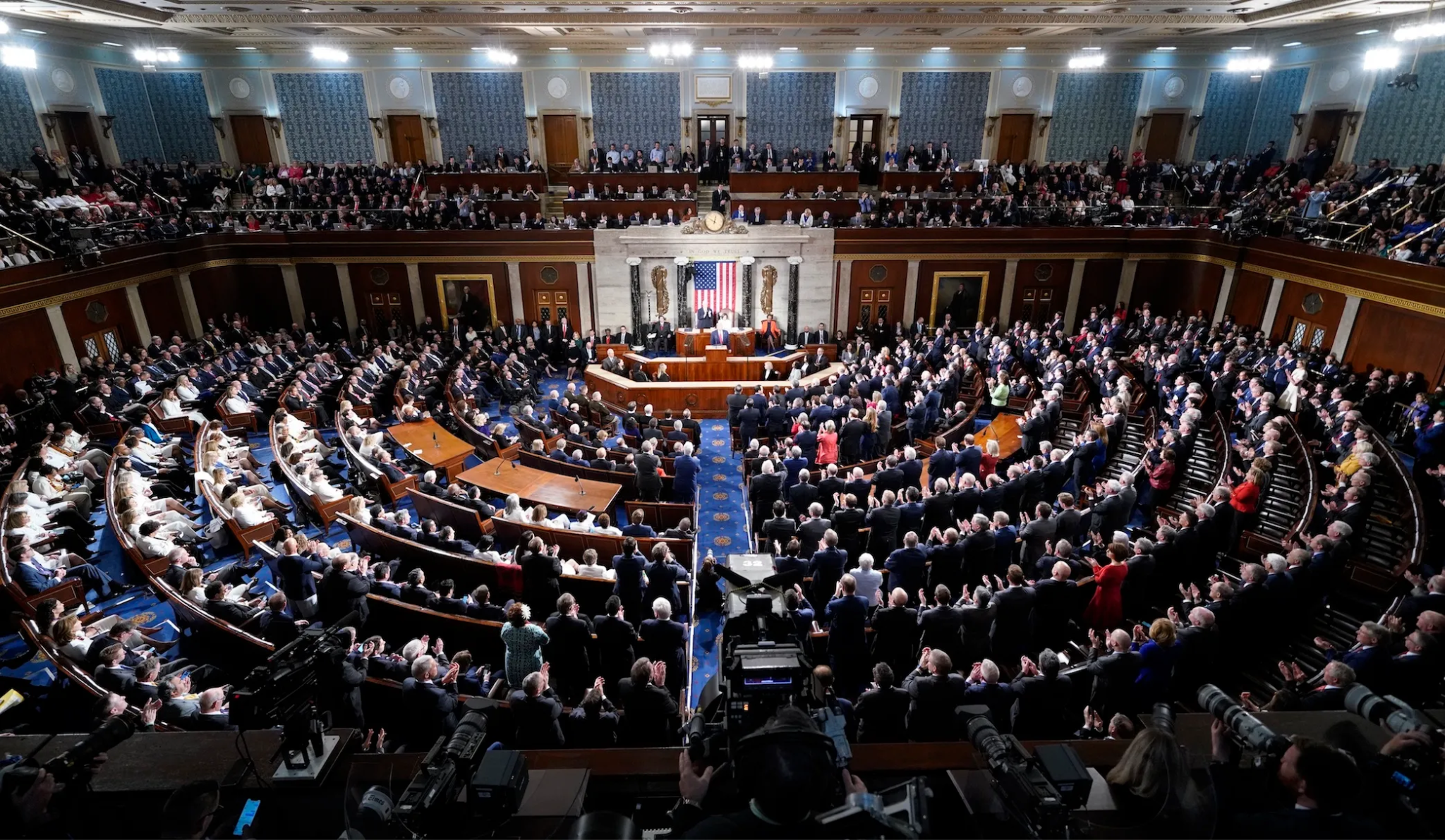
House Minority Leader Hakeem Jeffries said he told members they should sit in “silent defiance” if they attended Trump’s speech this year, or they should make alternative plans. Jeffries said he’s planning to attend because “we’re not going to Donald Trump’s house. He’s coming to our house. It’s my view that you don’t let anyone, ever, run you off of your block.”
There are two alternate events planned during the State of the Union: the “People’s State of the Union” which will be held on the National Mall and is a rally hosted by Democratic groups, like MoveOn and the MeidasTouch. Several senators and representatives are scheduled to speak at that rally.
Sen. Chris Van Hollen, who will speak at that rally, said he is skipping the State of the Union because, “I refuse to be a prop in the chamber as Donald Trump shreds our Constitution and attacks our democracy.”
Some other Democrats are planning to attend a different event called the “State of the Swamp” at the National Press Club. That one is being called a “rebuttal” to Trump’s speech.
This is separate from the official rebuttal that is done each year by a member of the opposing party. This year’s rebuttal from the Democrats will be given by Virginia Governor Abigail Spanberger.
2025 Economic Report
A report released today by the Bureau of Economic Analysis showed the US economy grew by less than expected in the last quarter of 2025. During the third quarter of 2025, Gross Domestic Product (GDP) growth was at 4.4%, but during the most recent quarter, it dropped to 1.4%.
GDP is the measure of all goods and services produced in the US. It’s one indicator of how strong the economy is overall.
The slower growth was due to decreased government spending and exports, though consumer spending and investment increased. Part of the reason government spending was down so much was the 43-day government shutdown in October and November.
Trump blamed the Democrats for the bad numbers, saying on Truth Social, “The Democrat Shutdown cost the U.S.A. at least two points in GDP. That’s why they are doing it, in mini form, again. No Shutdowns!”
American spending was up in part due to increased costs for housing, utilities, and health care. Economist Shannon Grein told The Washington Post, “The economic environment right now is incredibly narrowly driven… Higher-income households are still spending but we’re seeing pullback from middle- and lower-income households.”
The GDP in the fourth quarter was helped by business investments into AI. But overall, the economy only grew 2.2% in 2025, which is the slowest growth since the pandemic in 2020.
Americans are also saving less, with the rate dropping to 3.6%, which is the second-lowest figure since August of 2008, during the Great Recession. That means more people are taking on debt to make purchases.
Inflation also ticked up in December, with the Personal Consumption Expenditures index rising 0.4%, which put inflation at 3.0% for 2025.
It’s stunning a justice would mention the potential after math of the ruling in the dissent. As if that should have any influence on a legal decision. Imagine if all cases were decided that way. That says a lot about this court. Also Trump calling the justices disloyal. Wow.
Just here to say I am so grateful for these daily briefs!