

The Daily Brief - Apr. 24, 2026
The latest on the US-Iran peace talks, a push to bring back firing squads, the end of the Fed chair probe, and more

These are today’s top stories, delivered straight to your inbox. Catch up here on all the news.
US-Iran Peace Talks
The US and Iran are set to meet in Pakistan to resume talks aimed at ending the war that has stretched on since the end of February.
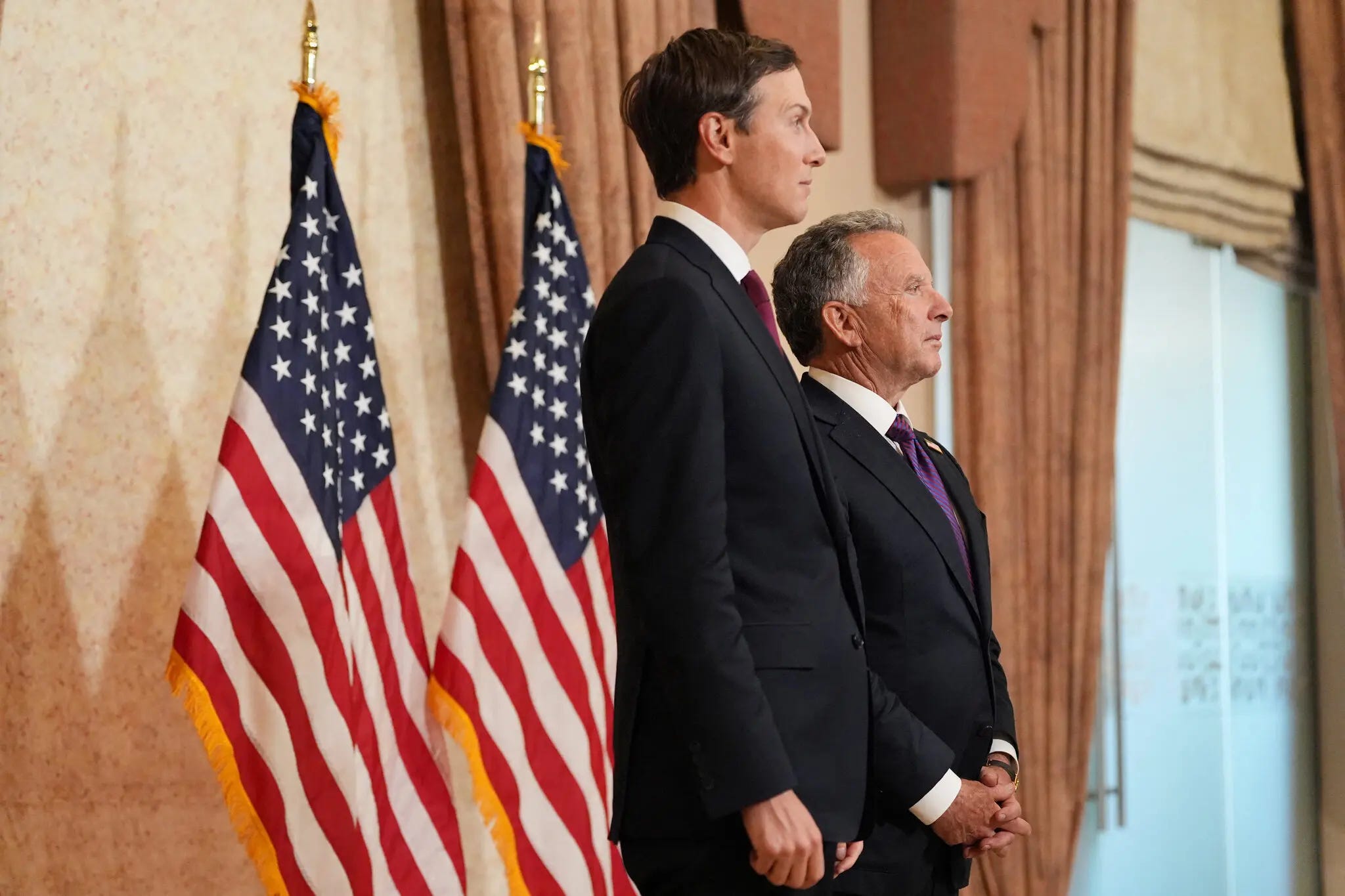
Trump’s lead negotiators on Iran, special envoy Steve Witkoff and the president’s son-in-law and informal advisor Jared Kushner, will travel to Islamabad tomorrow for the talks, administration officials said, adding Vice President JD Vance is ready to travel to Pakistan if the talks progress.
Negotiations had stalled due to the ongoing US naval blockade of Iranian ports. In response, Iran has continued to restrict traffic through the Strait of Hormuz, attacking commercial vessels there as recently as yesterday.
The two sides remain far apart on Iran’s nuclear program, the reopening of the strait, and the lifting of sanctions.
DOJ Recommends Bringing Back Firing Squads
The Justice Department is recommending adding firing squads, electrocution, and gas asphyxiation to the federal government’s options for executing people, according to a report released today by Acting Attorney General Todd Blanche.

Currently, the only allowed federal execution method is lethal injection, but the required drugs have become difficult to obtain. The report cites that difficulty as a reason the federal Bureau of Prisons should modify its execution protocol to include the older methods of firing squad and electrocution, along with the nitrogen-gas method Alabama first used in 2024.
The federal government has used firing squads only in rare military cases, never as a standard method in the civilian system. It used the electric chair from 1927 through the early 1960s, but then stopped carrying out executions for nearly four decades. When federal executions resumed in 2001, lethal injection was the established method.
There are currently three people on federal death row, each of whom is responsible for a mass-casualty attack: Dzhokhar Tsarnaev (2013 Boston Marathon bombing), Robert Bowers (2018 Tree of Life synagogue shooting in Pittsburgh), and Dylann Roof (2015 Emanuel AME Church shooting in Charleston, South Carolina). President Biden put a moratorium on federal executions while in office, and commuted the sentences of the 37 other people who had been on federal death row before he left office.
President Trump rescinded the moratorium and has sought to restart executions, with the DOJ authorizing prosecutors to seek death sentences against nine new defendants since Trump took office.
Justice Dept. Drops Powell Probe
The Justice Department dropped its criminal investigation of Federal Reserve Chair Jerome Powell today, removing the last obstacle to confirming Kevin Warsh as the new Fed Chair when Powell’s term is up. Previously, at least one Senator said they would not vote to confirm Warsh until the DOJ ended their investigation into Powell.
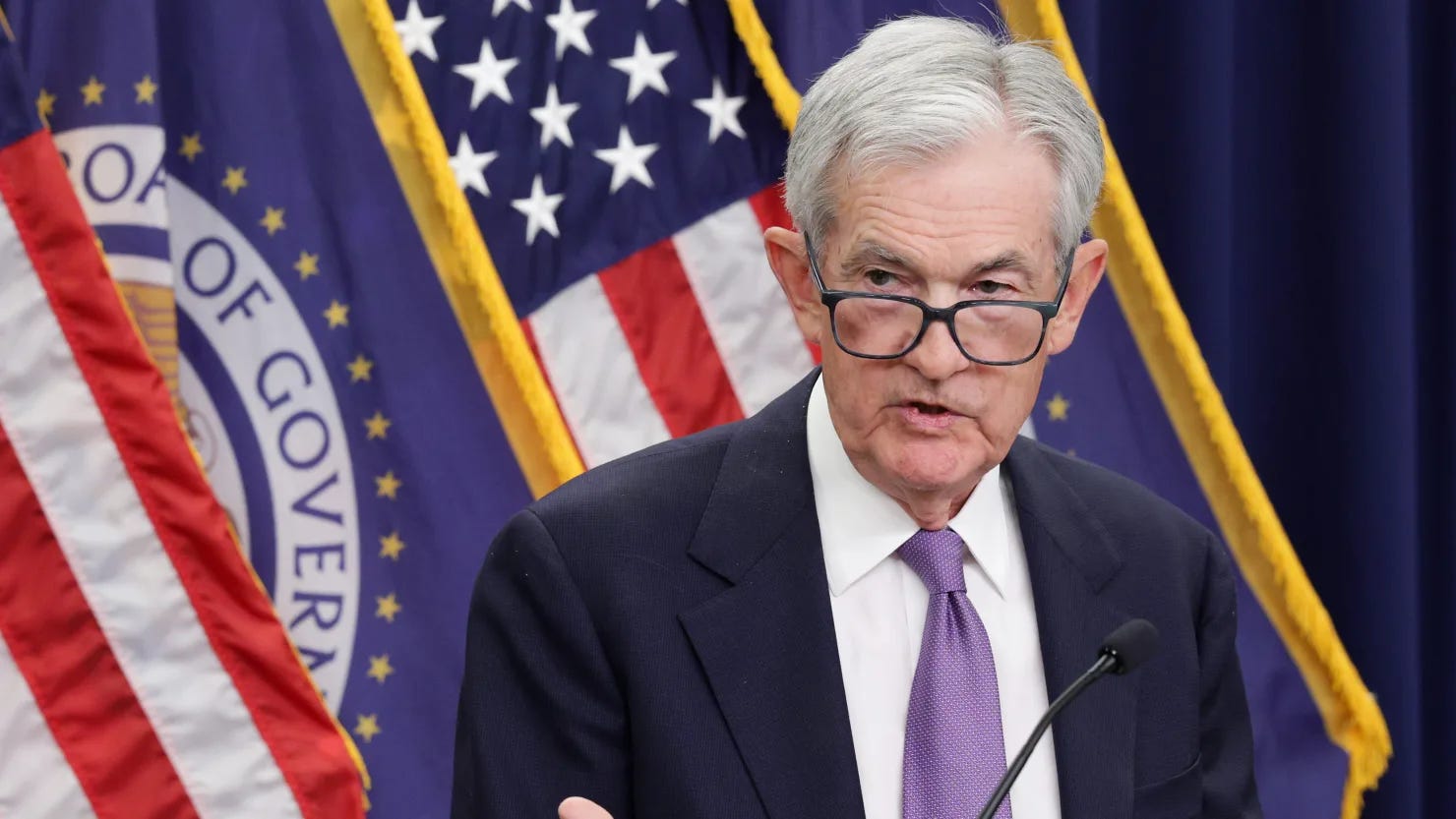
US Attorney Jeanine Pirro, the top federal prosecutor in DC, announced the decision on X, saying she was deferring to the Fed’s inspector general — who has been reviewing the same renovation since July 2025 and has so far found no wrongdoing. Pirro said she would not hesitate to reopen the case “should the facts warrant doing so.” IGs typically launch internal audits to investigate any waste and fraud.
Powell’s term as chair ends May 15, but he is slotted to remain on the Fed board through 2027, and he had said he would stay until the Senate confirmed his successor.
Trump nominated Warsh, a former Fed governor, in January after months of publicly attacking Powell for refusing to cut interest rates as quickly as Trump wanted.
Newsbreak
There’s still time to sign up for Sharon’s private book club — Governerds Insider — but don’t wait too long. Doors only open three times a year, and Season Two is 98% full. This season we’re reading Jill Biden’s memoir and Marjan Kamali’s The Lion Women of Tehran, and both authors are joining us live.
Ibram X. Kendi and Bob Crawford will also be here for private author talks, and Steve Vladeck will teach workshops on the major Supreme Court cases of the term. Registration closes as soon as the seats are full. Click here to enroll.

Pentagon Fires Stars and Stripes Ombudsman
The Pentagon has fired the ombudsman of the military newspaper Stars and Stripes, the latest move in the months-long effort by Defense Secretary Pete Hegseth to take control of the newspaper.

Jacqueline Smith, who has been ombudsman since December 2023, said she was fired for speaking out. In a column published yesterday in the newspaper, she said she had warned the House and Senate Armed Services committees in recent months of her “great and growing concern about attempted control of the newspaper by the Pentagon.” Her last day will be April 28. The Defense Department confirmed her dismissal but gave no reason.
Congress created the ombudsman position in 1991 to safeguard the paper’s editorial independence and report directly to lawmakers on any Pentagon interference. Stars and Stripes has been published continuously since World War II; its staff are Defense Department employees, but it has operated without Pentagon interference in its editorial decisions for decades.
The Pentagon has been trying to reshape the paper for months. On Jan. 15, Pentagon Spokesperson Sean Parnell wrote on X that the department would “modernize” Stars and Stripes and refocus its coverage away from “woke distractions that syphon morale.” The same day, the Pentagon rescinded the federal regulation that had given Stars and Stripes legal protection from interference, replacing it last month with an interim policy that the Defense Department can change at will.
US Weighs Punishing NATO Allies Over Iran War
An internal memo prepared by the Pentagon’s top policy advisor for senior staff outlines proposals to punish NATO allies that refused to back the US war on Iran, Reuters reported today.
The memo, described to a US official on condition of anonymity, expresses frustration that some allies refused to grant the US “access, basing and overflight rights” for operations against Iran.
The email lists the options for punishing allies, including suggestions of suspending Spain from NATO, and reviewing US support for Britain’s claim to the Falkland Islands, which is contested by Argentina.

Spain has been the most vocal European critic of the war and refused to let US military aircraft use its airspace. The email is said to describe “decreasing the sense of entitlement on the part of the Europeans.”
The NATO treaty doesn’t contain a provision for suspending or expelling a member state. The only path out is voluntary withdrawal, so it’s unclear how the US could force Spain out.
Wisconsin Sues Online Betting Platforms
The Wisconsin Department of Justice sued five online prediction-market platforms yesterday, accusing them of running illegal sports betting in the state.

Attorney General Josh Kaul filed lawsuits asking a court to bar Kalshi, Robinhood, Coinbase, Polymarket, Crypto.com, and their affiliates from offering sports betting for customers located in Wisconsin.
The platforms market their “event contracts” as financial instruments that pay out based on real-world outcomes, including who wins a game or covers a point spread. Kaul’s office argues the contracts are functionally identical to traditional sports bets and therefore violate state gambling law.
Sports betting has been legal in Wisconsin since 2021, but only in person at tribal casinos. Gov. Tony Evers signed a law on April 9 that legalized online sports betting statewide, but only if the servers processing the bets are physically located on tribal land.
The companies have signaled they will fight the lawsuits.
Trump Administration Reclassifies Medical Marijuana
The Justice Department reclassified state-licensed medical marijuana from Schedule I to Schedule III of the Controlled Substances Act yesterday, which gives state-licensed medical marijuana operators a major federal tax break and also eases restrictions on cannabis research.

Moving medical marijuana to Schedule III places it alongside drugs like ketamine, Tylenol with codeine, and anabolic steroids — categories the federal government considers to have accepted medical use and a lower potential for abuse than Schedule I drugs like heroin. Scientists who study the medical effects of cannabinoids have been requesting reclassification for a long time.
The change does not legalize marijuana for medical or recreational use under federal law, and it does not affect anyone incarcerated on federal marijuana charges.
The DEA will hold an administrative hearing beginning June 29 to consider whether to reschedule marijuana more broadly, beyond just the medical category.