

The Daily Brief - Apr. 17, 2026
The latest on the Strait of Hormuz, the repeal of a Minnesota mining ban, charges against an ICE agent, and more

These are today’s top stories, delivered straight to your inbox. Catch up here on all the news.
Iran Opens Strait Of Hormuz; US Blockade Stays
Iran’s Foreign Minister Abbas Araghchi announced today that the Strait of Hormuz is “completely open” for commercial vessels for the duration of the 10-day Israel-Lebanon ceasefire, which was brokered by the United States and went into effect at midnight yesterday.
Ships must use a designated route — the same corridor through which Iran has been collecting tolls of up to $2 million per vessel since the war began.

Following Araghchi’s remarks on X, President Trump said the US naval blockade of Iranian ports — in place since talks with Iran collapsed in Pakistan last weekend — will remain “in full force” until a peace deal is signed. In practical terms, that means the strait is open to shipping traffic traveling between other countries, but vessels headed to or from Iran’s own ports remain blocked by the US Navy.
Meanwhile, about 20,000 sailors and 2,000 ships carrying around 21 billion liters of oil are stuck in the waterway.
The two-week US-Iran ceasefire brokered by Pakistan expires April 22 and the two sides might resume negotiations in Pakistan soon, according to several reports. The sticking points in negotiations include Iran’s nuclear program, the future of the Strait — including whether Iran can collect tolls it has imposed since the war began — Iran’s frozen assets in European banks, and the lifting of US and EU sanctions.
The US is reportedly considering releasing $20 billion in frozen Iranian funds in exchange for the country’s enriched uranium stockpile. Trump denied this on Truth Social, saying the US will acquire the uranium but that “no money will exchange hands in any way, shape or form.”
Congress Repeals Ban on Minnesota Mining
The Senate voted 50-49 Thursday to overturn a mining moratorium near Minnesota’s Boundary Waters Canoe Area Wilderness, clearing the way for a mine project. Two Republicans — Sens. Thom Tillis of North Carolina and Susan Collins of Maine — voted against the measure along with Democrats. The Boundary Waters Canoe Area Wilderness is a 1.1 million-acre network of lakes and forests in northeastern Minnesota, bordering Voyageurs National Park to the west and Quetico Provincial Park in Canada to the north. Pollution from a mine in its watershed, environmentalists warn, would not stop at those borders.

The ban was imposed on about 350 square miles of the Superior National Forest by the Biden administration in 2023 and was intended to remain in effect until 2043. House Republicans voted to overturn the ban last month. The bill now heads to President Trump, who is expected to sign it.
The vote opens the door for Twin Metals Minnesota, a subsidiary of Chilean mining giant Antofagasta, to resume efforts to build an underground copper and nickel mine in the Superior National Forest. The company’s proposed mine site is about 5 miles southwest of the wilderness area, in land within its watershed, the network of streams and lakes that drain into it and that feed its water supply.
Environmentalists warn that pollution from mining operations will flow through the wilderness area’s watershed, contaminating it with mercury and sulfides. They say fish, wildlife and plants will suffer — particularly the wild rice central to Minnesota’s Ojibwe tribal culture.
The repeal was driven largely by Rep. Pete Stauber, a Minnesota Republican who chairs the House Natural Resources Committee. Stauber co-sponsored the House measure and has championed Twin Metals’ project for years. Stauber received contributions from the mining industry in at least three election cycles. When the Biden administration imposed the ban in 2023, Stauber said blocking domestic mining while China and Russia develop their own mineral reserves means “China and Russia are laughing straight to the bank.”
Judge Halts Ballroom Construction Again
A federal judge ruled yesterday that above-ground construction on President Trump’s proposed White House ballroom must stop until Congress authorizes the project, reaffirming an earlier order that the judge said the administration had tried to circumvent.

The ruling drew a line between two things happening at the same site. Below ground, the administration is building a new presidential bunker to replace a World War II-era facility demolished when Trump tore down the East Wing last year. Trump has said the complex will include bomb shelters, a hospital, drone-proof ceilings and secure military communications, and that the ballroom above ground is essentially a roof over it. The judge wrote that work on underground structure is allowed to continue but the work on the 90,000-square-foot ballroom must stop.
The administration has argued the two were inseparable, but the judge rejected that. “National security is not a blank check to proceed with otherwise unlawful activity,” he wrote in his order.
Leon first ordered construction halted on March 31, pending congressional approval. It is estimated to cost $400 million and seat roughly 1,000 guests.
Newsbreak
No matter who you’re talking to, The Next Conversation gives you immediately actionable strategies and phrases that will forever change how you communicate. Written by Jefferson Fisher, trial lawyer and one of the leading voices on real-world communication, the book offers a tried-and-true framework and phrases that will lead to powerful results, from breaking down defensiveness in a hard talk with a family member to finding your own assertive voice at the conference table at work. And don’t miss the new companion workbook, The Next Conversation: Practical Exercises for Arguing Less and Talking More, which will help you start applying your new skills.

Congress Briefly Extends Warrantless Surveillance Law
After a late-night standoff, Congress voted to keep a federal surveillance program — Section 702 of the Foreign Intelligence Surveillance Act (FISA) — alive for two more weeks. But it did not extend the program for 18 months that the White House has sought. The president is expected to sign the extension.
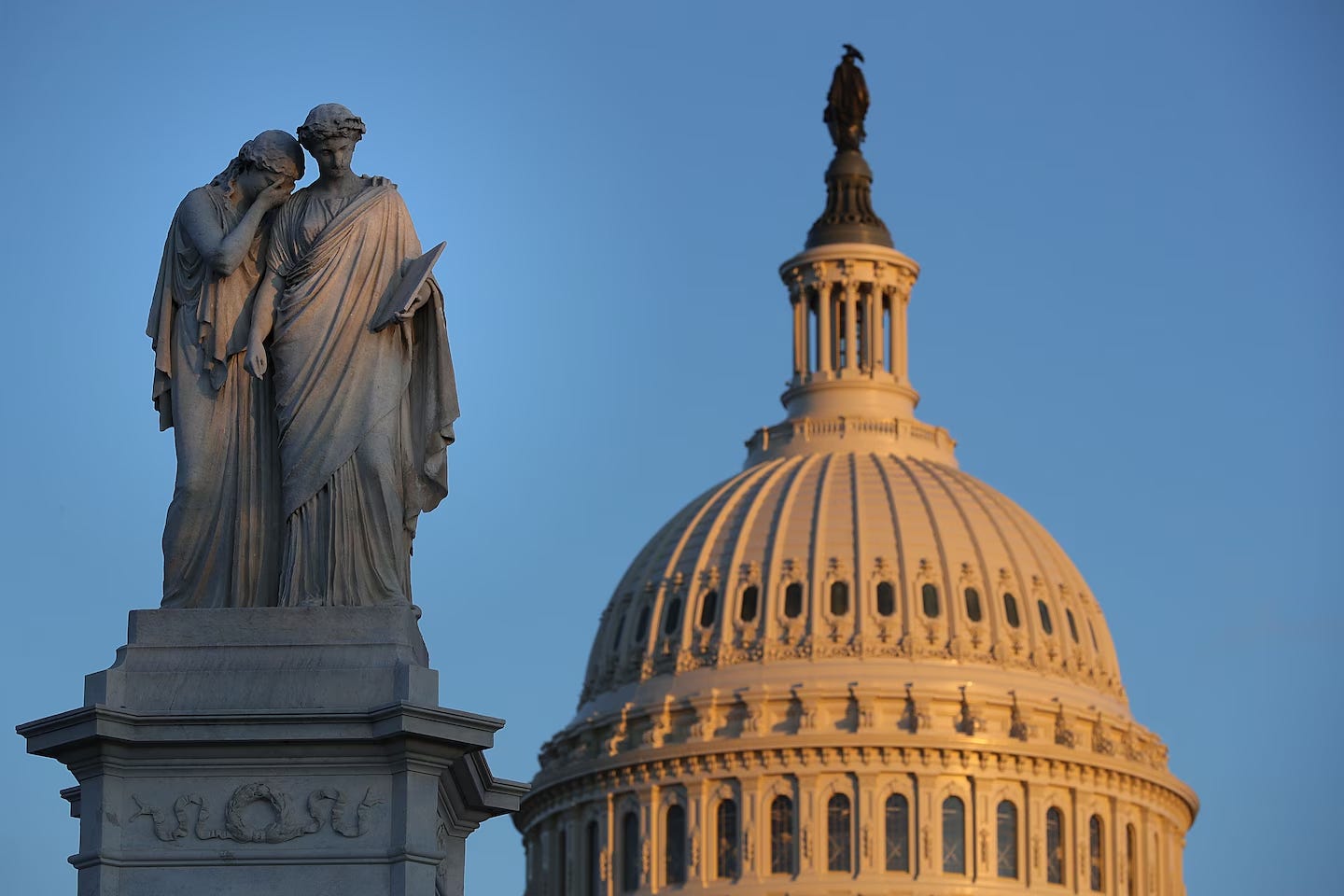
Passed after the Sept. 11 attacks, FISA allows US intelligence agencies to collect the electronic communications of foreign nationals located outside the country — without obtaining a warrant. The National Security Agency uses it to order phone and internet companies to hand over messages sent to or from targeted foreigners. The government says the program is one of its most important tools for tracking terrorism, cyberattacks and foreign espionage.
The law authorizing the program was set to expire on April 20. Trump and House Speaker Mike Johnson pushed for a straightforward 18-month renewal with no changes attached, but a group of roughly 20 House Republicans joined most Democrats and blocked it.
These members remain opposed to extending warrantless surveillance powers without reforms, like requiring warrants if the government intends to collect data of American citizens.
The two-week clock gives Republican leadership until April 30 to make a deal.
Election-Denying Attorney Loses Law License
Attorney John Eastman, one of the primary architects of the legal strategy to attempt to overturn the 2020 election, has been disbarred.
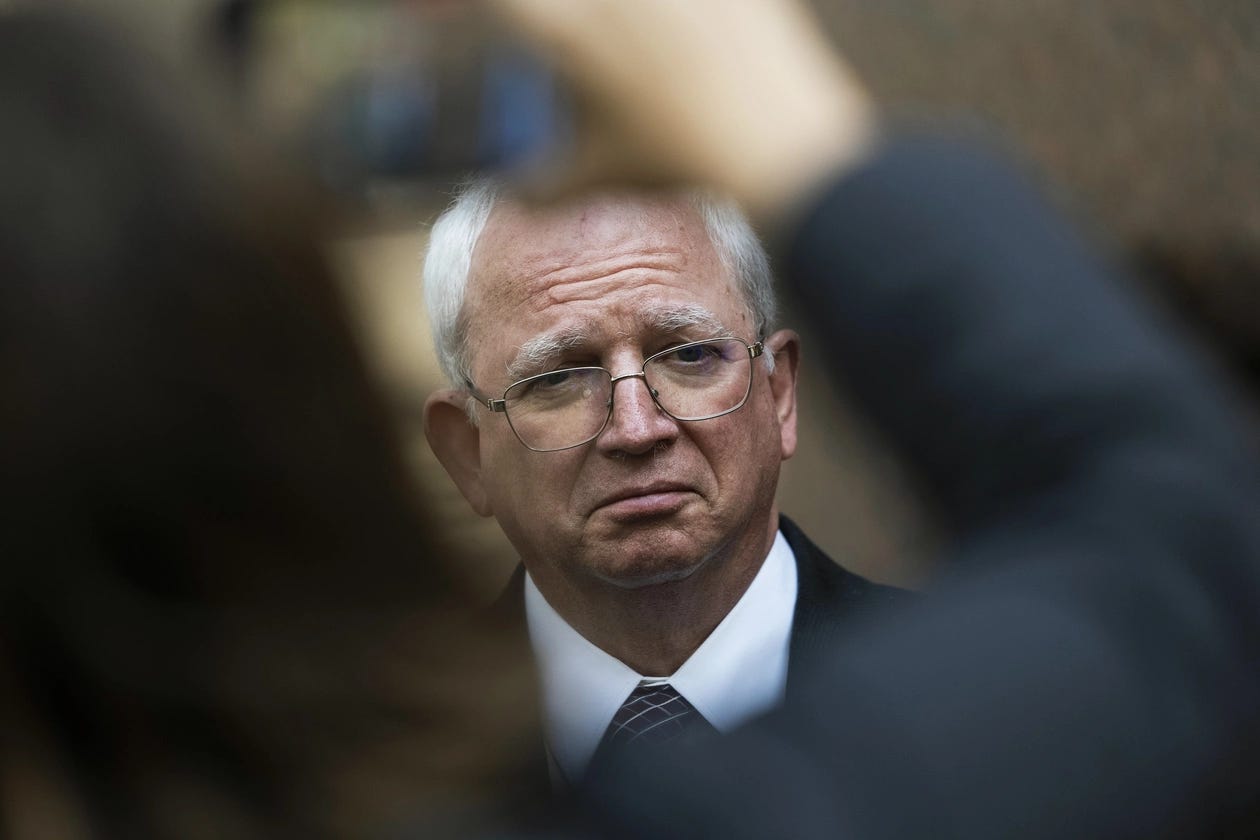
Eastman argued that Vice President Mike Pence had the authority to reject or delay counting certain Electoral College votes when Congress met on Jan. 6, 2021 to certify the election results. In memos circulated before that session, Eastman outlined two paths: Pence could unilaterally refuse to count electoral votes from disputed states, potentially throwing the election to the House, or he could delay certification to let state legislatures revisit their electors. The strategy relied on disputed claims of election fraud. Pence rejected the plan, saying he lacked such authority.
A lower court disbarred Eastman in 2024 for “unethical actions” in promoting election fraud claims that had been debunked. Eastman appealed to the state supreme court, which denied his petition yesterday and struck his name from the roll of California attorneys. Eastman’s attorney said they plan to seek review at the US Supreme Court.
ICE Agent Charged
A Minnesota county attorney yesterday announced they were charging an ICE agent with two counts of second-degree assault. The agent, Gregory Donnell Morgan Jr., 34, of Maryland, allegedly pointed a gun at two commuters during a Minneapolis highway confrontation in February. A nationwide warrant has been issued for his arrest.

Morgan was sent to Minneapolis for Operation Metro Surge, a federal immigration enforcement operation that ran from Dec. 1, 2025 through mid-February 2026. Prosecutors say on Feb. 5, Morgan was driving on the shoulder of the highway to bypass traffic when another vehicle briefly swerved into his lane and then rejoined traffic. Morgan allegedly pulled alongside the vehicle, opened his window and pointed his weapon directly at both occupants while continuing to drive on the shoulder. The occupants, unaware Morgan was a federal agent because he wore no uniform and drove an unmarked vehicle, later told investigators they thought he was a “crazy person.”
Hennepin County Attorney Mary Moriarty said she believes this is the first criminal case brought against a federal immigration officer involved in the Trump administration’s immigration crackdown. The Department of Homeland Security and the Justice Department have not yet responded to the announcement of the charges.
ICE Director To Step Down
Acting ICE Director Todd Lyons submitted his resignation yesterday. Lyons said in a letter to Homeland Security Secretary Markwayne Mullin that he is leaving to take a job in the private sector. His last day will be May 31.
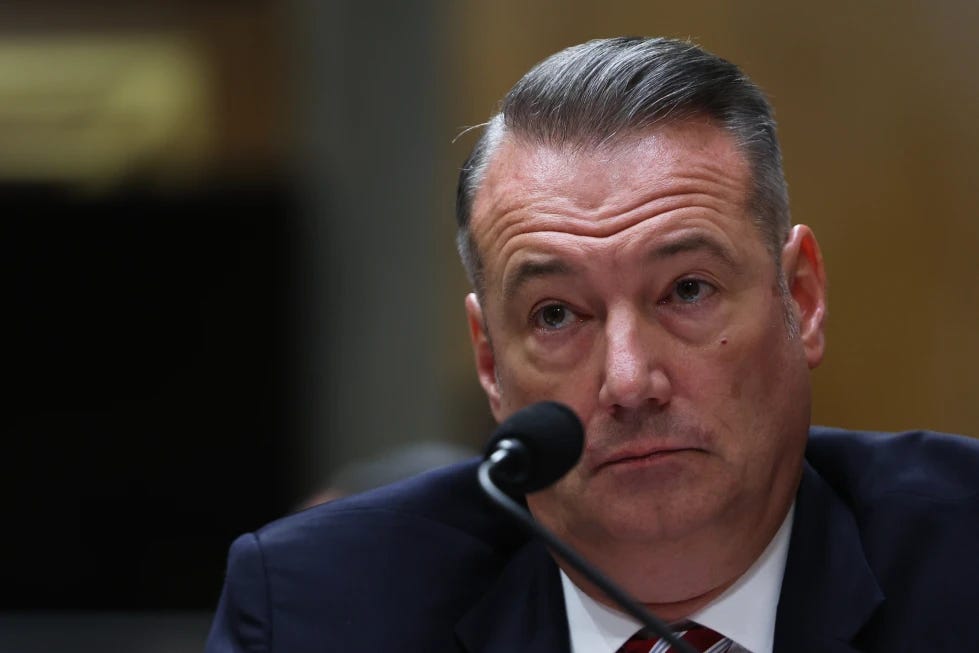
Lyons has been acting director since March last year. He led ICE through an aggressive immigration enforcement campaign that drew legal challenges and protests nationwide. The scrutiny has been particularly focused on the fatal shootings of US citizens Renee Good and Alex Pretti in Minneapolis in January. At least 13 immigrant detainees have died in ICE custody in the first three months of 2026, bringing the total since Trump’s reelection to 46.
No replacement for Lyons has been announced.
CDC Director
President Trump nominated Dr. Erica Schwartz yesterday to be the next director of CDC. “She is a STAR!” Trump wrote on Truth Social.

Schwartz served as deputy surgeon general during Trump’s first term. She is a retired rear admiral and a board-certified preventive medicine physician who spent more than 20 years in uniform, including as chief medical officer of the US Coast Guard.
Schwartz is a proponent of vaccines, which puts her at odds with Health and Human Services Secretary Robert F. Kennedy Jr., a vaccine skeptic. Kennedy has falsely linked vaccines to autism. Since Kennedy fired Schwartz’s predecessor, Dr. Susan Monarez — who said she was dismissed after refusing to implement Kennedy’s preferred changes to vaccine policy — the agency has been led on a temporary basis by Dr. Jay Bhattacharya, the National Institute of Health director, whose authority to serve in that role expired last month under federal law limiting how long acting officials can serve.
Mining near Minnesota’s Boundary Waters Canoe Area Wilderness will be devastating to wildlife, to recreation, and to the small businesses supporting that recreation. 😢🥺😭