

Something Has Shifted for Ukraine
Time may not be on Russia’s side anymore

Since the start of Russia’s war in Ukraine, the dominant story has been one of slow, grinding inevitability. Russia was bigger, richer in manpower, and willing to absorb casualties at a scale democracies could not sustain politically. Ukraine was brave but outmatched. American support kept Kyiv in the fight, but American patience, as everyone in Washington knew, had a shelf life.
For three years, the conventional wisdom was that time favored Russia — that Ukraine was slowly running out of men, ammunition, money, and international attention.
Something has shifted. On the battlefield, in the diplomatic corridors of Europe, and even inside Russia itself, signs are emerging that time may no longer be working entirely in Putin’s favor. Russia’s economy is under strain. Europe is more engaged than at any point since the invasion began. Ukraine has found new ways to offset Moscow’s advantages in manpower and resources.
None of that guarantees a breakthrough. But it does create something the war has lacked for years: a potential opening to end the war.
Let’s start with the numbers, which are not leaning in Russia’s favor. According to the Institute for the Study of War, Russian forces gained 9.76 square kilometers per day in the first four months of 2025. Over the same period this year, that figure has fallen to 4.6 square kilometers — less than half the previous pace. Ukraine has, for the first time since 2023, recaptured more terrain than Russia has gained, according to Institute for the Study of War analyst George Barros.
This doesn’t mean Russia is losing the war. Russian forces continue to gain territory, and Ukraine remains dependent on outside military and financial support. What has changed is the pace and cost of Russia’s advances. For much of the war, Moscow’s gains appeared slow but unstoppable — a matter of time and math. Those calculations look less favorable today.
Ukraine has built what military analysts now describe as a drone “kill zone” along the front lines — a dense, overlapping web of mass-produced unmanned aerial vehicles that can spot, track, and strike advancing troops before they reach Ukrainian positions, turning Russian infantry assaults into costly, grinding attacks that are increasingly expensive to sustain. The manpower advantage Russia has always counted on is being eroded — not by Ukraine matching it soldier for soldier, but by substituting machines for the men Ukraine doesn’t have.
By some estimates, Ukraine’s drone production has now exceeded Russia’s. Ukrainian defense firms have developed AI systems that identify targets faster than human operators can, and data-sharing networks that let commanders across different units coordinate strikes in real time — compressing the window between spotting a threat and destroying it. Combined with long-range precision strikes, this has turned Ukraine from a one-way recipient of Western military aid into a source of battlefield knowledge that NATO, Gulf states, and others are actively trying to acquire.
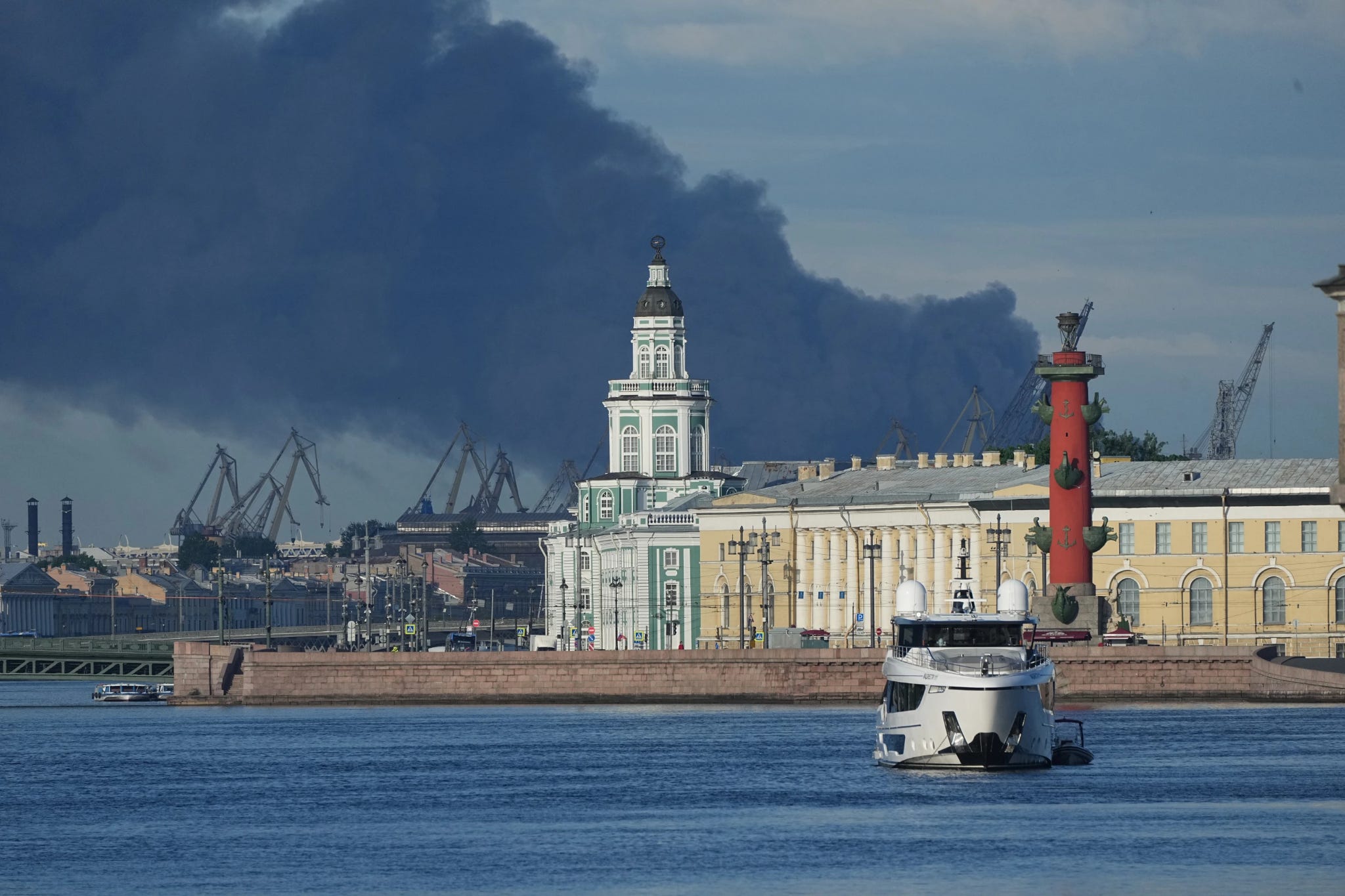
That long-range capacity deserves its own attention. Ukraine is now hitting targets more than 1,000 kilometers inside Russia, using domestically produced drones and cruise missiles built precisely because Western allies balked at letting Kyiv use their weapons to strike Russian soil. Last week’s drone strikes on St. Petersburg — timed to coincide with Putin’s St. Petersburg International Economic Forum, his annual Davos-type showcase of Russian stability and prosperity — made the point with uncomfortable clarity: Ukraine can reach beyond the battlefield into highly populated cities.
Costs becoming harder to hide
Russia’s economy has proven far more resilient than many Western analysts predicted in 2022, but resilience is not the same thing as health. Labor shortages are affecting industries far removed from the defense sector. Interest rates remain elevated. Defense spending now consumes an ever-larger share of the federal budget. Oil revenues remain vulnerable to sanctions and price fluctuations. None of these pressures has created a tipping point, but together they describe an economy increasingly organized around sustaining a war that was never supposed to last this long.
That reality is becoming harder for ordinary Russians to ignore and is chipping away at the Kremlin’s long-running effort to keep the war psychologically distant from daily life. Russia’s state-owned polling institution, the Russian Public Opinion Research Centre, reported in April that Russians are more likely to protest than at any point since the war began.
Europe steps up
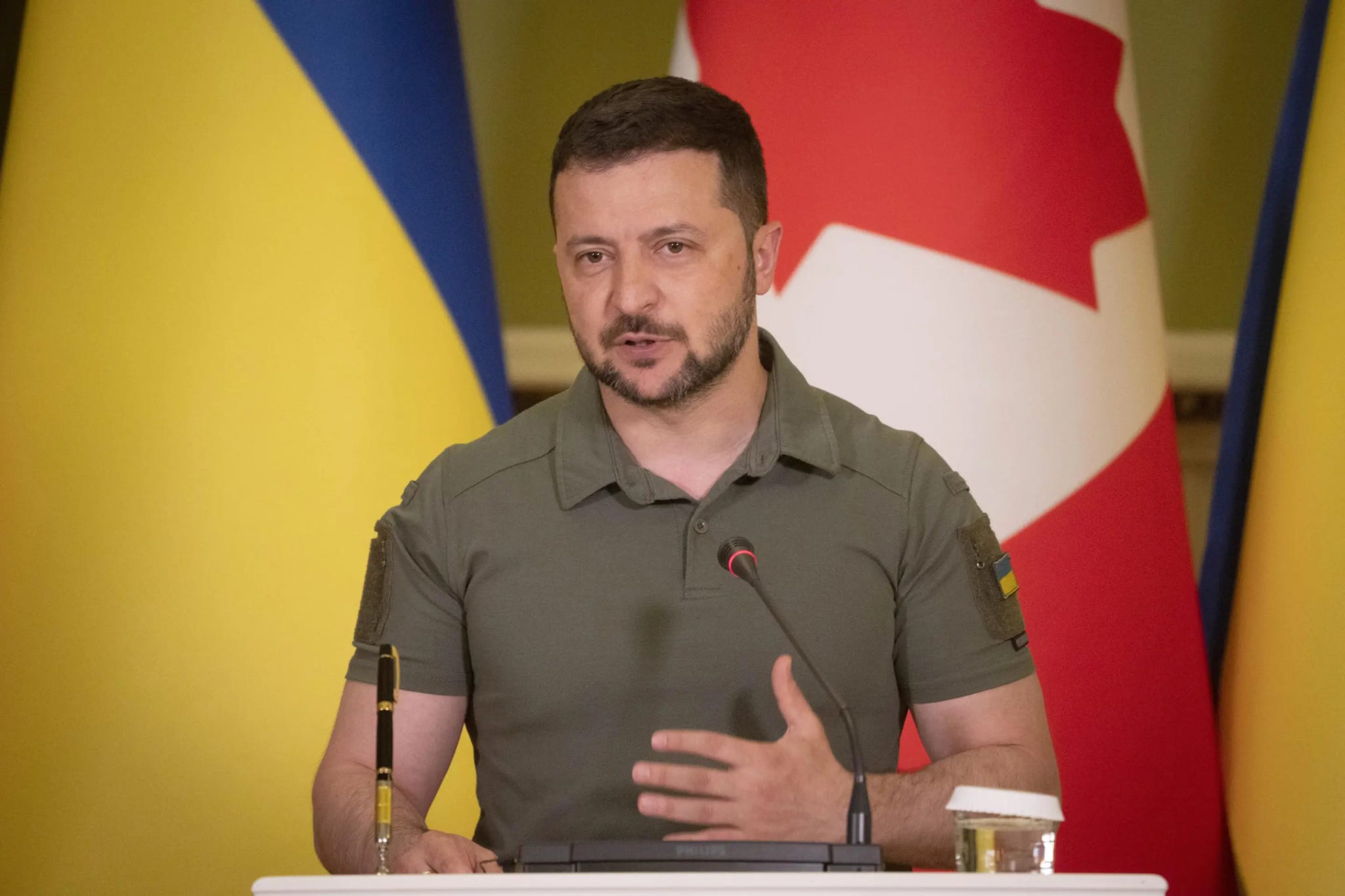
On Sunday, Ukrainian President Volodymyr Zelensky met in London with British Prime Minister Keir Starmer, French President Emmanuel Macron, and German Chancellor Friedrich Merz. The four leaders issued a joint statement laying out five conditions for a “just and lasting” peace, including a halt to fighting, negotiations from current battlefield positions, and robust security guarantees for Ukraine. The statement noted that Ukraine’s right “to choose its own security arrangements and alliances must be fully respected” — a direct rebuke to Moscow’s insistence that NATO membership for Ukraine be permanently taken off the table.
European leaders are careful to say they are not seeking to replace Washington as mediators. But the distinction is getting harder to maintain. The European Union has committed roughly $105 billion in loans and support to Ukraine. Britain and France are leading efforts to provide post-war security guarantees. When Zelensky wrote an open letter to Putin last week calling for direct talks, he specified that Europe should be part of the process — not as a diplomatic courtesy, but as a reflection of where much of the diplomatic energy now resides.
No one formally handed Europe a larger role. After more than a year of watching American-led diplomacy struggle to gain traction, European governments increasingly concluded that waiting for Washington to lead was no longer a strategy.
Trump’s moment and his absence
Trump entered his second term convinced he could end the war quickly. For a time, his combination of direct engagement with Putin and pressure on Zelensky suggested he might at least force the parties to the table. Instead, Moscow remained committed to demands that amounted to Ukrainian surrender, and negotiations stalled.
As the talks bogged down and Trump concluded that neither side was prepared to make meaningful concessions, he shifted his focus to other conflicts. Gaza offered the possibility of a ceasefire. Venezuela produced the dramatic capture of Nicolás Maduro. Iran, at least initially, held out the prospect of a quick military victory followed by a negotiated settlement. Ukraine, by contrast, offered no obvious path to a deal. The conflict remained what it had always been: a long war requiring sustained attention rather than a quick diplomatic breakthrough.
Conflicts of this kind rarely end because conditions ripen on their own — they end because someone with real leverage decides it’s time to push. The irony is that the leverage that analysts once argued Trump was applying too heavily to Kyiv may now be more useful when directed at Moscow as conditions worsen for Russia. Trump could threaten tighter sanctions enforcement, secondary sanctions on Russian energy exports, and greater pressure on the networks helping Moscow evade existing restrictions. Yet those measures require sustained political attention that Trump isn’t showing.
What comes next
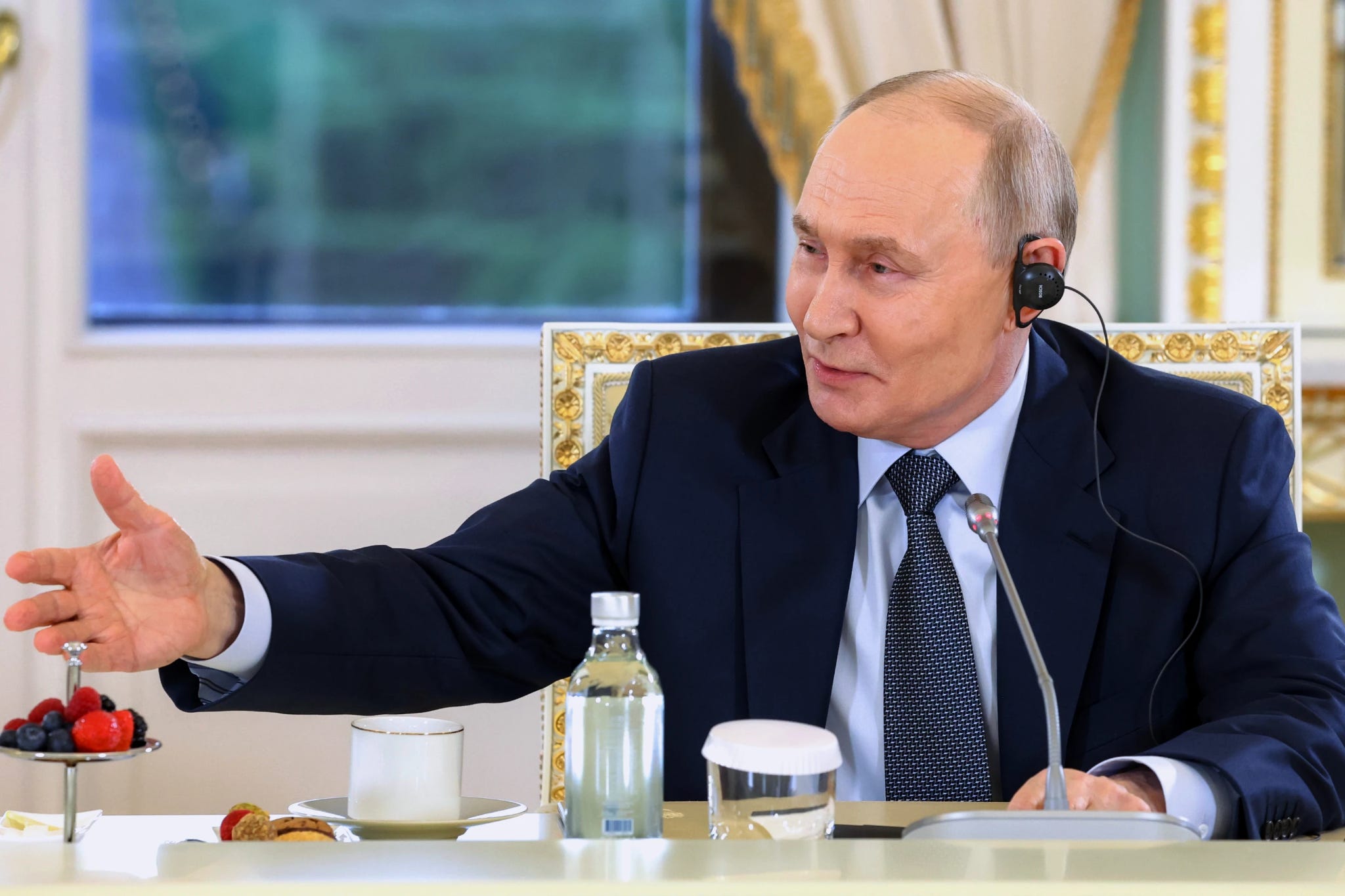
Putin continues to reject direct talks with Zelensky, and the Kremlin’s public posture doesn’t suggest he has abandoned his core objectives. That remains the stumbling block. But Zelensky has now signaled a willingness to discuss difficult questions, including freezing current front lines under Russian control, as the basis for a ceasefire arrangement that could hold — a significant shift from his earlier position.
History suggests the cost of failing to seize such moments. The Korean War ground on for two years after the front lines stabilized, both sides absorbing casualties for terrain neither could hold. The Iran–Iraq War lasted eight years and killed perhaps a million people before both governments finally acknowledged that continuing served no purpose either could articulate. In both cases, the conditions for negotiation existed long before anyone acted on them.
Ukraine’s stronger negotiating position, Europe’s diplomatic push, and Russia’s increasing military, economic, and political pressure have arguably put the war’s end in reach. What’s missing is a catalyst: a leader with genuine leverage who decides that pushing for a settlement now is worth more than waiting to see whether the battlefield eventually delivers a cleaner result. Trump could be that leader, if he recognizes, and seizes, the moment before it passes.
Andriy Biletsky, commander of Ukraine’s Third Army Corps, recently said, “I believe the next six to nine months are a turning point.” He argued that Russian forces are exhausted and no longer capable of the large-scale advances seen a year ago. George Barros of the ISW put it more urgently: “What the United States and international partners supporting Ukraine are looking at is an extremely rare, ephemeral opportunity to lean into helping Ukraine exploit this advantage while they still have it. I’m not prepared to argue that it’s going to be here nine months from now. So we really have to look at this window for what it is.”
 | A guest post by
|