

Rediscovering Wonder in a World That Moves Too Fast
Lost in the loop
Enrollment for Governerds Insider -- the community built on curiosity, clarity, and meaningful connection -- is officially open.
If you already know you want in, click here to join. We expect spots to go quickly.
Here’s why: Over 90% of our members renew every season. That means most spots are already claimed—and only a limited number are available for new members.
If you’re on the fence, here’s the short version:
Governerds Insider is where we read remarkable books, host live conversations with the authors, and build a smart, welcoming community of people who want to understand the world—together.
This season’s guests include:
Vice President Kamala Harris
Andrew Ross Sorkin
Catherine Price, Jennifer Wallace, Khameer Kidia, and Jefferson Fisher
Membership includes:
Live Zooms, author Q&As, and workshops
Historic deep dives that bring context and meaning to what’s happening now
A place to feel smarter, calmer, and more connected in the middle of the chaos
If you’ve been craving depth, clarity, and good company—this is your room.
Spots are limited, and enrollment won’t be open long.
Now, back to your regularly scheduled programming.
Rediscovering Wonder in a World That Moves Too Fast
You’re on hold, shifting between automated menus, waiting for someone — anyone — to answer. Your phone buzzes, an email pings, a news alert flashes across the screen. Hours later, you feel disoriented, exhausted, and disconnected. This sense of unreality is increasingly common.
The average American now spends nearly five hours a day on their phone, and office workers spend an additional six to seven hours a day in front of a computer during the workday. Adults spend roughly 2–2.5 hours a day on social media alone, and the typical office worker reads or scans over 100 emails daily. It’s little wonder that Americans with high screen use are experiencing fractured attention spans, higher rates of anxiety, and disrupted sleep. Exceeding these limits has been linked to higher anxiety, disrupted sleep, and a fractured attention span.
Katherine May, author of Enchantment: Awakening Wonder in an Anxious Age, sees this modern overload as more than inconvenient — it shapes our emotional lives. “That looping behavior in particular — that cycling between one app and another… sometimes closing the app and opening it immediately afterwards, like as a complete impulse — I began to try and see that as a symptom of anxiety in itself,” she observed. It’s our mind waving a red flag, signaling that something deeper needs attention.

Constant exposure to alarming news and online outrage compounds the strain. Neuroscientists warn that chronic engagement with negative news triggers the body’s stress response repeatedly, leaving people with unspent adrenaline and a near-constant sense of threat. “Never before have we had to live with this extent of contact with all the awful things in the world,” May said. Humans were designed to deal with suffering in our own communities, not on a global scale. The sheer volume of suffering happening far away leaves us feeling helpless and overwhelmed. Our brains, evolved for far slower, more contained experiences, struggle to process this nonstop flood of global crises. This results in emotional exhaustion, disconnection, and a sense that reality itself is slipping away.
“What’s going on underneath that,” May said, “is this constant sense of threat that has become ever-present but [is] actually quite amorphous. It’s not something we can look at directly, but it’s there — this looming, existential threat that we’re all aware of but can’t act on. Life might look kind of normal, but every piece of media we consume is telling us it isn’t. And this leaves us living with unspent adrenaline, ready to act on something we’re not even sure of.”
This emotional tension, May argues, is compounded by the endless outrage we encounter online, where anger becomes the only socially validated response. She suggests that the real cost is how we respond to this constant state of unease: “It’s almost God-like, the overview we have now of all the terrible things in the world at once, and, of course, we’re totally helpless in the face of it most of the time,” she said.
A Moment to Marvel
The remedy is both simple and radical: wonder. Wonder is the deliberate practice of noticing what fascinates, delights, or humbles us in everyday life. Children do it naturally — a stone in the garden, a leaf, a cloud can absorb their full attention. Adults, by contrast, often dismiss curiosity as trivial. Relearning this skill even in small doses, May says, can restore balance and focus.
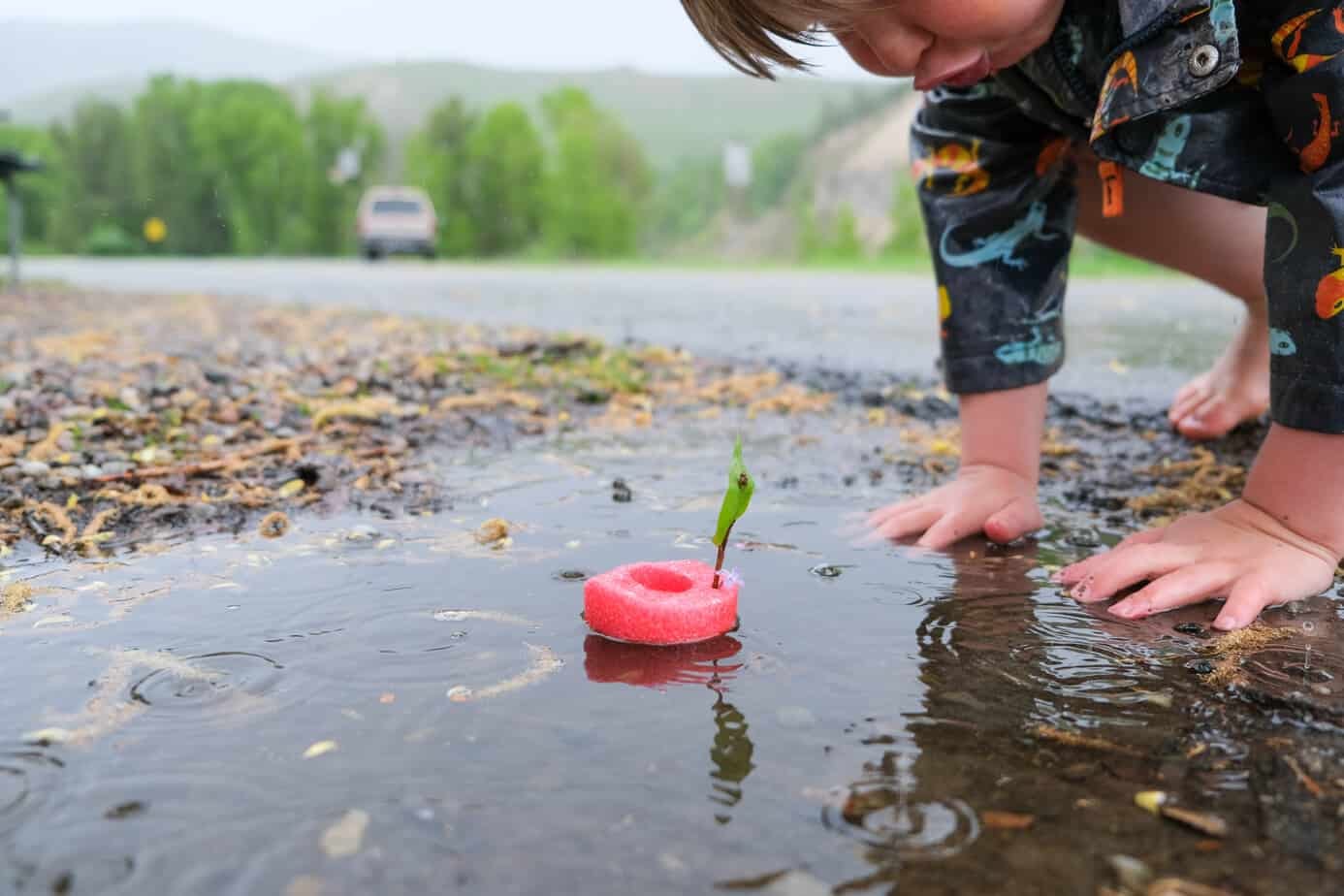
Even tiny moments of observing nature can be transformative. A leaf’s delicate veins, sunlight slanting across a kitchen counter, the way a bird perches on a branch — each encounter invites a pause. “I don’t have to achieve something that’s going to solve all my problems forever,” May said. “But I can make a connection with something that I find wonderful that’s going to settle me for long enough to survive this moment.”
Research shows that spending as little as 20–30 minutes in the natural world can reduce cortisol levels and lower blood pressure.
“The world is actually 95% probably more wonderful” than the problems we dwell on. “And that’s what we need to integrate now more than anything else,” May said. “That’s the lesson that we need to learn about this, that the terrible violence, the terrible suffering is unusual in our species. For most of the time, we are ticking along with great kindness and generosity.”
Research on awe and mindfulness suggests that reflecting on the vastness of the world — whether through nature, the cosmos, or quiet contemplation — can reduce stress, improve focus, and foster empathy. By embracing our limited scope, we free ourselves from the burden of control and can invest energy in simple, meaningful gestures that connect us with others and the world around us.”
Wonder as Practice
Wonder is both practical and adaptable. Observing nature, revisiting childhood fascinations, or keeping a journal of small delights can help anchor us. Scientific curiosity can deepen the experience rather than diminish it: watching a plant grow, noting the trajectory of the stars, a walk by a river — each offers moments of grounding in a frenetic world.

Importantly, wonder is not a way to ignore suffering. On the contrary, it makes us better equipped to face it. May explains that our emotional reactions — grief, horror, and outrage — were never designed for the constant, distant suffering we’re exposed to today. We find ourselves caught in a cycle of debating emotional responses to things that are happening far away, instead of engaging with the actual people who need our help. “We’ve got ourselves into quite the pickle, but none of us are willing to let that go,” she continued. “We’re arguing about that response without actually even touching the people who are suffering… and it’s a self-perpetuating toxic environment.”
“If we are rested and if we are grounded… we can help the world better,” May said. Moments of joy and curiosity provide resilience, allowing us to be present for others, act thoughtfully, and meet life’s challenges without being overwhelmed.
For those looking to reclaim calm, May suggested simple exercises: take five minutes to observe something closely, keep a notebook of small delights, or notice a familiar object as if seeing it for the first time. These intentional acts of attention create pockets of calm that counterbalance digital noise and constant productivity demands.
In an anxious age, wonder is not a luxury — it’s a survival tool. It reconnects us to our humanity, restores equilibrium, and allows us to notice the extraordinary in the ordinary. By cultivating fascination, curiosity, and awe in everyday life, we can manage stress, nurture resilience, and find joy — even amid the relentless pace of modern life.
This is wonder-ful advice! (🥁) But truly, social media is a harmful window to our world. I love the way May frames it to put it into perspective. Thanks for sharing this, Ed.
My takeaway: you are not responsible for all of the world’s problems, or even knowing about all of them. Potential solutions to world-weariness include a deliberate narrowing your focus onto projects within your control. Bite-sized and tangible goals can make you much more likely to experience some sense of accomplishment and humility compared to the hopeless feeling of inevitability that comes with being glued to 24-hour news. And then — voila! — a movement can be achieved when several people put their cynicism away, plug along at their bite-sized tasks, and together accomplish something that matters on a grander scale.
I also think the strategy of approaching things as questions is key. The world is full of people who exploit our anxieties with certainties and oversimplification. It seems like 99% of Substack headlines are phrased as though someone with no expertise was able to figure out some tension between ideas and now they 100% percent know the only answer, stuff like (I’m making this up) “Sky Slaughter: How Boomers Are Murdering Birds with Windmills”. Instead, I find that authors that present some information but ask people for their input on how to interpret it are not only more persuasive when they offer their POV (because their humility is disarming), but also it just feels healthier to approach the world with wonder, not ignoring the nuances, accepting the messiness, and brainstorming solutions with all of our tools ready to be used.
I’m moments away from (nervously) posting my 2nd piece about constitutional reform that polling says is popular with over 75% of Americans, but our chosen leaders refuse to enact due to lack of incentives on their part. The overall goal will be creating a list of ten amendments that people will coerce their reps to commit to in the midterms, conditioning their vote on a pledge to make the reform happen in their first year of office.
Before I published my first piece, I decided that each headline was going to be phrased as “Freedom of ___?” or "The Right to ___?" The idea was to propose each amendment as a new item in a Bill of Rights for our new era (for instance an anti-gerrymandering amendment could be known as “The Right to Pick Your Politician?”). The question mark, while a little awkward, is to make it clear: I do not want this to be a thing where someone tells you they have it figured out already. I am not just another dude trying to convince you he knows everything and how things work. I actually have no idea how a lot of this works until I read a little bit/a lot about it, and even then, each thing I read reveals more forks in the road, more questions that need to be decided through consensus, not oversimplified and spoon fed. And that’s the beauty of our Constitution: you cannot amend it without building a consensus and making people feel part of the process.
Sorry for the long tangent here, but I am here to offer people a small project if they feel like putting aside the anxiety of our default world and focusing on incremental progress. It’s something that can require very little from you, but has the opportunity to become something very consequential for our sanity if we focus on November 2026. I’m currently in the brainstorm phase and then next month I hope to be out in the wild, meeting people face to face and asking them what ideals they want our Constitution to live up to. See ya in the discussion, if this sounds good to you! Regardless, take care of yourself! And touch grass, as they say. 😌🌾
Great article. I actually have this book and will be digging it out to reread.
Little tip that has helped me with social media. In settings you can manually turn the phone to grayscale. Those bright candy colours of Instagram don’t look so enticing in black and white….