

Parents Can No Longer Count on the Department of Education
Students still have rights, but who will protect them?

Nicole May did what parents are told to do when a school fails their child.
The Ohio mother filed a complaint with the US Department of Education’s Office for Civil Rights in the spring of 2024. She alleged that her teenage daughter had been bullied because of her hearing aids and punished in class when she could not hear her teachers. More than two years later, the complaint remains unresolved. May has largely stopped checking for updates.
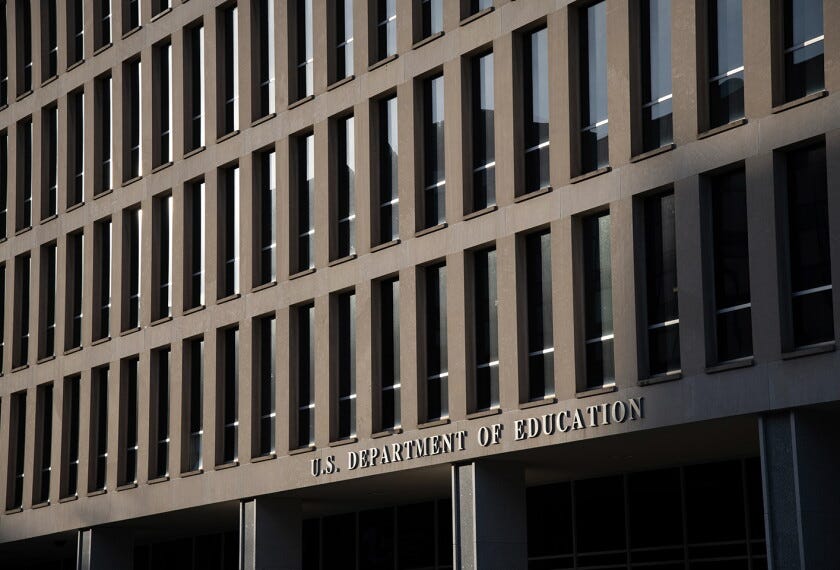
Now the federal office handling her case is being pulled apart.
On June 16, the Trump administration announced that the Department of Justice (DOJ) will take on much of the work of enforcing civil rights laws in schools, while the Department of Health and Human Services (HHS) will assume many of the day-to-day responsibilities for special education and disability programs. The administration describes these arrangements as interagency “partnerships” designed to cut bureaucracy, combine expertise, and improve services.
The underlying protections remain in federal law. Students with disabilities are still entitled to services. Schools still cannot discriminate based on race, sex, disability, national origin, or age. Parents can still file federal complaints.
But those protections depend on the machinery surrounding them. Congress can declare that a child has a right to an equal education. Someone still has to investigate when a school ignores that right, decide whether the school broke the law, force a remedy, monitor compliance, and answer the parent who has been refreshing the same inbox since 2024.
For decades, much of that work lived inside the Department of Education. It is now being distributed among agencies that have different missions, different staffs, and different ideas about what protecting a student should look like.
What the Education Department was built to do
The Department of Education, created in 1979 by Congress, has always occupied a strange, misunderstood place in the American imagination. Its supporters sometimes discuss it as though it runs the nation’s schools, while its critics sometimes discuss it the same way, only with more exclamation points.
In truth, local school districts, school boards, and state legislatures still make most decisions about curriculum, staffing, calendars, and daily operations. The Department of Education’s influence has largely come through providing funds for special education students and schools with high rates of attendees below the poverty line, collecting data, and making and enforcing federal regulations.
Start with special education.
In 1975, Congress passed the Education for All Handicapped Children Act, later renamed the Individuals with Disabilities Education Act, or IDEA. The law promises eligible children a “free appropriate public education” designed around their individual needs and, whenever appropriate, delivered alongside students without disabilities.
That promise created individualized education programs, better known as IEPs. An IEP can require specialized instruction, therapy, transportation, counseling, audiology services, assistive technology, or other support a child needs to learn. Federal law also requires states to identify eligible children, involve parents in decisions, and provide procedures for challenging a school’s choices.
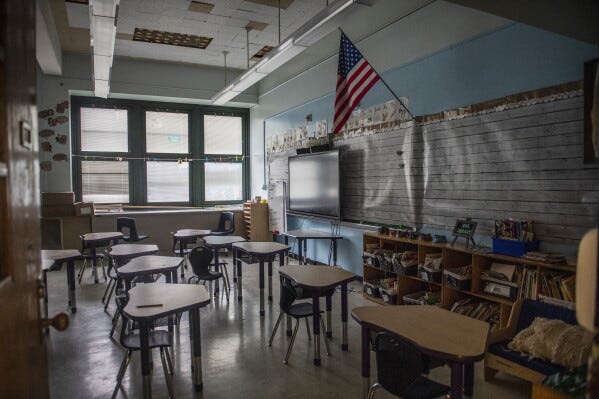
During the 2022–23 school year, 7.5 million students ages three through 21 received services under IDEA, representing about 15% of public-school students.
The Education Department’s Office of Special Education and Rehabilitative Services did not write any child’s IEP or settle every local dispute. States and school districts handled that work. But what the federal office did do was distribute billions of dollars, monitor whether states complied with IDEA, collect data, issue guidance, offer technical help, and make annual determinations about state performance. It also administered vocational-rehabilitation and employment programs for people with disabilities.
Another part of the Education Department handled a separate but overlapping responsibility. The Office of Civil Rights, known to friends of federal abbreviations as OCR, enforced federal laws prohibiting discrimination in education. Those laws include Title VI of the Civil Rights Act, which bars discrimination based on race, color, or national origin; Title IX, which bars sex discrimination; Section 504 of the Rehabilitation Act, which protects people with disabilities; and the Age Discrimination Act.
Its cases could involve racial harassment, inaccessible buildings, unequal athletic opportunities, discriminatory discipline, a college’s handling of sexual assault, retaliation against a parent, or a school refusing reasonable accommodations to a student with a disability. The same child could be protected by IDEA’s guarantee of educational services and Section 504’s prohibition on disability discrimination.
Families could file a complaint without hiring a private attorney and launching a federal lawsuit. OCR investigators gathered evidence, interviewed families and school officials, negotiated resolution agreements, and monitored whether schools followed through. If a recipient of federal education money refused to correct a violation, the department could begin proceedings to suspend funding or refer the case to the Department of Justice.
One dispute can draw in all these offices related to special education. Separating those responsibilities among different federal agencies now creates more opportunities for cases to be caught between departments, divided up, or forgotten altogether.
 | A guest post by
|