


The week after his Court issued a decision that has enabled more antidemocratic gerrymandering, US Supreme Court Chief Justice John Roberts publicly lamented that the country wrongly views the justices as “political actors.”
Methinks the Chief Justice does protest too much.
Speaking at a judicial conference, Roberts challenged the oft-expressed view that Supreme Court justices are just like everyone else — that they have political views and that their decision-making is influenced by those political views, rather than being declarations of some objective legal truth. “At a very basic level, people think we’re making policy decisions, [that] we’re saying we think this is what things should be as opposed to this is what the law provides,” he said. Essentially, he insists that there’s a fundamental difference between the justices and politicians who are elected to office.
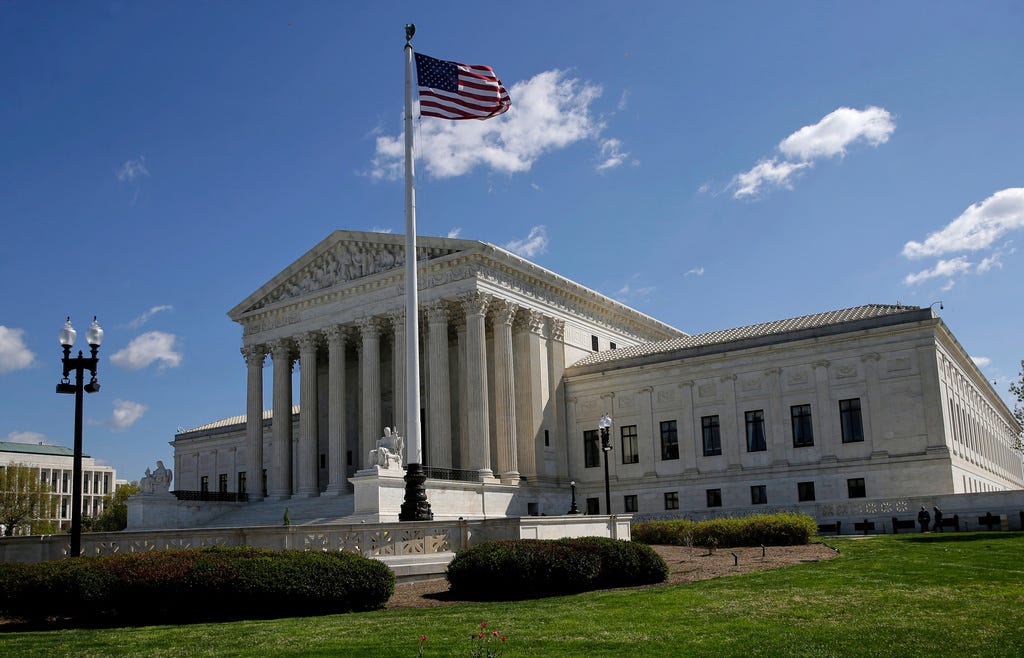
But in fact, there’s a long history of Supreme Court justices being political actors of the kind that Roberts describes. Before becoming justices, they worked elsewhere in government to advance their political views, and once on the Court they advanced those same views in the language of the law. The Roberts Court is no exception. Indeed, the Roberts Court is now a partisan institution in addition to a political one.
Even aside from the justices’ political views influencing their decisions, there’s no getting around the fact that the justices’ decisions influence our politics, which makes them part of the political system, rather than above it.
Justices with political backgrounds
The very first Chief Justice of the Supreme Court, John Jay, was a political actor before, during, and after his tenure as Chief. Before serving on the Court, Jay was the President of the Continental Congress. While on the Supreme Court, he negotiated a treaty with Great Britain, and later resigned from the Court to become the Governor of New York.
While most justices haven’t simultaneously served as foreign diplomats or gone on to governorships, Jay was not unique in having held an obviously political role before his time on the Court. William Howard Taft was President of the United States before he became Chief Justice, and John Marshall was the Secretary of State before he took on the same role. Indeed, as Secretary of State, Marshall helped the Adams administration develop the court reforms that were at issue in Marbury v. Madison, where Marshall himself authored the opinion that first established the Court’s authority to declare laws unconstitutional.
While members of the Roberts Court may not have previously served in elected office or in a presidential cabinet, they had political jobs before becoming judges. And in those political jobs, they unsuccessfully pursued the very same policy goals they managed to achieve once they were confirmed to the Supreme Court.
