

Loving a Country That Lets You Down
Black Americans have held anger and love of country at the same time

Princeton professor Eddie S. Glaude Jr. is counting down the days to America’s 250th anniversary in a solemn fashion. His newest book, America, U.S.A.: How Race Shadows the Nation’s Anniversaries, challenges the public to see the nation’s upcoming celebration as a reminder of harmful patterns and broken promises, and a call to seek better.
Glaude also poetically weaves historical threads and voices throughout his new book. We get to know American stories like that of Moses Gordon. Gordon was enslaved until he escaped to Philadelphia and lived free for ten whole years, enjoying his divine right to live and pursue happiness by marrying his love and raising a family. When he was recaptured thanks to the Fugitive Slave Act, Moses chose to drown himself rather than live as a slave again.
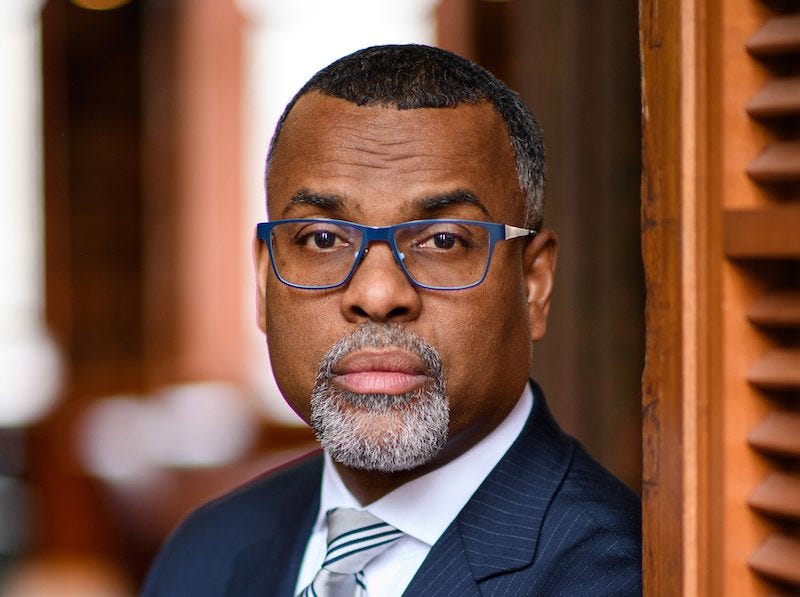
I spoke with Glaude about how the anniversary should inform politics and activism. We also spoke about his past political stances (such as not supporting Hillary Clinton in 2016) and how to balance the political demands of citizenship with the challenges of life.
This interview has been edited for clarity and length.
Natasha S. Alford: You recently headed to Mississippi in response to the attack on voting rights in the South and across the country. Talk to me about what you saw and how that mobilization impacts your assessment of America right now.
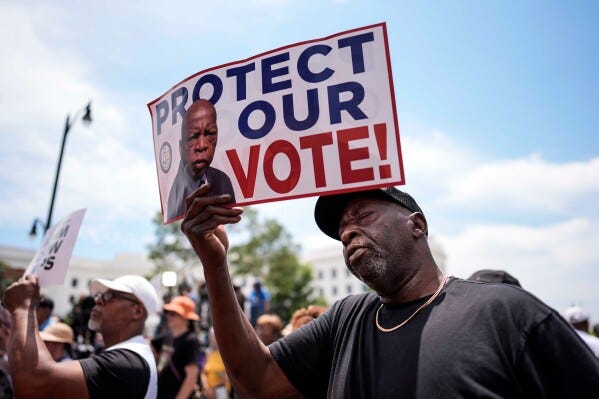
Eddie S. Glaude Jr.: It was an extraordinary experience. On a rainy Wednesday in Jackson, MS, thousands of people showed up at the convention center and they’re upset, they’re angry. But that anger isn’t manifested in a simple expression or a nostalgic longing for a movement in the past. It is really a kind of preface to an ongoing organizing effort and mobilizing effort.
What I saw very clearly is that Black Mississippi has an infrastructure to do exactly what needs to be done. They use protest as a mobilizing effort, as a kind way of dramatizing the event, dramatizing education needed in order to position themselves to respond. They said this is a math problem. We have to determine what is the exact number of voter registrations that we need — how many do we need to get registered, and how many did we need to turn out in each county?
So, I came away from Mississippi inspired. Mississippi is always a metaphor for the country, predictions of the nation. It’s such a beautiful state, and it is so cool at the same time. I was on fire as I got on the plane to come back to New Jersey.
Alford: As you talk about the granularity, the skill, all that went into the organizing, how do you see this movement in relation to the Democratic Party? What do you think the party can learn from what you saw?
Glaude: Congressman Benny Thompson was there, and Derrick Johnson, president and CEO of the NAACP, was there. Jonathan Jackson was there from Illinois. So it’s clear to me that the Democratic Party will benefit from the surge of Black voters, from the turnout of low propensity Black voters as they ramp up the underground effort.
But I think the motivation isn’t reducible to the aims and ends of the party. I think that motivation is really bound up with an understanding of Black political power. That will impact how the Democratic Party moves forward. We can no longer be a captive electorate. The party can’t just take our support for granted. Because our rate of turnout matters in terms of victory or defeat.
So, if we’re going to do any kind of autopsy of what happened in the presidential campaign, and we’re going to do an analysis of what’s happening throughout this house right now, it has everything to do with how Black people orient themselves in the political process and how the Democratic Party will orient itself to Black people.
Alford: At one point, you took a public stance saying that you were not supportive of Hillary Clinton during her 2016 run. You explained essentially this idea of wanting more from Democrats and not wanting the same.
There’s been a segment of the internet that has tried to hold you to account for that position and connect it to the election of Trump. How do you respond to that?
Glaude: You know, to be honest with you, it was hurtful. Some people said that my anger was performative, that I’m the kind of intellectual that performs for the white gaze. It was painful in a certain way. But I also understand the internet for what it is. It’s a very kind of manufactured environment, and the idea is to shut you down.
One thing I could say, and I’ve admitted it over and over again, is that I overestimated white America. I didn’t think white America would elect someone so grossly unqualified to be the president of the United States. I should have known better. But I’m not going to apologize for wanting better for Black people.
But then you say, Wait a minute, wait a minute. What you’re trying to argue is that Black voters were supposed to turn out for Hillary Clinton at the same level that they turned out for Barack Obama? That was historic, that turnout. And when you look at the data, we turned out, we actually returned to 2004 numbers in terms of the turnout for Hillary Clinton.
Alford: We know that Black people were insisting upon our freedom and our humanity from the start and having white allies and people who changed their hearts. That was all part of this larger puzzle of factors that advanced legislation to end slavery. In 2016, “allyship” was the big buzzword. What do you think allyship looks like right now?
Glaude: I think we need to interrogate what we mean by “allyship.” If you are committed to justice without exception, then we’re all in this battle together. Solidarities aren’t presupposed. They’re made. They go in and out of existence all the time. That’s at the heart of politics. We have to build solidaristic movements across groups, across various interests.
In pursuit of justice, in light of the problems that we confront, I think we think of allyship and bind it up with philanthropic enterprise as a kind of charitable gesture. In the book, I have a chapter entitled “Freedom Is a White Man’s Gift.” And because somebody believes that they own freedom, that they can give it and take it away, oftentimes a fight for justice presumes that some people are doing something for us as opposed to with us.
So I think we need to get clear on our conception of justice without exception. We need to understand that freedom doesn’t belong to any one of us to give or to take away, right? It is a practice that we evidence in solidaristic efforts to bring about a better world for us and our children and our child’s children.
Once we get that as the basic premise, we can go about doing the work together, it seems to me, but we’re not charity cases. We’ve never been charity cases. “Don’t give me alms,” Frederick Douglass said. “I want justice without exception.”
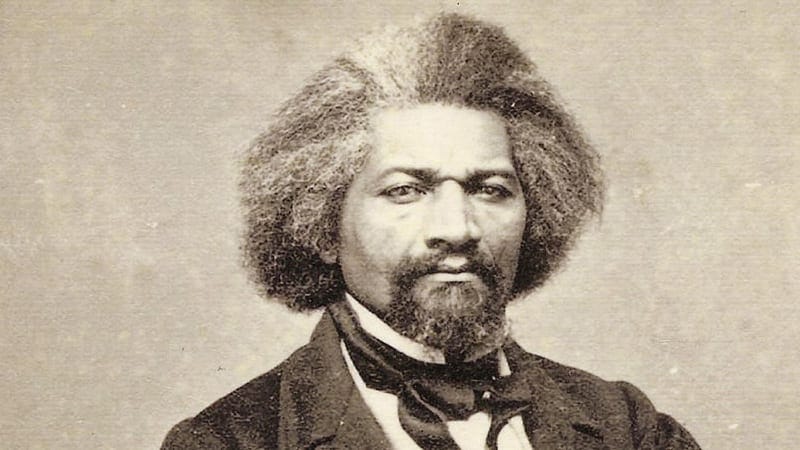
Alford: I remember I was getting chills when I was reading the part of your book where you document Frederick Douglass saying, “What happens when Northern whites and Southern whites start to bond again?” It reminded me so much of 2016, when there were the white folks who were like, “We want to be your allies!”
But then that 2024 election came and, for some, it was just easier to be white Americans as their primary identity. Despite all of that investment in allyship and moving the country forward, people just retreated. I’m sure you thought of that as you thought of Douglass’s speech.
Glaude: Of course. In the book, particularly near the end, I’m echoing Douglass in 1875. So I’m speaking to the country in 2025 on the eve of 2026, right?
I remember writing it in December because it was a manic process. Something possessed me, Natasha. I wrote the book in nine months. So I’m writing and I’m speaking, trying to call attention to what we’re going to experience come July 4, in many ways trying to pull Douglass’s voice in my own to speak to this moment, because we know what they’re going to do come July 4.
We know that they’re going to try to render us invisible or make us play bit parts in the story of the country. But one of the arguments I make in the book is that even as America is trying to tell itself this fake story, this storybook version of itself, we’re always speaking back. We never allow that story to stand on its own.
You know, just six years ago, we were in the midst of a racial reckoning.
They renamed Black Lives Matter Plaza. Folk were doing all of this stuff and in the blink of an eye, look where we are. And the only thing you can say is that either folk were lying or folk didn’t have any place to land with their rage. So they just submitted to business as usual. And so I’m trying to capture that in the book. The book is angry, but it’s also loving.
We’re in this 250th year and we have to raise our babies in this again.
Alford: Do you think we have to tap into that anger? On social media, people are expressing that they can’t stay enraged because they’re trying to live.
But I almost feel that the anger is necessary to wake up and to realize what is happening, what is being taken from us. It’s almost as if there was a certain group who understood the stakes when the news hit and then the other folks just sort of kept going with business as usual.
Glaude: This is true. It’s hard because you still have to bury your dead. You have to take care of your old, aging parents. You have to make sure your kids are doing okay. Life is still “lifing” in the midst of all of this. But I’ve been blessed, Natasha, over the last decade to teach my James Baldwin seminar during the Trump years. I teach his nonfiction, and I did it this year as I was writing the book.
There was a student who was so earnest. She described her vexed relationship to the country. One minute she loves the nation, the next minute she loathes it. And she was trying to find resources in Baldwin’s notion of love over the course of his entire career. And she dropped this line on me that just hit me so hard that I wrote it, I used it in the book. She said, “Maybe hope isn’t what we need to reach. Maybe we just simply need to tell the truth with love lit by rage.”
Tell the truth with love, lit by rage.
Alford: If you are writing an additional chapter for America, U.S.A., 50 years from now, what describes how Americans acted in this moment to actually preserve and recreate democracy?
Glaude: At the end of the book, I resist the temptation to offer solutions. I say that we simply need to make a choice. Either we’re going to be a beacon of freedom or we’re going to be a white republic.
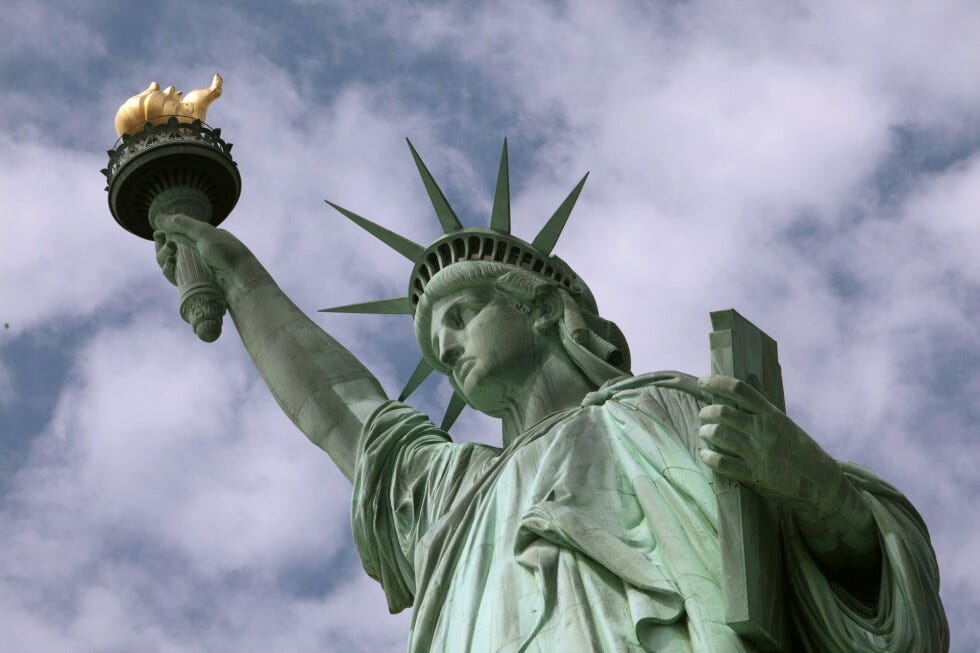
Now we can debate what being a beacon of freedom is, but we can’t be a beacon of freedom and a white republic without contradiction. So, 50 years from now, I hope that I’m able to write in an afterword that we made a choice to finally rid ourselves of the contradiction.
That we deconstructed the idea of “white America” that has distorted and disfigured our democratic lives from the founding to now. Now, what that will look like in terms of policy, what it will look like in terms of on-the-ground politics, I’m not sure. But what I do know is that if we make that choice, it will free us from the shackles that have bound us since the nation’s inception.
Alford: You noted that you wrote this book while your mother was battling cancer. What did it teach you about the balance between your citizen duty and personal duty as a son to be doing both at the same time?
Glaude: Oh, it’s such a great question, such a hard question. You know, in the midst of the political matter, life still “lifes.” You can use it as a verb, right? We still have to live.
That means we’re not only tending to aging parents or parents who used to… How can I put this, Natasha? I thought my parents were invincible. And to live long enough to see that they’re shaky, that they’re not as healthy as they once were, that they’re vulnerable, and to be witness to it...
At the same time we have to endure the madness of our politics, you still have to pay your bills. You still have to take your kids to college. You have to do all the things that life demands. But you can’t put your head in the sand. Even though life still goes on, you have to address the circumstance of one’s living because it has an impact on how you, in fact, tend to the people you care for.
There are these concentric circles. There are the people right in front of you. There’s a circumstance that impacts the way in which you tend to them. So it matters with regards to health care policy. It matters in terms of the local hospitals. It matters with terms of insurance. It matters in terms of the property tax. It matters in terms of the grocery bill, because they’re on fixed income. You know what I mean? So these policy realities impact the very way in which we care for the people we love.
You know what? I’m so thankful that my father was a postman for 30-plus years. He was the second African American hired at the post office in Pascagoula, Mississippi. And he was a shop steward. He led the local union. And they had wonderful insurance. And that insurance is helping them in this time of need. Think about that in relation to the current health care crisis.
So that’s a way of saying, you got to tend to your folk. You got to care for them. You got to pull them close, but you can’t put your head in the sand because the policy decisions that are being made will impact how you tend to them.

 | A guest post by
|