

It's Not the Supreme Court's Fault
A new book argues the country's woes come from other branches of government

Quick note before today’s piece:
My private book club — Governerds Insider — opens three times a year, and Season Two is 94% full. This season we’re reading Jill Biden’s memoir and Marjan Kamali’s The Lion Women of Tehran, and both authors are joining us live.
Ibram X. Kendi and Bob Crawford will be here for private author talks, and Steve Vladeck is teaching workshops on the major Supreme Court cases of the term. Registration closes as soon as the seats are full.

Now, on to today’s story.
— Sharon
At a time when faith in the Supreme Court is at record lows, attorney and legal analyst Sarah Isgur says many Americans are blaming the wrong branch for the nation’s woes.
Isgur, who has previously worked on Republican presidential campaigns and in all three branches of the federal government, is the host of the legal- and Court-focused podcast Advisory Opinions. She is also the author of the new book Last Branch Standing, in which she argues that the Supreme Court is the branch of government most resembling what the Founders intended.
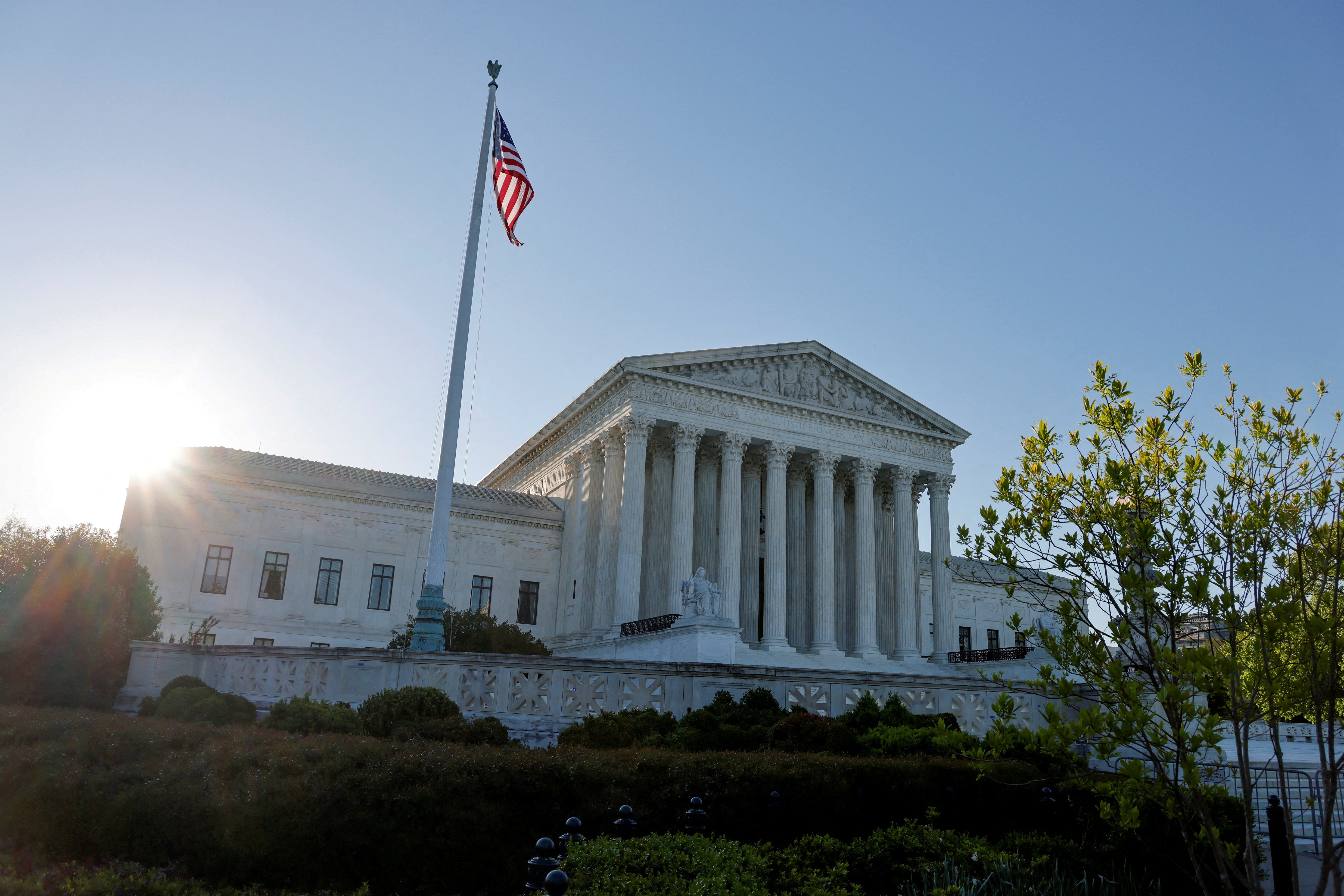
To Isgur, SCOTUS is meant to be an anti-majoritarian institution that doesn’t bend to the whims of culture or politics. And despite the perception that the Court votes along lines of partisan ideology, she argues that looking beyond sensational cases reveals balance in the ways justices are approaching judgments.
I spoke with Isgur about her motivation for the book and which of its arguments will most challenge conventional wisdom.
(The following interview has been edited and condensed for clarity.)
Natasha Alford: Let’s start with the title. What does “Last Branch Standing” mean to you?
Sarah Isgur: To understand why so many are frustrated with the Supreme Court, you have to understand that the other two branches are failing — you have Congress not doing its job, and you have the president doing every job.
We are basically living under government by executive order. That’s not the way it’s supposed to work. And so instead of feeling like the Supreme Court is part of an ongoing conversation between Congress or the constitutional amendment process and the president, instead we feel like the Supreme Court is the last word. So when a headline reads, “Supreme Court strikes down Biden’s student loan forgiveness,” or “Supreme Court strikes down Trump’s tariffs,” we think, “Well, then that’s the answer.”
What the headline should read is, “Supreme Court says Congress can pass student loan debt forgiveness, but a president acting alone cannot,” or “Supreme Court said only Congress can implement worldwide tariffs, not President Trump.” Because we don’t see it that way, we blame the court when we should actually be blaming Congress or blaming ourselves for not voting for people who will actually legislate.
Alford: You open the book with the idea that the way we talk about the Court is not grounded in data or fact, and that the Court is not the 6–3 conservative monolith that people assume. Break that down for people.
Isgur: Let’s start with the statistics. In the last 20 years, 90+% of cases at the Supreme Court have been decided with at least one liberal justice in the majority. The most likely outcome of any case at the Supreme Court is that it’ll be unanimous. Last term, the number of cases that had all the liberals in dissent together was the same as the number that were decided with all the liberals in the majority and conservatives in dissent, whether it was 6–3 or 5–4. The problem is that we never hear about those cases where the conservatives lose because it doesn’t fit our narrative.
Last term there were three big cases — one on gun manufacturer liability, one on religious liberty for tax exemption in Wisconsin, and one on reverse discrimination involving sexual orientation — that all came out unanimously. Each of the opinions was written by a liberal justice.
Alford: Justice Ketanji Brown Jackson gave a speech at Yale recently in which she called her fellow conservative justices’ emergency orders “scratch paper musings.” She also noted that the Court has sided with the Trump administration in 80% of emergency applications this term.
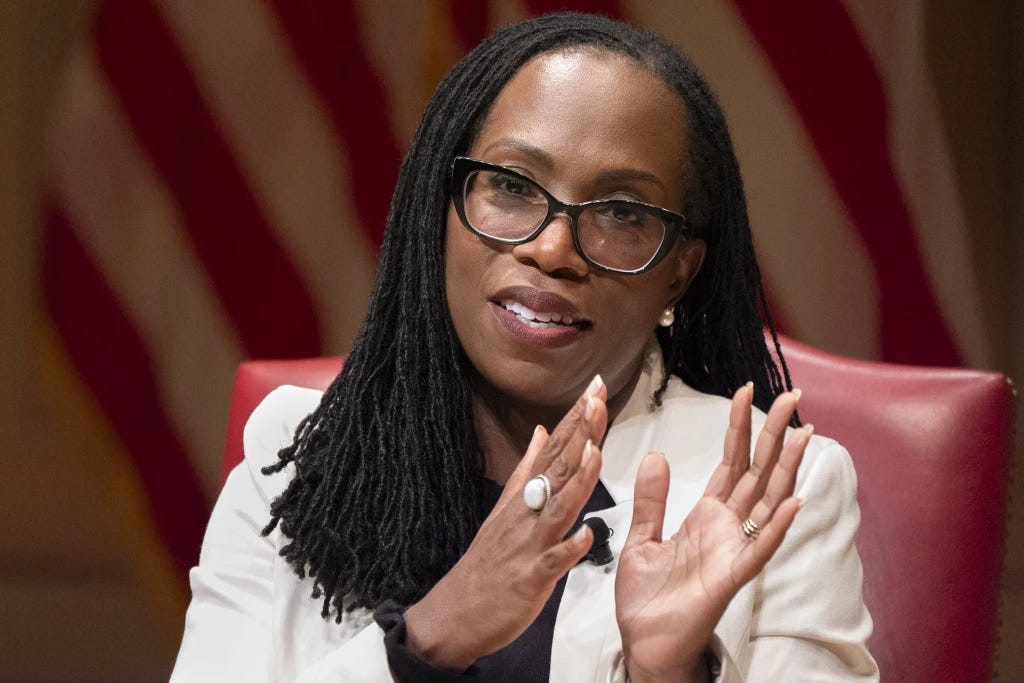
Does that change anything in terms of understanding the 6–3 framing, or even just how these justices are relating to each other right now?
Isgur: We have to explain what this emergency docket or interim docket is. This is when the Supreme Court is asked to decide whether a policy will go into effect during the litigation of the case before it comes back up to the Supreme Court. Donald Trump has won a lot at the interim stage.
But what’s interesting is that all four of his major policy cases so far — the Alien Enemies Act, federalizing the national guard in Chicago, the tariffs case, and certainly what we think will happen in the birthright citizenship case — he’s lost in the end. So when you look at statistics that say he has won 80% of these interim cases, it’s important to put that in the context of waiting for the final decision.
Also, we should look at the denominator. Beyond the 27 interim cases that the administration has appealed to the Supreme Court, there are another hundred that they didn’t appeal and just took the “L” on. So you can say they’ve won 80% of the cases they chose to appeal. But if you include all of the cases that they didn’t even try to appeal, the percentage is much smaller.
Alford: You mentioned that Presidents Obama, Biden, and Trump all had something in common in terms of bypassing Congress and using executive orders. Talk to me about why that’s a problem for the average person who might be thinking, “Oh, I’m just glad something is being done.” Does it undermine what the Founders had in mind?
Isgur: It undermines us as voters. A hundred years ago in the Progressive Era — with both Republicans and Democrats, it’s Woodrow Wilson and it’s Teddy Roosevelt — they had this idea that voters are pretty dumb and members of Congress didn’t know about all the science and new discoveries.
So what we really needed, the presidents thought, is to leave these questions of public policy to experts and to ensure that voters can’t mess with those experts. So they created all these agencies within the executive branch and made them independent so that they couldn’t be voted out. Now a hundred years has gone by and — slowly but surely — Congress has learned that they don’t have much of a job anymore. They haven’t really been exercising their legislative muscles. Some members aren’t even hiring legislative staff. They’re just hiring communication staff, bookers to put them on TV, or social media gurus.
As presidents saw that Congress wasn’t legislating, they stepped in and said, “Aha, I’ll just solve this through executive order.” Then Congress learned, “Oh, this is even better. Because now the president, when he’s in my party, I’ll get everything I want and I don’t have to compromise anything.” That made it even more impossible to compromise, since one side knows the president will sign an executive order and the other side knows when they get the power, they can just undo that executive order and sign a new one.
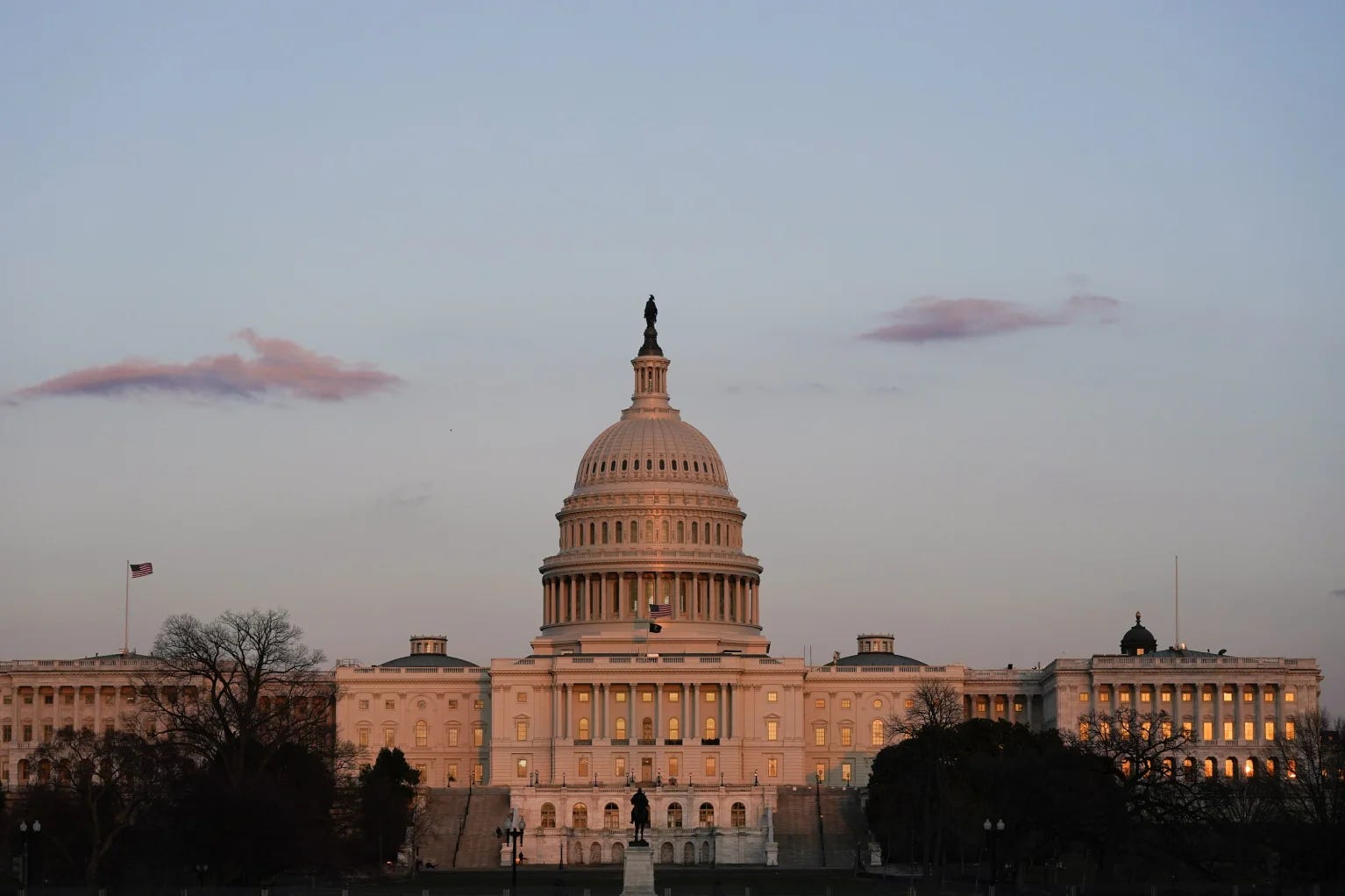
Alford: What can the Supreme Court do about that?
Isgur: What the Court can do is make the president more accountable for the decisions being made within the executive branch. They can make him a more powerful president over a less powerful presidency. For instance, no more independent agencies, and the president has hiring and firing power. No more experts shielded from political accountability, but they also don’t have the power to make all of these decisions that they’ve been making in these agencies. Instead Congress has to do that. The Court can’t make Congress legislate, but it can strike down all these executive orders.
Biden’s student loan debt forgiveness, the eviction moratorium, the vaccine mandate, Trump’s bump stock order, his tariffs, his birthright citizenship order, federalizing the National Guard, all of those [were] presidents not working with Congress, even though their party controls both houses. And the court can simply say, “The president can’t do that.” Then our problems will continue to exist, and the hope is that voters will start to elect members of Congress who will compromise and address those problems.
Alford: With public trust in the Supreme Court at historic lows, what do you think Americans should know that could change perceptions of it?
Isgur: The Court is a counter-majoritarian institution. It’s the only branch that is supposed to rule against the majority of Americans. That’s why it exists, actually. If the other two branches were always doing their job constitutionally, we would never need a judicial branch to check them.
The justices on the Court spend a lot of time thinking about John Marshall Harlan. He’s the sole dissenter in Plessy v. Ferguson, which upheld racial segregation. His portrait sits in their conference room when they vote on cases. They sign the flyleaf of his Bible before they take their seat on the Court.
He was the sole dissenter because he stood against the majority of Americans, the majority of the Court, the culture in which he grew up — because his job, as he saw it, was simply to say the Constitution demands the equal protection of the laws, regardless of your race. While he was alone, that is an opinion that we hold quite dear today. History thinks he’s right, posterity thinks he is right. If you’re a justice on the Supreme Court, you’re not supposed to care about your approval numbers. In fact, having a high approval number might mean the Court isn’t doing its job right.
Alford: There’s a whole chapter in your book about the Court taking fewer and fewer cases. Should we interpret that as a good or a bad thing?
Isgur: The Court doesn’t take enough cases. At the beginning of my lifetime, they took 150 cases a term. We’re down to 60 now. And I think we all know it’s not because there aren’t things that need to be solved in our law.
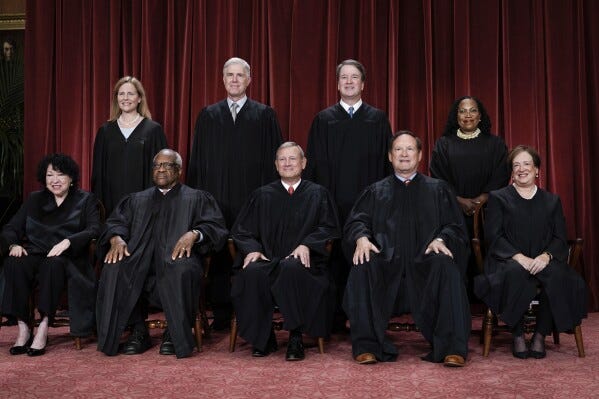
Let’s say the Court took five Second Amendment cases in a single term instead of one — they wouldn’t all turn out the same way, and it’d be much harder for partisans to say we are always losing or we are always winning at this Court.
Alford: You wrote about how the Federalist Society has shaped the modern Court more than any president, but you also argue that it may be on the brink of collapse. Why is that significant?
Isgur: The Federalist Society started in 1982 as a response to the Warren Court and the belief that the Supreme Court justices were simply giving policy pronouncements as if they were a super-legislature. The Federalist Society has three pillars: (1) the state exists to preserve freedom; (2) separation of power is essential to our system of government; and (3) it is emphatically the duty of judges to say what the law is and not what it should be — that’s where you get originalism and textualism. It wasn’t about outcomes. It was about process, and conservatives believed if judges used the correct process, it would result in better outcomes for the country and preserve the Constitution.
Well, here we are in 2026, and the political right is now quite different from when conservatives had a real seat at the table with the Republican Party. The current political right is like, “Why do I care about process? I want the outcomes that I want.” In that sense, there is no more purpose for the Federalist Society for the political right. It’ll be very interesting to see, if Donald Trump were to get another pick for the Supreme Court, does he choose a judicial conservative who cares about process, or does he choose a political-right judge who’s only interested in outcomes? Do we start to head back to that Warren Court era when judges were acting as a super-legislature?
Alford: I also wanted to ask you about term limits, which people can read about in Last Branch Standing. Could you give a quick note about why you are against term limits for justices?
Isgur: Imposing term limits and guaranteeing each president two Supreme Court nominations sounds nice, right? It gets rid of the randomness. But whenever we’re talking about policy, the question should always be: what are the trade-offs? You’re fixing this problem, but what does it cost?
In this case, you’re fixing a randomness problem. But let me tell you about the cost. If every president knows they get two picks, eventually they will name who their picks are while they are candidates. Eventually those two people will run as a ticket with the president. You will have the president, the vice president, and two Supreme Court nominees. How independent will we think this branch is when a justice just got off the stump, took off his red hat, and put on a black robe? Will you trust the justices’ decisions when they keep ruling in favor of the president they want to appoint them to a cabinet position? Or if the justices know that they’re getting a new colleague in six months, and they know who that justice will be, what if they just wait out the tenure of a justice they don’t like?
Term limits would also change who presidents pick as justices. They’re not going to pick some legal nerd to do this — they’re going to pick someone who’s good on the campaign trail.
This will all undermine the independence of the judiciary and our belief in its legitimacy. So with the idea of term limits, we are solving one problem, but I think we’re causing much greater ones.

 | A guest post by
|
Thanks for this conversation. It’s the kind of framing I wish showed up more often in civic coverage, because I do think a lot of people direct their anger at the Supreme Court when the real culprit is upstream. The justices are capable of real boneheadedness and hypocrisy, but their ability, and sometimes their duty, to hand down conclusions we hate is usually rooted in bad law or the absence of law guiding their interpretation of the Constitution. If we don’t like where they land, the work is ours: clarify what we actually want the Constitution to say, and stop outsourcing that labor to nine unelected people.
That said, to say that at least they’re not as dysfunctional as Congress or the president is a pretty low bar. Yesterday’s episode of The Daily made that clear. Reporters at the NY Times got their hands on sixteen pages of private correspondence showing exactly how the shadow docket was born in 2016, during the five-day sprint over Obama’s Clean Power Plan. The memos don’t read like careful jurisprudence; instead it was more like Roberts bulldozing his colleagues because he felt personally played by the EPA after the mercury case. They were completely focused on what the Obama reform would cost industry, and unlike what you would expect from levelheaded Supreme Court justices, they completely ignored the cost of what a warming planet would be for all of us. Alito framed the routine regulation as an existential threat to the Court’s legitimacy, and Kagan merely flagged that what they were about to do was unprecedented, while nobody stopped to ask where it would lead.
A decade later, we know where it led: a docket that now hands the current president win after win on thin briefs and no reasoning, with political scientists pointing out that partisan voting is measurably stronger there than on the merits docket where accountability structure exists.
And it’s also worth remembering the other very valid reasons public trust is where it is. The immunity ruling essentially tells us a president can do almost anything without legal consequence as long as it can be dressed up as part of the job, which Sotomayor correctly pointed out could be read as cover for political assassinations. Regardless of how vague the Constitution could be read, surely that not an outcome we could live with, right? And not how you could imagine lawmakers intended the law to work…
There’s the ProPublica reporting on undisclosed gifts. And recusals that should have been no-brainers. There’s the Alito household flying flags associated with Christian nationalist and insurrectionist movements. There are the undercover recordings catching justices agreeing with extreme partisan framings they’d never commit to in public.
And none of this even touches the blatant hypocrisy that produced the current bench, where a brand new principle was invented to deny Obama a third pick across two terms and then cheerfully discarded to hand Trump a third pick in a single term.
Which brings me to term limits, because I think Isgur’s tradeoff argument is really important and interesting, but also underestimates the depth of the current problem. She’s right that candidates might eventually name their picks on the trail. But we already live in a world where the confirmation process is apocalyptic and bears almost no relationship to what voters expressed at the ballot box. A single vacancy can reshape American life for forty years. The case for term limits, paired with a larger bench, isn’t really about solving randomness. It’s about lowering the stakes of any one seat so that no single nomination feels like a civilizational hinge. More turnover and more total justices means each pick shifts the balance of the Court less, which would cool the confirmation wars rather than heat them. That seems like the goal we should have, even if the tradeoffs she names here are worth taking seriously on the way there.
Very interesting interview. Thanks!