

Is Iran a Distraction?
A political science professor makes sense of the US-Iran War

When I woke up to the news Saturday morning that the US and Israel had attacked Iran, I reminded myself that knowledge can be an antidote to fear. The first person I thought of to help me get my head around whether we might be escalating into yet another Middle East war and what some of the likely outcomes might be was my friend Paul Poast.
Paul is an associate professor of political science at the University of Chicago, as well as a senior nonresident fellow at the Chicago Council on Global Affairs. We talked Monday morning about how the US got into this situation and where things are likely to go from here.

The interview transcript has been edited and condensed for concision and clarity.
Andrea: How are you thinking about the range of possible outcomes in Iran?
Paul: You could have an outcome that is all good: We’re going to take out the supreme leader. We’re going to take out a lot of the other leaders. There’s going to be some kind of pro-US, pro-democracy leadership that’s going to step in, and they’re going to take over and keep everything stable.
The other extreme is full-on regional war at a huge scale to where it gets protracted for months and you could even have a complete collapse of Iran. Now you have Iran falling apart, secessionist groups in Iran wanting to leave, a revolutionary state that’s unstable and causing war throughout the whole region. That’s a nightmare scenario.
Between these extremes, I think the most realistic outcome is not too dissimilar from what happened with the Maduro raid. Maduro gets removed. Vice President Delcy Rodríguez gets brought in, becomes the new leader, and basically it’s just the same government without Maduro.
I think you could see something similar here: the Ayatollah Khamenei is no longer the supreme leader, but somebody else is put in. They may even be more hard-line than the previous ayatollah.
Andrea: How surprised were you when you heard the news that the US had begun its attack?
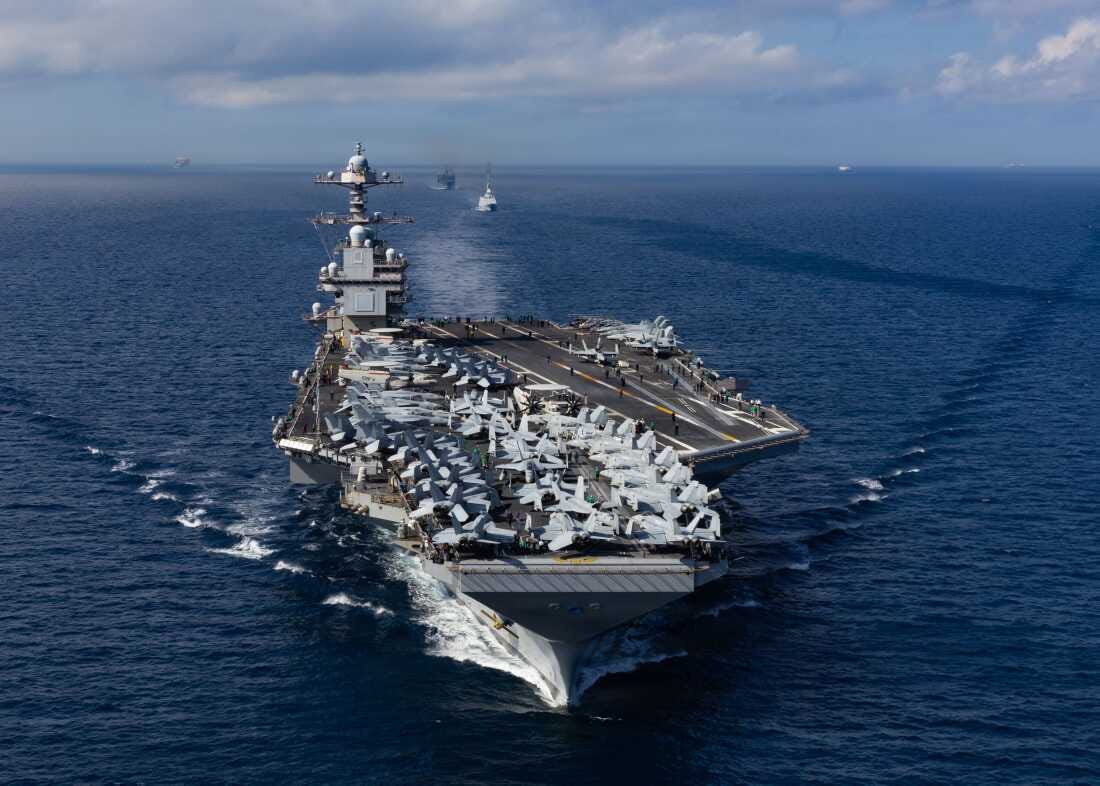
Paul: I was not shocked because they were mobilizing military assets into the region at a level not seen since 2003 or the Gulf War. When you’re putting that many assets — 150 planes, the Gerald Ford aircraft carrier, the Lincoln aircraft carrier — there’s a real possibility you’re actually going to use them.
Having said that, I was surprised. Just on Thursday, they’d had another round of negotiations in Geneva over the nuclear program to recreate the Iran nuclear deal but with Trump’s name on it. At the end of those talks, the Iranian official had said, “We had deep negotiations. We have a mutual agreement to continue talking.”
Andrea: Do you think that the negotiations were a distraction? Or were they in good faith?
Paul: It’s too soon to tell, but both possibilities are realistic. There is a plausible argument to be made that the Trump administration, including Donald Trump himself, was legitimately looking for some sort of agreement.
But it is hard to know if Trump was mobilizing with intent to use force or mobilizing for the sake of lending credibility to the negotiations — to say, “Look, if we don’t reach an agreement, we could use force.”
Andrea: How much of the decision to attack now came from a sense that the strikes against Iran’s nuclear program last year didn’t actually destroy it?
Paul: Despite what the administration said, I think they were fully aware the strikes did not destroy the nuclear program. But I think a bigger part of it is what I’m calling “Maduro momentum,” which is that the success of the Maduro raid back in January emboldened Trump to think, “Hey, let’s start going around and taking care of more issues.”
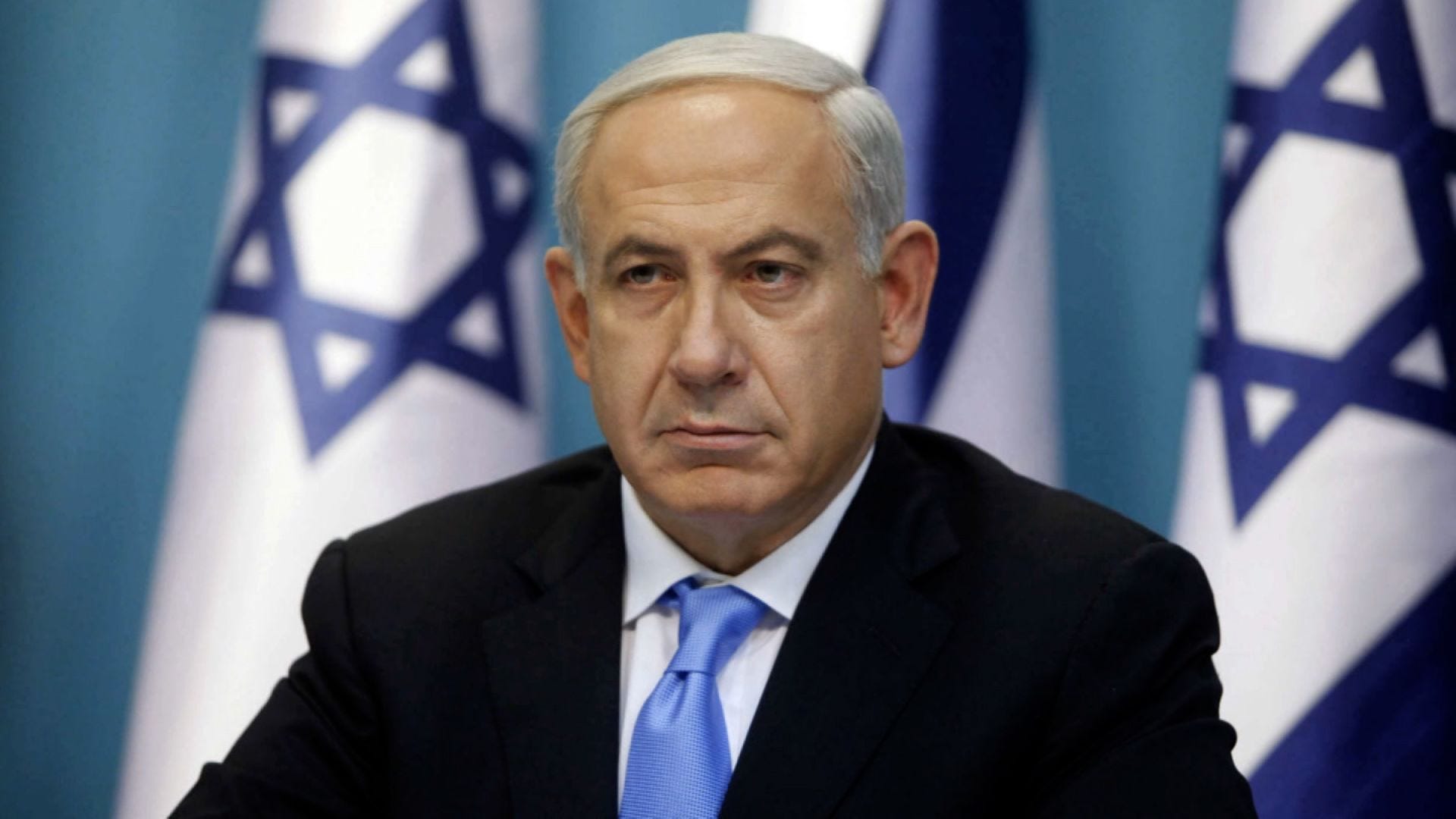
Also, I wouldn’t call it ally “entrapment” because I don’t think that played a role, but you did have Benjamin Netanyahu, the prime minister of Israel, saying to Trump, “Hey, now’s the time that we could try to take out these facilities.” My understanding as well is Mohammed bin Salman, the crown prince of Saudi Arabia, was also encouraging Trump because Saudi Arabia has long had a rivalry with Iran.
One more consideration for “Why now?” is that the US is stretching the resources pretty far. The USS Gerald Ford is the main aircraft carrier involved. It was also the aircraft carrier where the Maduro raid took off from. It was in the Caribbean. It was then redeployed back to the Persian Gulf. So you’re really starting to stress from a human factor — an endurance factor — the personnel on that ship. This can’t go on forever. We’re going to have to use this at some point, or we’re going to have to take the carrier back.
Andrea: How large do you think Netanyahu’s influence was?
Paul: I think that Netanyahu likely played a role in convincing Trump that now is a good time to do this, but I think Netanyahu was pushing on an open door. Trump has a track record of taking aggressive steps towards Iran, as well as of pushing back against Netanyahu.
Andrea: What are the implications for Iran’s nuclear program, and for nuclear proliferation in general?
If Iran already had a nuke, would Saturday have happened? No. Unfortunately, I think that’s going to be a lesson that a lot of other states are going to take: if you’re going to get a nuke, you better go all in right now and get that thing before something bad happens.
If the goal was to prevent Iran from having a nuclear weapon, it did seem like the Iran nuclear deal was actually making progress towards that. I think that the Trump administration was premature to move out of the Iran nuclear deal during Trump’s first term.
What’s interesting is that the deal would have been up for renewal this year. In a counterfactual world, you would be having negotiations late last year, this year, on extending it. In that case, would we have ended up with a war? I don’t know.
Andrea: Do you think Trump did this to divert attention away from Epstein or the economy?
Paul: When the Maduro raid happened, this was also a question. My answer was that, from day one when Trump got back into office, a goal of the administration was to remove Maduro. I don’t think it was explained by blowback from the Epstein files or concerns about ICE or anything like that. I think that that was a natural escalation.
And then, as I said, it was probably something like, “Okay, well, now I’ll turn to the next thing.”
I do think there are domestic political implications, however. Mainly: How is this “America first”? And even though there have been people voicing support so far, if this starts to go poorly, if this starts to look like Iraq, if there are more casualties — to what extent is he going to start losing some of the support? I think this is running a risk for him to alienate some of the more hard-line supporters if something like this really starts to go wrong.
Andrea: What do you think of the reaction from NATO countries and other allies of the US?
Paul: It’s not like they’re thinking, “Iran’s not a threat at all.” They’ve also had the view that Iran should not have a nuclear weapon. They’ve just not shared the same hawkish approach that the Trump administration, Israel, and Saudi Arabia have had. And what I’ve noticed so far is that the Europeans are kind of like, “Okay, we’re not thrilled that you went ahead and used force, but we’re also not going to cry over the fact that the ayatollah is gone.”
Andrea: What are you specifically going to be watching for in the coming days and weeks?
Paul: One key thing I’ve been keeping my eye on is trying to figure out who’s going to be the next leader. Trump is saying, “I’ve had some conversations with a possible new leader.” Who is that individual? I think that’s going to go a long way towards determining the kinds of possible outcomes we talked about.
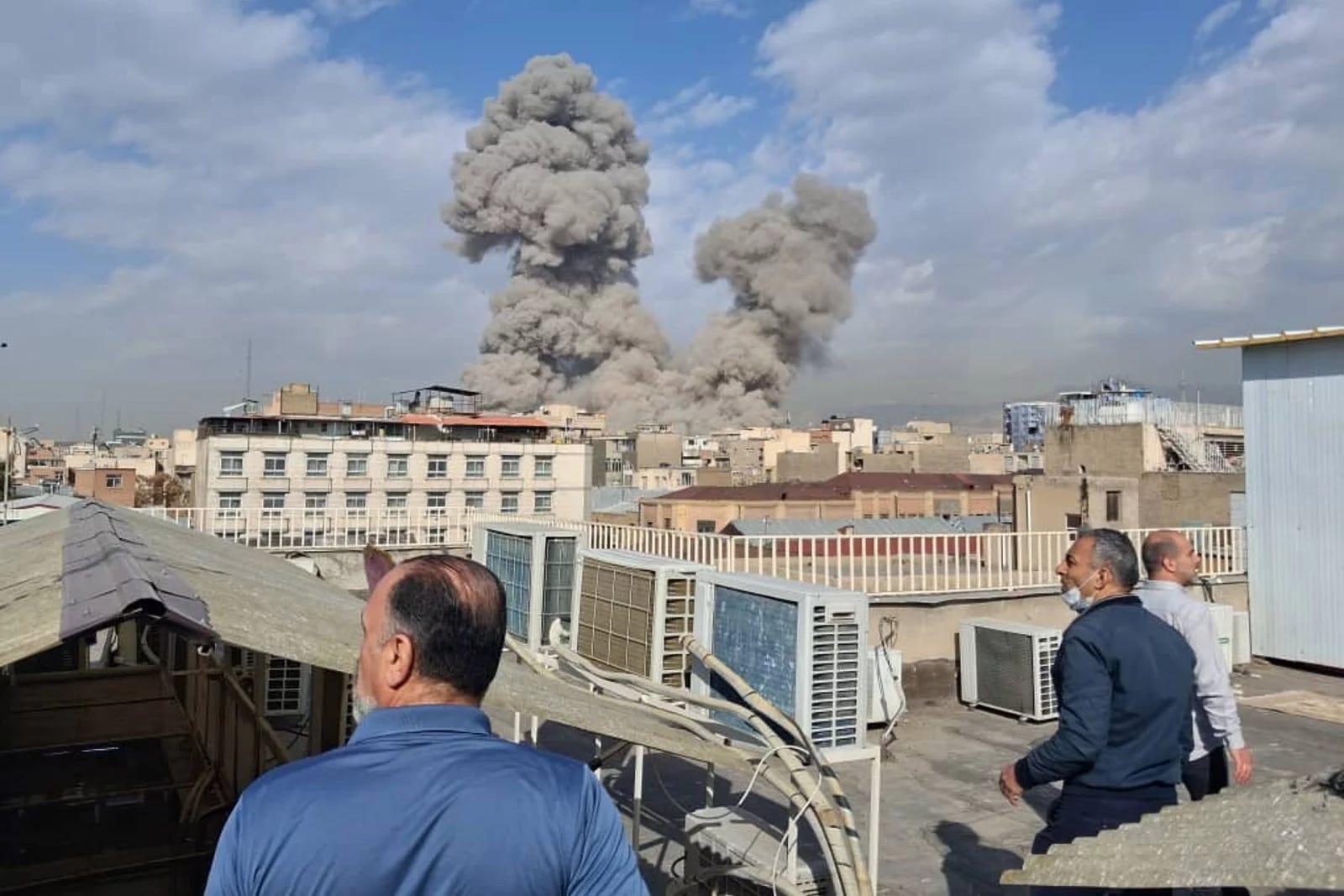
The other key question, of course, is the extent to which this spreads, the extent to which some of the groups that are supported by Iran escalate military engagements. We’re already seeing conflict between Israel and Hezbollah. Do we start to see a renewal of conflict in Gaza? Do we start to see more operations against the Houthis in Oman and in the Gulf region?
And does this start to destabilize things to where, even if you do start to make things a little bit more tractable in Iran, Iran has lost control of the proxies, and now you’ve created a bunch of other conflicts in the region?
So I think those are going to be two key things I’m going to be paying attention to, as well as paying attention to what Trump himself is saying about all this. He’s already changed his tone and message on it several times.
This is a fast-changing situation. Paul is sharing his ongoing observations on LinkedIn if you’d like to follow along.
 | A guest post by
|
Great interview. And now the question of Trump’s motivation keeps nagging at me. Ben Rhodes’ conversation with Ezra Klein this week pushed my skepticism further.
Think about the contradictions stacking up. Trump campaigned explicitly against wars without clear goals or exit strategies. Then he tells the Iranian people to rise up and overthrow their government… while simultaneously having a shortlist of candidates to install as the new leader, all of whom were subordinates of the ayatollah he just killed. Those two things cannot both be true at once. Either the Iranian people are supposed to determine their own future, or Trump has already picked their next ruler from the old regime’s bench. He can’t mean both.
Then consider the domestic politics. This is wildly unpopular: with the American public, with his own base, with most of his cabinet. The midterm campaign ads write themselves: the cost of this war exceeds the combined price tag of every social program Republicans tell us we can’t afford: ACA subsidies, education funding, childcare. And the only prominent figure who has been a consistent champion of striking Iran is John Bolton, the same John Bolton that Trump is currently trying to prosecute using the DOJ. The man whose defining policy goal Trump weaponized the justice system against is now applauding him from the sidelines.
So you run the list of who wanted this and you come up nearly empty. The Joint Chiefs were leaking their opposition. Vance wants nothing to do with it. Rubio was focused elsewhere. Tucker Carlson is furious. And then there’s Nick Fuentes, who spent the weekend telling his followers to either sit out the midterms or vote Democrat in protest of Trump’s collaboration with Israel on this war. These are among Trump’s most vocal and most volatile supporters, people he has, throughout his entire political career, consistently refused to alienate, even when doing so cost him nothing. He has contorted himself in remarkable ways to avoid losing the racists. And now he’s losing them anyway, just for this.
What coherent explanation is left? You don’t have to be particularly conspiratorial to wonder whether something other than strategic calculation is driving this; whether Trump is responding to personal incentives or pressure that hasn’t been made fully public. What Paul said about Netanyahu pushing on an open door is probably right, but it still doesn’t fully explain why that door was open at all.
The whole thing is so cruel for ordinary Iranians. Trump’s offer to them, stripped of the rhetoric, is: sacrifice your life fighting a regime that is still very much intact and in control of the guns, and if it doesn’t work out, meet your new boss — same as the old boss, just more afraid of Trump.
For another perspective: https://www.thefp.com/p/this-isnt-israels-war-its-americas?utm_source=substack&utm_medium=email