

Is AI Making Hiring Less Fair?
Chatbot interviewers and algorithmic resume filters are reshaping hiring

Dressed in a suit jacket and tie, Leo Humphries logged in to a video interview for what he described as his “dream job.” He greeted the interviewer and noticed that the voice that responded sounded oddly robotic. “Hi, thank you for joining the interview today,” it said. Soon afterward, the interviewer launched into what Humphries expected to be a normal conversation: “For our first question, let’s circle back. Tell me about a time when… when… when when when, let’s… Let’s circle back.”
As the “interviewer” glitched and repeated the same loop, Humphries’s suspicion was confirmed: he wasn’t being interviewed by another human being, he was being interviewed by an AI chatbot — a malfunctioning one.
Experiences like his are increasingly common. Job seekers across Reddit, TikTok, and other media share stories of being interviewed by AI agents. Some operate by offering a series of questions in the text and asking you to respond to them verbally. They may reply to your answers with follow-up text. They may “talk” to you. But no matter the format, applicants are being recorded and scored based on behaviors such as eye contact and facial expressions and skills such as problem solving, initiative, teamwork, and many others.
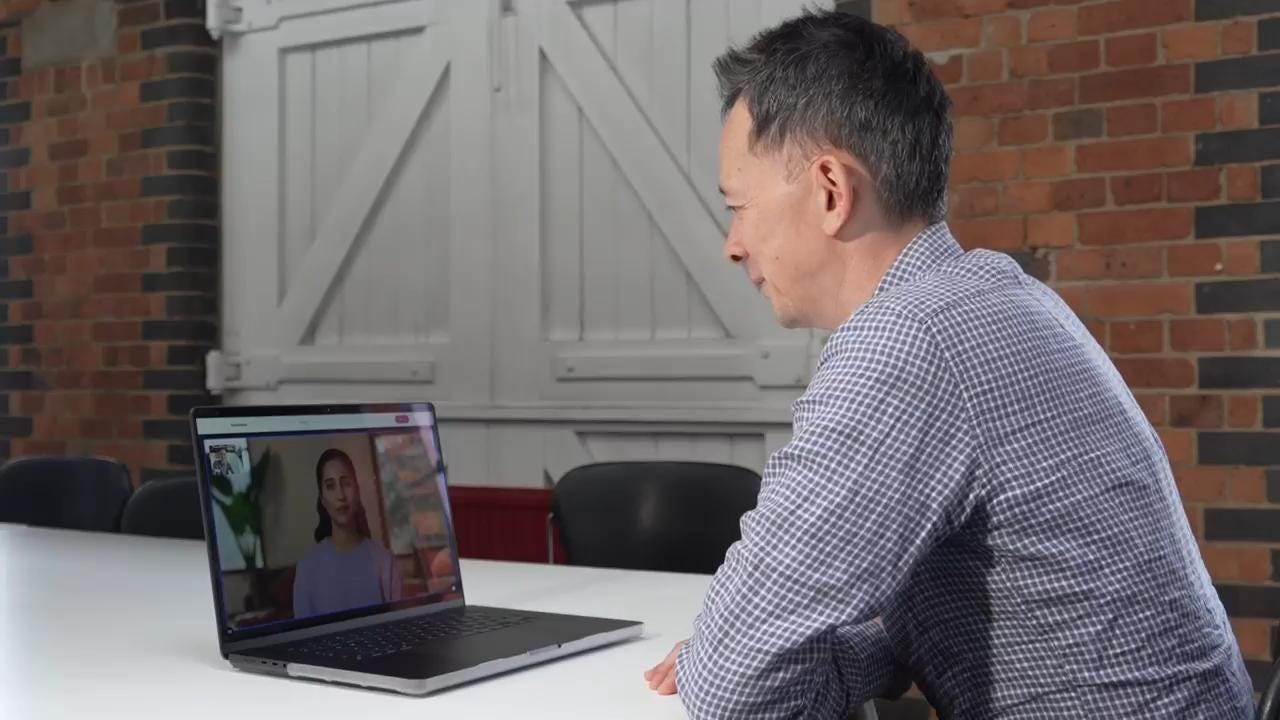
According to the World Economic Forum, in today’s job market nearly 90 percent of companies use artificial intelligence algorithms to initially assess job applicants.
This can range from screening a résumé for key words to administering personality tests to game-playing to that online interview, all before candidates move toward interacting with a human, if they get there at all.
As with standardized testing, algorithm bias — in those who design the algorithms and in the subsequent machine learning meant to apply and enhance them — has been a concern.
A new study published by The Stanford Institute for Human-Centered AI found racial bias when it audited just one algorithm used across 3.4 million applicants, who submitted four million applications to 156 employers in 11 market sectors.
The study emphasizes a new concern evidenced by its title, “Algorithmic Monocultures in Hiring.” This means a handful of algorithms from third-party vendors are being used by the great majority of companies, and therefore any bias — found or inherent, racial or otherwise — could follow you around from company to company as you apply.
 | A guest post by
|