

In Springfield, Ohio, the federal government is summoning Haitians to immigration offices, arresting and fingerprinting them, and fastening electronic monitors around their ankles. Across the US, 350,000 Haitians have been stripped of the protections that allowed them to legally live and work in the United States after the Supreme Court cleared the way for the Trump administration to terminate their Temporary Protected Status (TPS). Now, immigration authorities are placing many of them under electronic surveillance that monitors their location, restricts their movement, and stigmatizes them within their own communities.
Stripped of protected status
Congress created TPS in 1990 to protect people already in the United States when armed conflict, natural disaster, or other extraordinary conditions made it unsafe for them to return to their home countries. Haitians first received TPS after the catastrophic earthquake of 2010, and the protection was repeatedly extended as conditions deteriorated. During the decade and a half that followed, Haitian TPS holders built lives in the United States: working, marrying, raising children, joining churches, and becoming part of communities across the country. Nearly 10% are married to US citizens or legal permanent residents, and 18% are parents of US-citizen children.
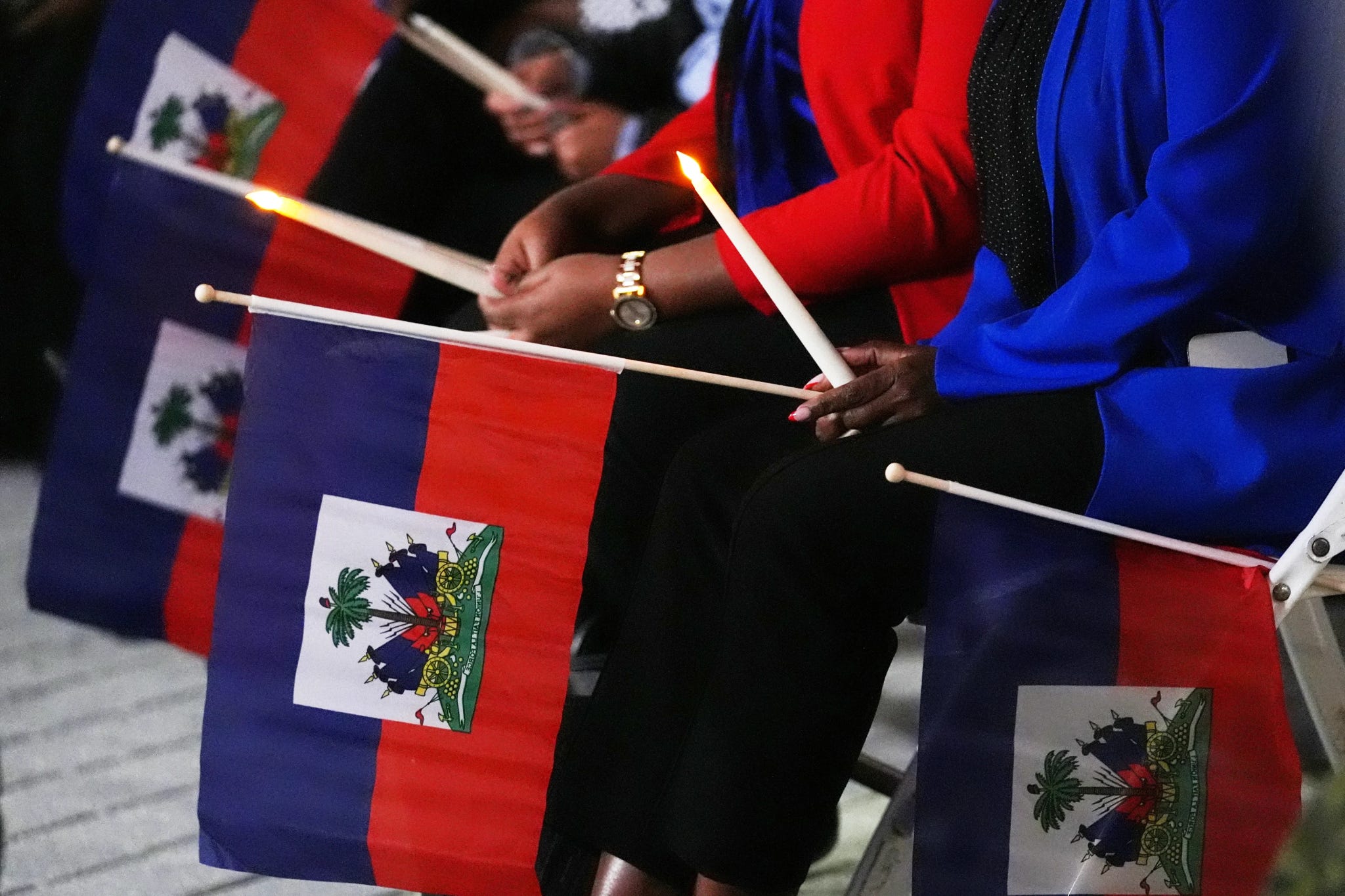
The administration says it is terminating TPS because Haiti no longer faces conditions preventing safe return and because continued protection is contrary to US national interests, citing migration, public safety, and national security concerns. That termination, in turn, has made hundreds of thousands of Haitians newly vulnerable to immigration enforcement. Faced with a population far larger than it could detain, ICE turned to electronic monitoring: a senior DHS official cited a lack of detention space as the reason the agency started expanding the use of ankle monitors.
Neither the termination of TPS nor the turn to monitoring was based on new conduct by the people selected for surveillance. Many have pending asylum claims and no final order of removal. Their attorneys say they have complied with immigration requirements, and they already underwent background checks as a condition of receiving TPS. What changed was not their conduct, but the government policy under which they had been living and working.
Now stripped of their status, former TPS holders are vulnerable to job loss, detention, or deportation. The consequences are especially visible in Springfield, Ohio, home to more than 10,000 Haitians. Local church leaders have spoken about congregants staying home from services for fear of arrest and deportation. Haitian communities elsewhere are also experiencing disruption: in South Florida parents are trying to comfort children who fear going to school while employers say workers are too afraid to come to work.
The administration’s determination that Haitians can return to their country safely is difficult to reconcile with the government’s own assessment of conditions there. The State Department currently tells Americans not to travel to Haiti “for any reason,” citing crime, kidnapping, terrorism, unrest, and limited health care. Yet the same government warning Americans against entering Haiti is making hundreds of thousands of Haitians vulnerable to being sent there in violation of foundational principles of human rights, and subjecting them to increased surveillance at the same time.
Electronic monitoring matters here not simply because it substitutes for detention in individual cases. It lets the government place far more people under immigration supervision than it could physically confine. In that way, the withdrawal of TPS expanded not only the population vulnerable to enforcement, but also the reach of the detention system itself. The form of control changed, but its burdens did not disappear.
The burden of surveillance
Ankle monitors can profoundly reshape ordinary life, constantly reminding wearers that they are under surveillance and limiting their ability to move freely through their communities. In Springfield, Haitians fitted with monitors have been restricted to a 75-mile radius — a boundary that would not even allow a person to travel to Ohio’s only immigration court, which is 188 miles away. That means wearers have to obtain government permission to attend their own immigration hearings. Leaving an authorized area, tampering with the monitor, or allowing its battery to die can generate an alert that may ultimately be reported to ICE. Even charging the device intrudes into everyday routines: one Haitian woman who worked nights was reportedly told by an ICE officer to charge her monitor while she slept.
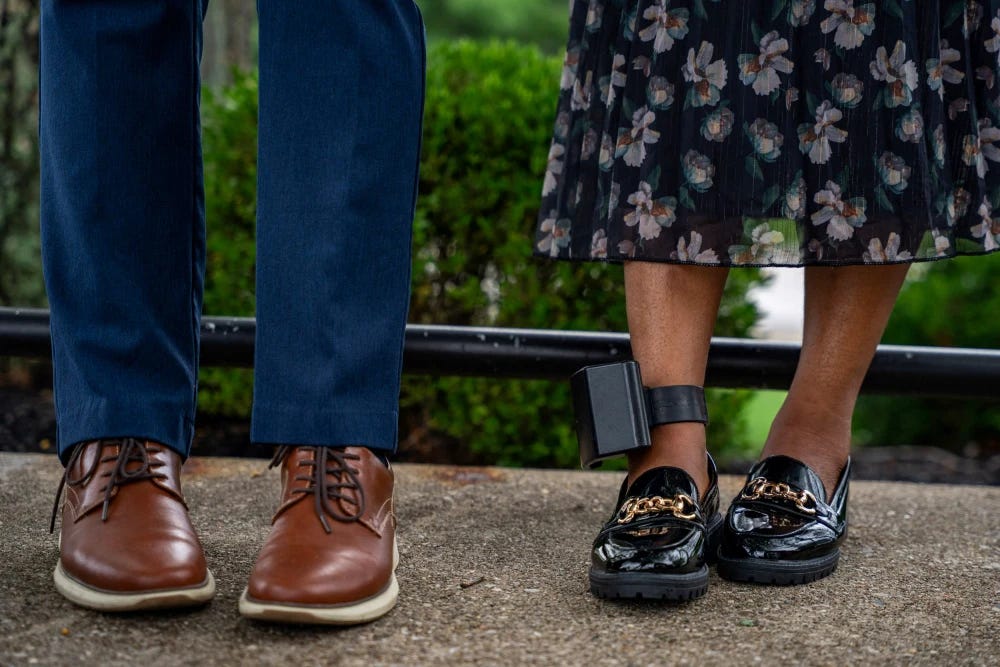
The monitor acts on both body and mind. It cannot simply be removed, and wearers have reported bruises, rashes, disrupted sleep, and other physical discomfort. One former wearer explained that the device “really gets into your psyche and really damages your soul.”
For Haitians, a restraint fastened around the ankle carries a particularly painful historical resonance. Haiti emerged from the Haitian Revolution, which defeated the forces Napoleon sent to reassert French control and restore slavery in the colony then called Saint-Domingue. The people freed themselves and established an independent Black nation in 1804. It was the first time in world history that a revolution by enslaved people resulted in the creation of a sovereign nation. Haiti thereby became both the world’s first independent Black republic and the first country in the Western Hemisphere to outlaw slavery. Its example reverberated throughout the Atlantic region, stimulating resistance to slavery and reshaping debates over race, abolition, and colonial independence. Against this history, Springfield Haitian leader Viles Dorsainvil has described the monitors as “trying to bring back the memory of slavery.”
Even apart from that association, the devices are stigmatizing. Worn visibly on the body, an ankle monitor publicly marks a person as subject to coercive state control. Because such devices are widely associated with the criminal legal system, wearers may be met with suspicion and judgment. Electronic monitoring therefore occupies an uneasy position: it allows people to remain outside detention walls while nevertheless intruding on privacy, restricting movement, disrupting routines, and penalizing people subjected to it.
The point is not that an ankle monitor and detention are equivalent. They are not. Remaining at home, living with family, working, and moving through one’s community are profound freedoms that incarceration takes away. But electronic monitoring is hardly benign, even if it is often sold as a “kinder” alternative to detention.
The growth of electronic monitoring
Before immigration authorities adopted electronic monitoring, it was already in use within the criminal legal system. As prison populations grew during the 1980s, officials turned to the technology as one response to overcrowding. By 1987, authorities in 21 states were using electronic devices to enforce home confinement for people on pretrial release, probation, or work release. Electronic monitoring allowed authorities to supervise people in their homes without having to find or build additional cells.
ICE later adapted the same model as it faced a growing detained population and limited detention capacity. The agency began piloting electronic monitoring in six field offices in 2003 and implemented its “Alternatives to Detention” program in 2004. The government presented monitoring as a way to secure attendance at immigration hearings and compliance with court orders without using a detention bed for every person under supervision.
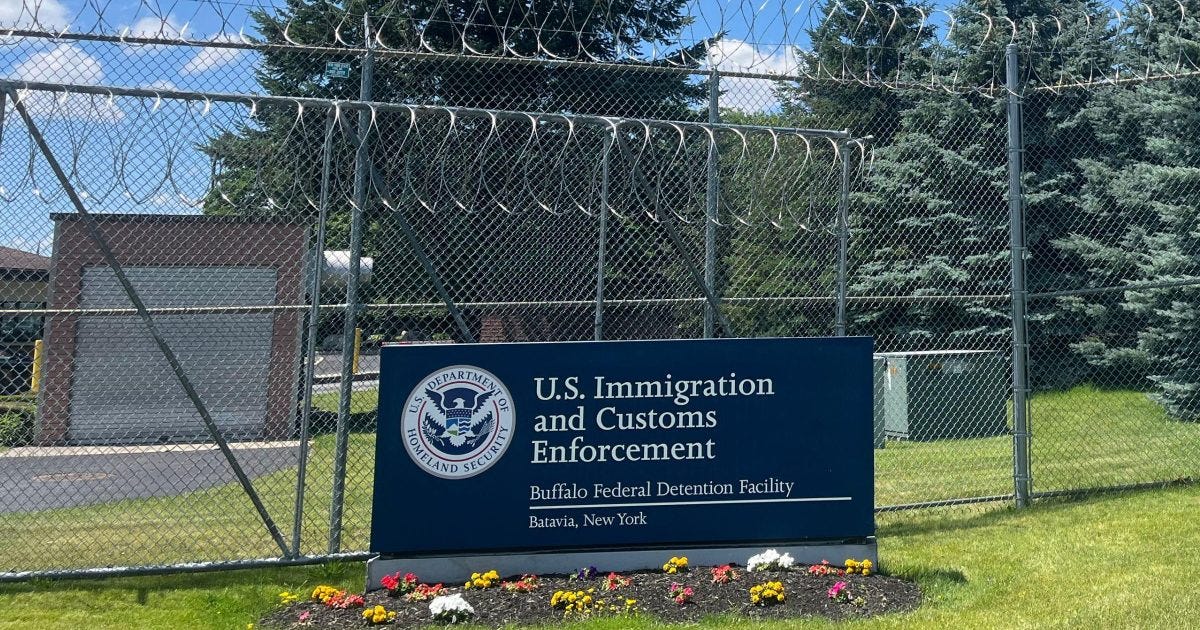
Soon, officials also started to portray monitoring as a response to the harms of detention, particularly for families. In 2005, responding to reports that DHS was separating parents from children, the House Committee on Appropriations urged the department to “release families or use alternatives to detention” whenever possible. Taken together, these enforcement, capacity, and humanitarian rationales gave electronic monitoring a relatively benign image: it appeared to offer effective supervision without physical confinement.
Cost reinforced that appeal. The Government Accountability Office found that in fiscal year 2013, the Alternatives to Detention program cost an average of $10.55 per person per day, compared with $158 for detention.
Yet the very features that made monitoring appear more humane and economical also produce a paradox of scale. Electronic monitoring can reduce physical confinement while freeing government supervision from the limits imposed by the number of detention beds available. Without needing a cell for every person, the government can extend location tracking, restrictions on movement, and reporting obligations to far more people than it could physically confine.
That expanded reach also creates opportunities for private profit. Electronic monitoring may cost the government less than detention, but ICE still pays private contractors to supply the technology and supervise the people subjected to it.
The business of surveillance
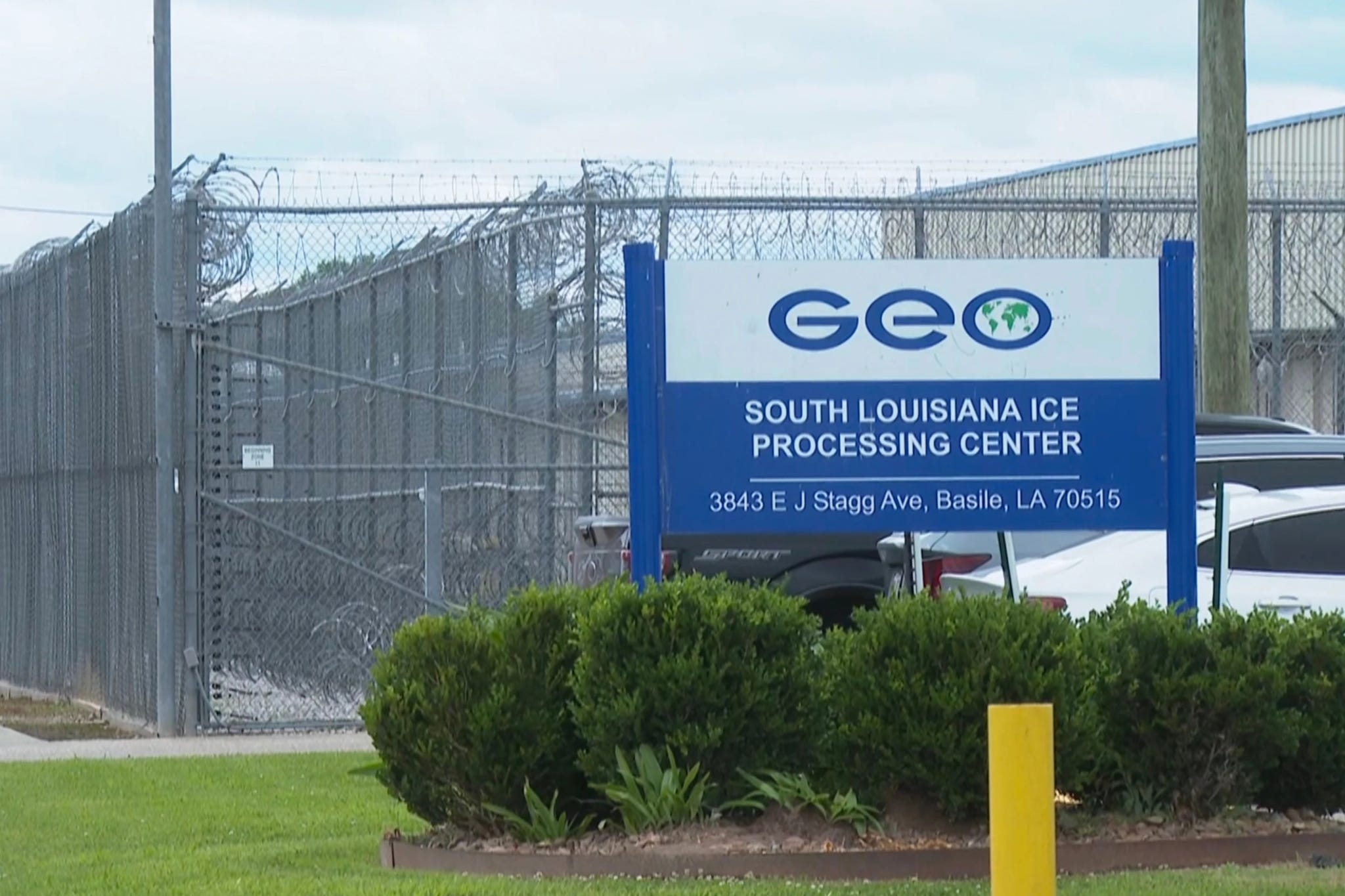
GEO Group, one of the country’s largest private prison companies, both operates immigration detention facilities for ICE and owns BI Incorporated, which ICE pays to supervise immigrants outside detention through electronic monitoring and other tracking methods.
This dual role represents a significant part of GEO’s business. In 2025, GEO reported $2.6 billion in total revenue, with ICE — its largest customer — accounting for nearly 48% of that amount. GEO’s electronic monitoring and supervision division, which includes BI, generated $320.9 million that year. When GEO purchased BI in 2011, it described the acquisition as a way to participate in the entire “corrections lifecycle,” from confinement inside institutions to supervision outside them. As of this month, BI was supervising approximately 184,000 immigrants, nearly 54,000 of whom were wearing GPS ankle monitors. GEO does not decide whom ICE detains or monitors. But once ICE makes that decision, GEO is positioned to earn revenue under either arrangement.
While electronic monitoring expands, resistance is emerging both nationally and in Ohio. In June 2026, immigrant-rights organizations filed a nationwide class action lawsuit accusing ICE of imposing GPS monitoring on people without individualized justification. The case was not filed specifically on behalf of Haitians in Ohio and the proposed class has not yet been certified, but could potentially include them if they are part of the supervision program being challenged. Meanwhile, in Ohio itself, earlier this month hundreds of neighbors, clergy members, and advocates gathered to sing, pray, and protest outside the ICE office where Haitians had been summoned for mandatory check-ins and fitted with ankle monitors.
The lawsuit and protests are efforts to stop or limit what is happening now, but the monitoring of Haitians is not an isolated measure. It is the latest use of an immigration enforcement system developed over decades as the federal government relies on private companies first to operate detention facilities and later to enable tracking and supervision of immigrants outside them. When TPS ended, the government did not have to create a new system. It could use one already in place to surveil a population made newly vulnerable by a change in policy.
The human cost of that system was visible outside the ICE office in Blue Ash, Ohio, on August 9. After Monsanto Maler emerged with a monitor attached to his ankle, he covered his face, burst into tears, and collapsed. He had gone there because the government ordered him to appear. He complied. When he left, ICE’s surveillance was fastened to his body.