

How War with Iran Would Impact the US
Escalating the conflict might not make Americans any safer

The United States spent 20 years trying to end one Middle East war. It may now be drifting toward another — this time with Iran — without the debate the American people have come to expect when their country takes up arms.
Historically, presidents have understood that war requires persuasion and public buy-in. Franklin Roosevelt addressed the nation before entering World War II. Lyndon Johnson offered justifications for escalation in Vietnam. Before the Iraq War began, George W. Bush spent months making his case to Congress and the American people — laying out stakes, strategy, and the sacrifices ahead. The debate was lengthy and the argument ultimately proved flawed. But Americans had heard it.
Donald Trump, so far, has offered something closer to flashes of rhetoric that signal intent without defining mission. “You’ll be finding out over the next ten days” whether there will be military action, he said last week, warning that “bad things happen” if Iran does not reach a “meaningful agreement.”
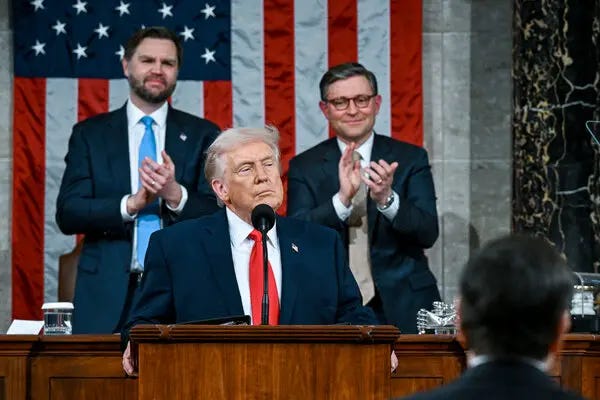
At the State of the Union, the country was waiting for clarity. It didn’t come. Trump said he preferred diplomacy but vowed Iran would never obtain a nuclear weapon — without explaining what preventing that would demand, or what comes next if talks this week in Geneva with Iranian officials collapse. The country is being asked to contemplate war without a clear accounting of costs, risks, or endgame.
The argument for action
The case for striking Iran is familiar. It is designated by the United States as a state sponsor of terrorism, funds and arms proxy groups across the Middle East, boasts a large arsenal of long-range missiles, and continues to advance a nuclear program that many officials believe could eventually produce a weapon. Preventing that outcome, supporters argue, would strengthen US security — protecting allies, global energy markets, and American deterrence far beyond the region.
It is a logical argument that many Americans could support in theory. But wars are not fought in theory. They are fought in consequences. Weighing the likely costs against the expected gains, and doing so in specific terms, is more important than any general rationale.
The real question is not whether Iran poses a threat. The real question is what confronting that threat militarily would demand of Americans — in lives, in money, in economic shock, and in the long shadow wars leave behind. It’s a calculation of whether the price of a potentially protracted conflict would make Americans safer or create a new set of dangers that outlast the initial operation and outweigh its benefits.
How it could begin
Trump has said publicly that he is weighing starting with a limited military strike to pressure Iran into a deal. People familiar with the planning say any initial operation would likely concentrate on nuclear sites and ballistic missile programs.
But history suggests that wars rarely work out as planned. Military operations described as limited tend to expand — through retaliation, miscalculation, or the collapse of assumptions that seemed solid before the first strike. Afghanistan began as a targeted campaign against al-Qaeda and became a 20-year war. Iraq was declared a mission accomplished within weeks but consumed a decade. Libya began as a limited intervention to protect civilians. It evolved into regime collapse, prolonged instability, and the lethal attack on US facilities in Benghazi. It is not hard to begin an action that is supposed to remain contained. Ending it is another matter.
The economic shock
The costs Americans felt fastest would arrive through energy markets.
The Strait of Hormuz — a narrow chokepoint off Iran’s coast, about 104 miles long and as little as 21 miles wide — separates the Persian Gulf from the Indian Ocean. Nearly 20 million barrels of oil pass through it every day, representing roughly one-fifth of global petroleum supply. Most of the crude from Saudi Arabia, Iraq, Iran, Kuwait, and the UAE must transit this corridor to reach world markets.
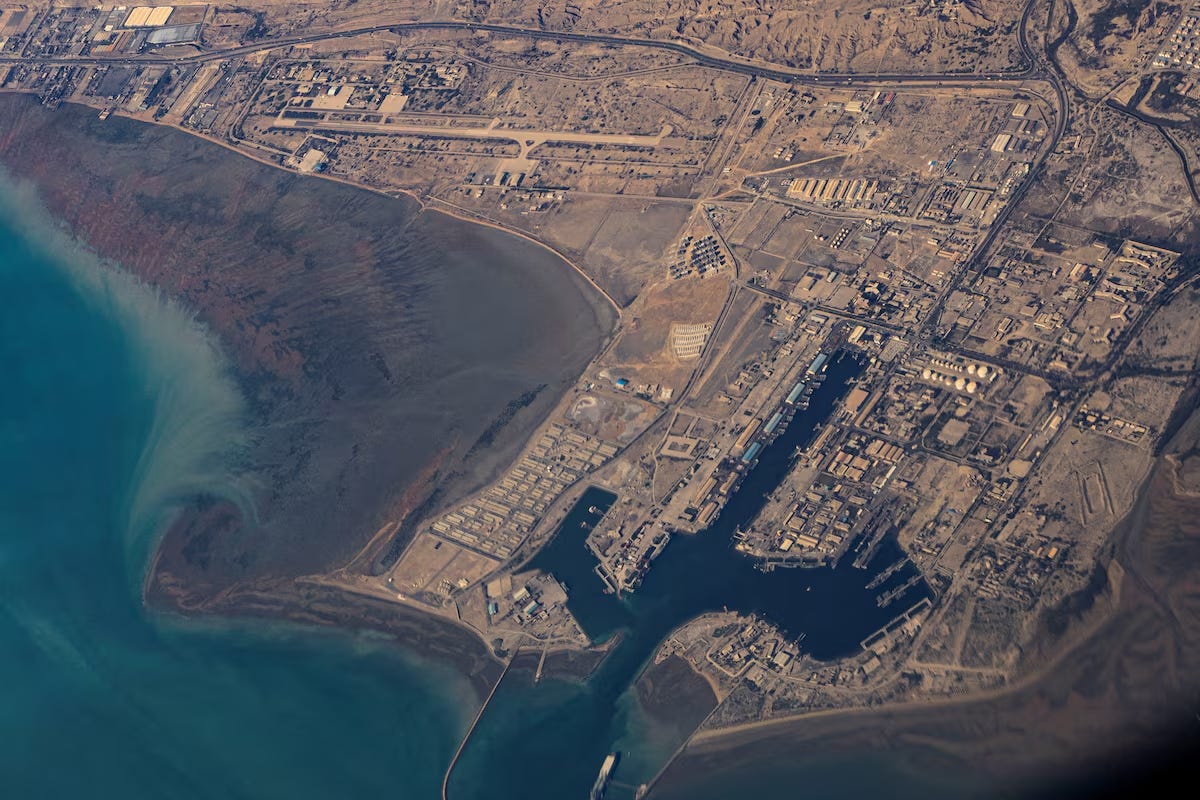
Iran does not need to close the strait to disrupt that supply. Even partial disruption — mining operations, harassment of tankers, drone or missile threats, or simply the perception of escalating risk — could send shipping costs and insurance rates sharply upward.
Markets react to uncertainty long before physical supply is cut off. They are already pricing in the risk. As of late February, the US oil benchmark had risen nearly $10 per barrel in response to Iranian tensions, hovering above $66. According to Claudio Galimberti, chief economist at the Rystad Energy research firm, a contained Iran conflict could push oil prices up another $15 to $20 per barrel, above $80. Any significant impact to the strait itself could force prices above $100, potentially sending the cost of gasoline toward $5 per gallon.
The Middle East conflict playbook of the last two decades has generally held: avoid targeting oil infrastructure. That assumption is now being questioned. Matt Reed, vice president of the geopolitical and energy consultancy Foreign Reports, said a desperate Iranian regime might not follow the old rules.
Rather than absorbing a US strike, as it largely did after the United States bombed its nuclear program last year, Iran could lash out against oil infrastructure in Gulf Arab states — targeting Saudi Arabia or the UAE, where the installations are exposed and the economic damage would be immediate and global. Iranian energy infrastructure could also be impacted during a military campaign, further tightening global oil supply and amplifying price shocks worldwide.
Americans often assume they are less vulnerable because domestic energy production has increased dramatically over the past decade. But oil is priced globally. A shock to Gulf shipping would show up quickly at home: higher gas prices, rising airline fares, more expensive shipping, higher manufacturing costs, and, eventually, more expensive groceries.
The long-term bill
The military buildup in the region since late December has already run roughly $350 million to $370 million, according to estimates from former Pentagon comptroller Elaine McCusker. That figure is driven primarily by naval operations — ships redirected or surged to the region, fuel, transit, and crew costs. Maintaining a carrier strike group runs about $1 billion per year. With two carriers now deployed to the Middle East, the meter is running.
The post-9/11 wars in Iraq and Afghanistan ultimately cost the United States between $5 trillion and $8 trillion, once veterans’ care, disability payments, interest on war financing, and long-term military commitments are included. The United States financed those wars through borrowing rather than taxes, meaning the true cost continued accumulating long after the initial campaigns — and is still appearing in federal budgets today.
Ghosts of wars past
Comparisons to Iraq, Afghanistan, and Libya are, in one important sense, misleading: Iran is larger, more populous, and far more prepared militarily for a sustained confrontation. It does not need to win. It needs only to make conflict expensive enough — politically, economically, and in American lives — that Washington regrets getting in. Since the 1979 Iranian revolution, Tehran has built its military doctrine around exactly such a scenario.
There is also the opportunity cost. The post-9/11 wars absorbed vast financial and political capital as China invested heavily in infrastructure, technology, and long-term economic growth. That competition is more intense today. A sustained Middle East engagement could lock the United States into exactly the kind of resource-draining distraction it can little afford.
Would America be safer?
Supporters of confronting Iran argue that decisive action could reduce long-term nuclear risk and restore deterrence — if nuclear infrastructure is destroyed, missile capabilities are degraded, and Tehran’s ability to arm proxies is curtailed before retaliation escalates.
That is one plausible scenario. But the opposite outcome is equally plausible.
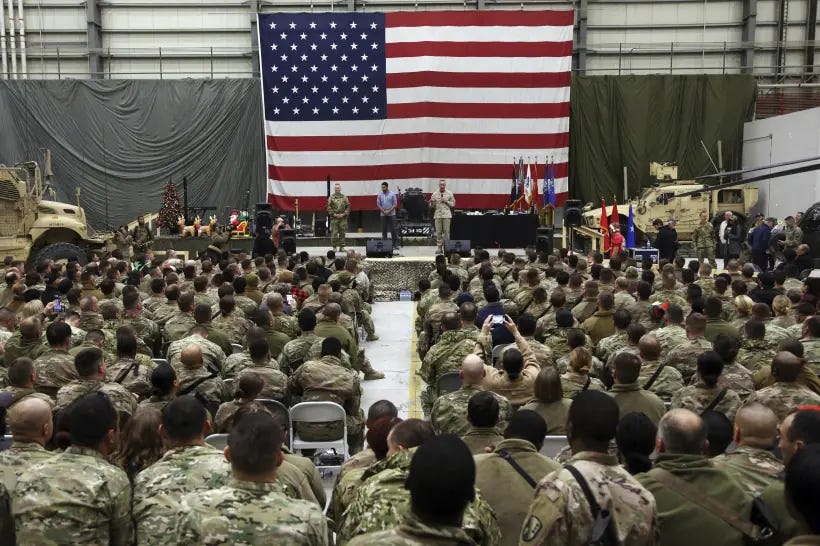
Roughly 30,000 to 40,000 US troops are stationed at bases across the Middle East, in Qatar, Bahrain, Iraq, Syria, Kuwait, Saudi Arabia, and the UAE. Those bases would fall within retaliation range from the moment a conflict began.
Iran’s strength is not conventional military dominance. It is death by a thousand cuts — ballistic missiles, drones, cyber capabilities, and militias designed to raise the price of confrontation. Its strategy is built on patience. Rather than one decisive counterstrike, the Iranian goal would be attrition: enough sustained pressure to make Washington want to get out.
Iran’s network of proxy militias — including Hezbollah in Lebanon, Shiite groups in Iraq and Syria, and the Houthis in Yemen — provides multiple avenues for retaliation without direct state-to-state war. Beyond the risk of attacks on US bases, oil infrastructure, and shipping lanes, there is also the possibility of strikes against American embassies, commercial interests, or civilians abroad. Hezbollah has demonstrated an ability to operate far beyond the Middle East; Iranian-backed networks have repeatedly shown they can create insecurity while maintaining plausible deniability.
Cyber operations add another dimension. Hackers linked to Iran have previously targeted US companies and infrastructure. Cyber retaliation does not produce dramatic battlefield imagery, but it can disrupt financial networks, transportation systems, or energy grids, causing economic damage and public anxiety far from any traditional war zone.
The risk is not necessarily a single catastrophic attack. It is sustained pressure that raises costs gradually, forcing the United States into a prolonged defensive posture with no clear exit.
Inside the debate
Questions about the risks aren’t being raised only outside Washington. They appear to be shaping deliberations inside the administration as well.
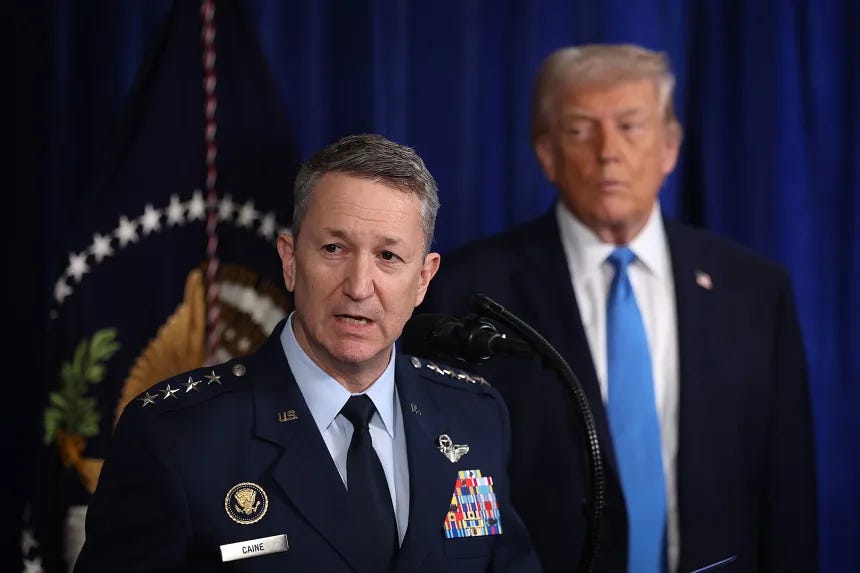
Joint Chiefs Chairman Gen. Dan Caine has advised President Trump and senior officials that any military campaign against Iran carries significant risks — including the real possibility of becoming entangled in a long, costly conflict. Vice President JD Vance has also raised concerns about complexity and the potential for entanglement, questioning how far the United States might have to go once escalation begins.
No one involved in those discussions is said to be advocating a ground invasion, which would put American lives directly on the line at a scale not seen since Iraq. But even air strikes would carry a risk of US casualties.
What is the endgame?
Asked what the objective of any action against Iran would be, President Trump said simply: “To win.” He has yet to spell out what he hopes to achieve: Deterrence? Containment? Punishment? Regime change?
Taking out Iran’s nuclear program is a different mission from degrading its missile arsenal — and both are different from regime change, which would require hitting thousands of targets and could extend for weeks or months. Each objective carries a different price tag, a different risk profile, and a different idea of what comes next.
But history shows how quickly objectives blur as events move faster than plans. A war intended to eliminate one threat can easily generate a cascade of new ones.
Wars do not unfold in press briefings or social media posts. They unfold in military hospitals, in federal budgets, in energy markets, and at kitchen tables — with costs accumulating long after the fighting begins. A conflict with Iran would likely touch every American who drives a car, buys groceries, pays a credit card bill, or — most important — has a relative in the military.
Before the country moves toward another Middle East war, whether deliberately or by drift, Americans deserve an accounting of the expected costs and risks. What is the strategy? What does success look like — and who suffers when it doesn’t arrive? These are questions that should be asked — and answered — before the first missile falls.
 | A guest post by
|
Thank you Elise - your essay is one that deserves a much wider audience that "the PREAMBLE". One means of doing so is to offer this essay to news sources that have a wide readership. Examples would be the New York Times, the Washington Post, as examples. Is there a plan to provide your work to such outlets? If not, can it be a consideration?
Thank you for this Elise. It gave me a lot to think about today.