

How Shutdowns Became a Political Weapon
They used to be rare. What changed?

In the middle of the 1995 holiday season, something unprecedented happened in the US: the government shut down. With a Republican-led Congress and a Democratic president at odds, for 21 days, funding for everyday federal functions lapsed. At a time when many federal workers had planned to spend their salaries on holiday gifts, instead more than 200,000 were furloughed and went without pay. Across the country, parks and monuments closed. Passports and visas went unprocessed. The Veterans Health Administration was forced to limit medical care and facility access strictly to “protection of life” cases, and insurance benefits were delayed.
When he came into office in 1992, Bill Clinton was the first Democratic president elected in 12 years. But the GOP swept the 1994 midterms, campaigning on promises to repeal Clinton’s upper-income tax increases, stave off health care reforms, and push through wide-ranging spending cuts to balance the federal budget. By 1995, Newt Gingrich had become the first Republican speaker of the House in 40 years.
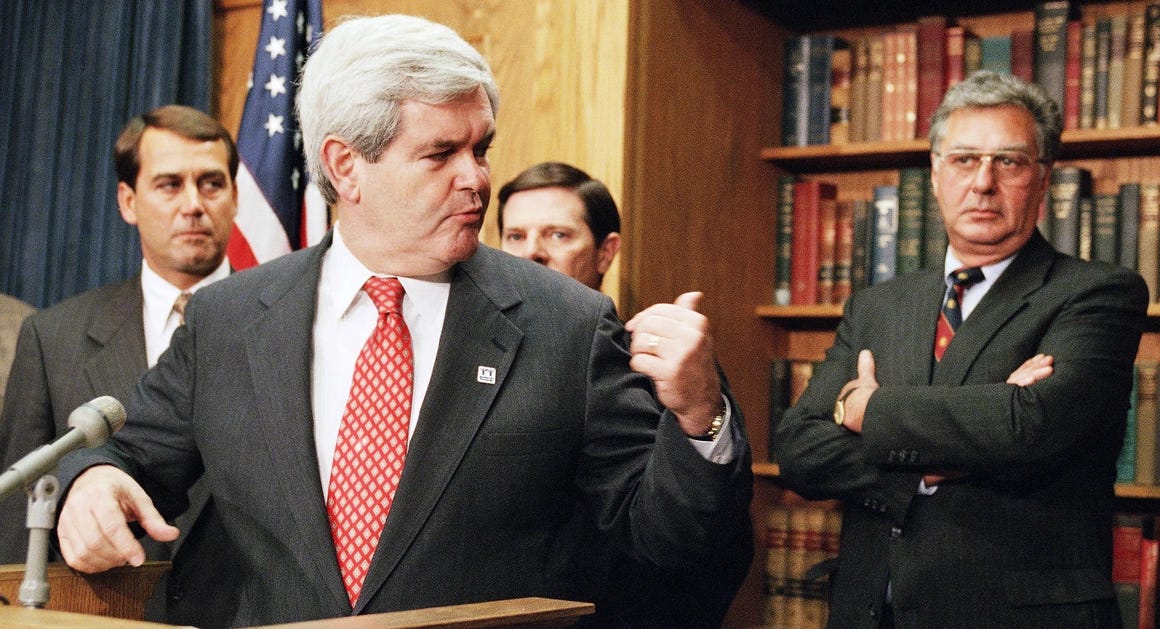
Clinton had also promised a balanced budget and deficit reduction, but when Congress sent him a budget proposal with cuts to critical safety net and social programs like Medicare, welfare, and Social Security, he promptly vetoed it. With the president and Congress at an impasse, by December 15, the government was out of money.
The shutdown ground on through the new year, until Senate Majority Leader Bob Dole helped deliver a compromise deal. The government reopened, but the shutdown marked the beginning of an era of hyperpartisanship in which disruptions to the ordinary functioning of the government would, within a few decades, go from rare aberrations to a regularly wielded weapon.
An exploitable funding process
Before Clinton and Gingrich’s standoff, government shutdowns were more commonly known as “fiscal lapses” or “funding gaps.” Although 14 funding gaps occurred in the 1970s and ’80s, most lasted less than a week and didn’t lead to any agencies shutting down operations either because the gaps were too brief or they happened over a weekend, and funding was restored before any work was impacted.
Shutdowns stem from the government’s complicated funding process — which creates funding gaps and deadlines that can be used to pressure political opponents — and a level of polarization that’s less common in other democracies, particularly those with parliamentary systems.
Every year, Congress must pass 12 separate appropriations bills to keep the government operating. If one or more doesn’t pass, a partial shutdown can occur. But if all appropriations stall, there can be a complete shutdown. Temporary spending bills — called continuing resolutions — can allow the government to keep operating under the prior year’s spending levels until final appropriations are approved, but the deadlines and threats make funding gaps a constantly recurring point of leverage.
To understand how the mechanism for government shutdowns came to exist in the first place, we need to look back to the 19th century.
Prior to the Civil War, Congress and the executive branch often clashed over what historians call “coercive deficiencies,” in which agencies spent their appropriations early and then pressed Congress for more money. For example, the Post Office regularly sought and received additional funds following threats it would not be able to pay contractors to deliver the mail. In the 1850s, combined deficiencies topped $5 million a year (around $212 million in today’s dollars). Then, at the start of the Civil War in 1861, President Abraham Lincoln ordered the Treasury to pay out an initial $2 million for military preparations despite the lack of a congressional appropriation. When back in session, Congress retroactively approved the spending.
During the war years, spending grew from around $80 million a year at its start to a peak of $1.3 billion in 1865 because there were no guardrails to stop ad hoc and emergency expenditures.
After the war, Congress pushed back, passing the Antideficiency Act — legislation designed to curb government spending that exceeded appropriations.
Essentially, it meant that federal agencies could no longer spend money that hadn’t been appropriated by Congress. With the legislation helping to curb coercive deficiencies, Congress also formed new appropriations committees to manage spending more closely. In subsequent years, Congress strengthened the Act to add penalties, including fines and even imprisonment for federal employees who knowingly and purposely overspent.
How a legal opinion turned lapses into shutdowns
During the presidency of Jimmy Carter, the Federal Trade Commission (FTC) began making broader use of its power — originally granted by Congress in the 1930s — to regulate “unfair or deceptive” practices, with a focus on protecting consumers from the tobacco industry and the marketing of “sugary foods” on TV commercials. By 1980, industry lobbyists and friendly members of Congress were pushing back on FTC powers, and a congressional majority threatened to defund the agency unless it backed off.
In anticipation, President Carter asked his attorney general, Benjamin Civiletti, to explore the legal ramifications of an unfunded federal agency; what would happen and what would it mean?
Civiletti sent the president a five-page interpretation of the 1884 Antideficiency Act. The analysis emphasized that the government could not operate “nonessential obligations” during these lapses — meaning that when appropriations ran out, government operations had to cease. The White House accepted the interpretation.
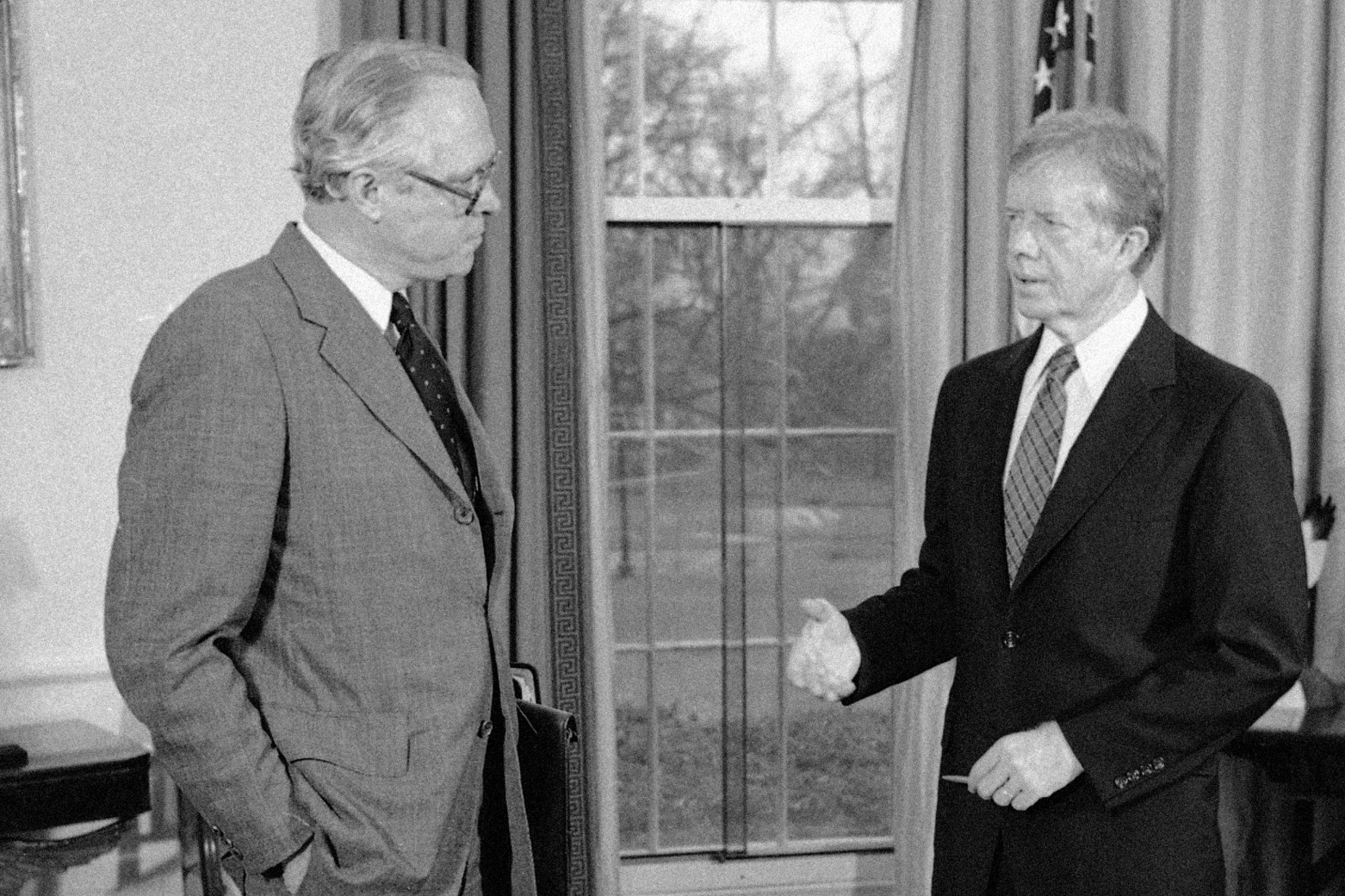
On April 30, 1980, Congress allowed the FTC’s funding to lapse. The next day, to comply with the Antideficiency Act as Civiletti had interpreted it, the White House ordered the FTC to shut down, sending nearly 2,000 workers home and halting its operations. The General Services Administration, which provides security at government buildings, sent US Marshals to FTC offices to ensure compliance. The shutdown — unprecedented at the time — quickly led to a compromise in which Congress would restore funding if the FTC’s regulatory authority were reined in. The agency reopened a day later, but a precedent had been set: forcing a shutdown had resulted in pressure that changed policy.
Civiletti would later offer a follow-up opinion of the Antideficiency Act in 1981, arguing for the existence of shutdown exceptions for the “safety of human life” and “the protection of property.” Those exceptions for “essential” government functions have become the norm in the modern shutdown era.
After originating with Carter and Civiletti, this interpretation of the Antideficiency Act continued under President Ronald Reagan. Eight funding lapses occurred during Reagan’s two terms, but they lasted only one to three days. Extended shutdowns didn’t begin until the mid-1990s, and they were a surprise to the man who’d initially cleared the legal path for them.
“I couldn’t have ever imagined these shutdowns would last this long of a time and be used as a political gambit,” said Civiletti in 2019.
The modern era of shutdowns
After Newt Gingrich opened the door to an extended shutdown in 1995, it would take nearly 20 years before one happened again, in part because of the political risks to members of Congress.
“It was all a blame game… and the Republicans were hoping that Clinton would get the bigger share of the blame,” explained former Clinton White House chief of staff Leon Panetta. “But in the end, they got the share of the blame in the public’s mind.” And while Clinton went on to a second term as president, Gingrich ultimately resigned as House speaker after disastrous midterm elections for Republicans (and several unrelated scandals).
But in 2013, the Republican majority in the House found an issue that made the potential backlash worth the risk: during President Barack Obama’s second term, they led an unsuccessful effort to roll back the Affordable Care Act, resulting in a 16-day shutdown. During the shutdown, Republicans repeatedly proposed spending bills that also included delayed reauthorization of the ACA.
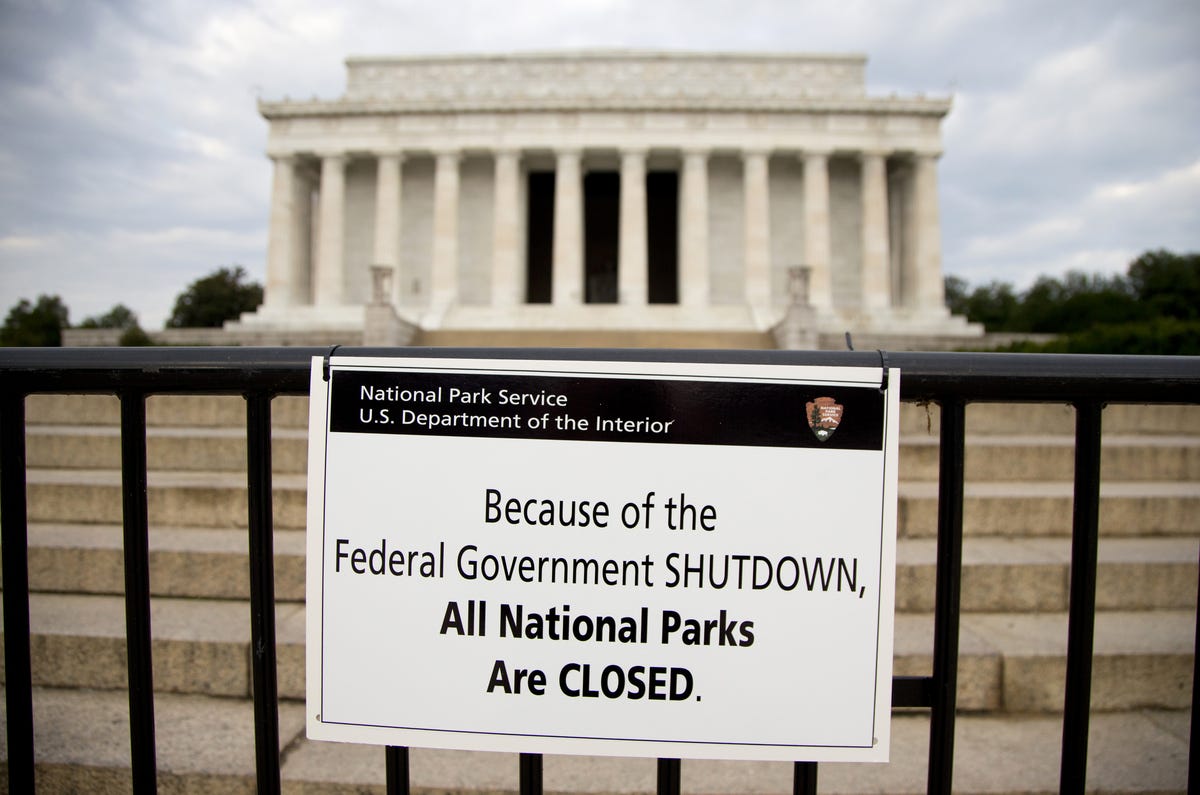
More than 800,000 federal workers were furloughed this time, and polls put most of the blame on the GOP. After 16 days, the Republican House pulled the amendments that would’ve defunded the ACA, and affected government agencies reopened. Republicans didn’t pay much of a political price, though, expanding their majority in the House and maintaining control of the Senate in the 2014 midterms.
The next government shutdown, in 2018, established a new record of 34 days. This clash centered on funding for a wall at the US-Mexico border. President Donald Trump had campaigned on building the wall, and he declared in late 2018 he would veto an annual congressional appropriations bill brought by the House unless it contained $5.7 billion in border wall funding. But Republicans held only a slim majority in the Senate, and the bill stalled, leading to the shutdown. Furloughed workers protested outside the White House, and Trump eventually caved, signing an appropriations bill without his requested border funding.
In October of 2025, another government shutdown began and eventually set a new record of 43 days. This time, it was Democrats who forced it, refusing to pass appropriations unless Republicans agreed to extend Affordable Care Act tax credits. (Though Republicans control the House and Senate, they needed Democratic votes to pass appropriations because of defections within their own party.) This time, more than a million federal workers were furloughed.
Polls were evenly split on which party was to blame, though the majority of Americans supported Democrats’ policy aims in trying to extend ACA tax credits, which lowered premiums for more than 20 million Americans. In the end, Democrats agreed to reopen the government without the extension, based on Republican assurances it would be part of separate legislation. But while the House made good on the deal, the Senate did not, and the tax credits ultimately expired.
The current landscape
This year, the Department of Homeland Security’s administrative functions went unfunded for 76 days. Democrats used the filibuster to halt funding in an attempt to force Republicans to agree to limitations on immigration enforcement, which had attracted public condemnation in light of brutal and sometimes deadly crackdowns around the country.
While essential functions continued during the partial shutdown, TSA workers temporarily went without pay, but the president redirected previously appropriated funds to keep them paid even as overall funds to run the agency stalled. Ultimately, the shutdown ended when Congress passed a bill to fund all of DHS except ICE and CBP, which Republicans try to fund separately through the budget reconciliation process (which means they won’t need any Democratic votes). Ultimately, none of Democrats’ demands for immigration enforcement reform were met, illustrating yet another instance where a shutdown failed to produce any meaningful policy change.
A solution in the making
While shutdowns are increasingly common, they’re not inevitable, and some members of Congress argue that they’re not a necessary feature of the US government.
In 2025, Jodey Arrington, a Republican from Texas and chairman of the House Budget Committee, introduced the Prevent Government Shutdowns Act. Its companion bill was refiled in the Senate.
The bills would trigger automatic rolling 14-day continuing resolutions until a funding lapse is resolved, allow no congressional votes unrelated to appropriations during that time, and limit recesses, adjournment, and travel by members of Congress, staff, and the White House Office of Management and Budget until new appropriations are made.
“My Prevent Government Shutdowns Act is commonsense legislation that would shift the burden of a shutdown away from We the People and onto the politicians where it belongs,” Arrington posted upon filing the bill. The legislation has attracted bipartisan support, with 10 Republican and nine Democratic cosponsors to date for the House version.
Similar bills have been proposed before, including Sen. Rand Paul’s Government Shutdowns Prevention Act as well as the more recent Eliminate Shutdowns Act and Withhold Member Pay During Shutdowns Act, neither of which ever emerged from committee.
Ultimately, though, the future of government shutdowns may hinge on voter response.
“Americans across the country seem to be either apathetic, confused, or frustrated,” said Sen. James Lankford about government shutdowns. “It’s a shutdown Groundhog Day.”
 | A guest post by
|
I’m not sure if I am paid subscriber. To be clear I appreciate your work and know I paid $80 at some point.
How do I avoid paying double while making sure I’m a subscriber.
I believe I even paid at some point for my daughter-in-law and a good friend
Please help