

How Medical Secrecy Props Up Political Power
There’s no rule preventing elected officials from hiding their incapacity

On the morning of June 14, an ambulance arrived at Mitch McConnell’s home in Washington, DC.
His office announced that the 84-year-old Kentucky senator had been hospitalized and was receiving excellent care. That was basically it.
Then came the dispatch audio. Recordings reportedly tied to McConnell’s address described an unconscious person, a possible cardiac arrest, and CPR already underway. McConnell’s office declined to confirm the account or explain what had happened. Nearly three weeks after he entered the hospital, his staff finally confirmed that he was still there, “continues to improve,” and was working with aides on Kentucky and Senate business.
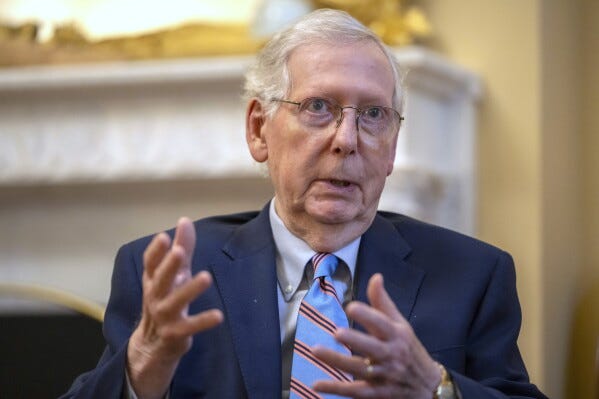
Then came the drip, drip, drip of updates. Several Republicans said they had spoken with McConnell directly. Senate Majority Leader John Thune’s office described a “lengthy and substantive” phone call. Sen. John Barrasso’s office said he had spoken with McConnell for 20 minutes. And Scott Jennings, a longtime McConnell ally, said he spoke with him about Iran, Ukraine, Senate races, and a little Senate history.
Those assurances may all be true. But the enormous space between what the public can see, what reporters can piece together, and what a small circle of family members, doctors, staff, and allies decide to say is where American politicians’ health disclosure currently lives.
The same tension surrounds President Donald Trump, who turned 80 in June, and famously President Biden before him. Trump has undergone four publicly announced medical exams during his second administration. After each of them, his physician pronounced him in excellent health and fully fit for duty, while questions remained about repeated advanced imaging, bruising, leg swelling, and moments when he has appeared sleepy during public events.
Maybe every White House claim is accurate. The current arrangement gives voters no independent way to know. Presidents choose what gets released, their doctors answer to them, and the public receives a memo written in the reassuring language of a luxury car inspection. Everything checked out. Runs beautifully. One owner.
That would be easier to accept if these were isolated episodes. They aren’t.
America is being governed by one of the oldest political classes in its history, with the age question most visible in the Oval Office. The last two presidents have been the oldest ever elected to the job, and the Senate remains a chamber where many of the most powerful members are well past traditional retirement age. And Congress has no substitute system when a lawmaker is in office but unable to show up.
Age alone does not prove incapacity. Younger politicians can get sick, disappear from work, or leave constituents without representation, too. But the older our government becomes, the more often voters will face the same question: Who is actually doing the job?
 | A guest post by
|