

How Catastrophe Makes Progress Possible
Sometimes the hardest times in history are the most transformative

We are living through a golden age of doom content. Every scroll surfaces another expert telling us the systems are more fragile than we knew, that the crisis is worse than reported, and that we have no idea how bad it’s going to get. The Guardian warns that the “Point of no return: a hellish ‘hothouse Earth’” is getting closer. Videos like “Humans Only Have 2 Years Left… PREPARE NOW!” rack up millions of views while the newsletters with the most alarming subject lines get the best open rates. And the appeal isn’t hard to understand: when the world feels genuinely out of control, collapse content offers a false sense of clarity. By naming the threat, it confirms that your unease isn’t irrational by giving you a narrative. And even a terrible narrative is more bearable than the formlessness of not knowing.
There’s a reason for this that goes deeper than media incentives. In 2001, psychologist Roy Baumeister and his colleagues published a landmark paper called “Bad Is Stronger Than Good,” documenting what researchers now call negativity bias: our tendency to weight negative information more heavily than positive across virtually every domain of human psychology. Bad impressions form faster. Bad events have longer-lasting effects. Bad feedback lands harder than equivalent praise. This is one of our biggest evolutionary inheritances because those who paid more attention to threats tended to survive long enough to reproduce and rear offspring. Our nervous systems were built for a world where bad news usually meant something was trying to kill you.
Terror management theory, developed by a group of psychologists in the 1980s, adds another layer: when awareness of death and civilizational threat is heightened, we instinctively cling to worldviews that feel complete and final. A collapse narrative offers existential relief — it ends the story. The uncertainty resolves. You know how it ends. That resolution, even a catastrophic one, is easier to accept than genuine open-endedness.
Doom content hijacks our deepest psychological architecture. And that’s precisely why we need to examine it carefully rather than simply consume it.
Collapse is a false binary
Collapse content tells a story that’s completely binary: civilization is either intact or it’s over. We’re either fine or we’re finished. The alternative to collapse is utopia.
But this has never been our reality.
Consider what followed the Black Death, which killed roughly a third of Europe’s population between 1347 and 1351. For the people experiencing it, this was an unambiguous catastrophe — cities emptied, institutions collapsed, and the fabric of daily life disintegrated. And yet the labor shortage it created gave surviving peasants unprecedented bargaining power. Serfdom began to dissolve, and wages rose. For the first time in centuries, the poorest people in Europe could negotiate the terms of their own labor. Historians have called the century and a half that followed a “golden age” for the peasantry. The suffering was enormous and real. So was what it forced open.
But it’s important to note that those gains didn’t last.
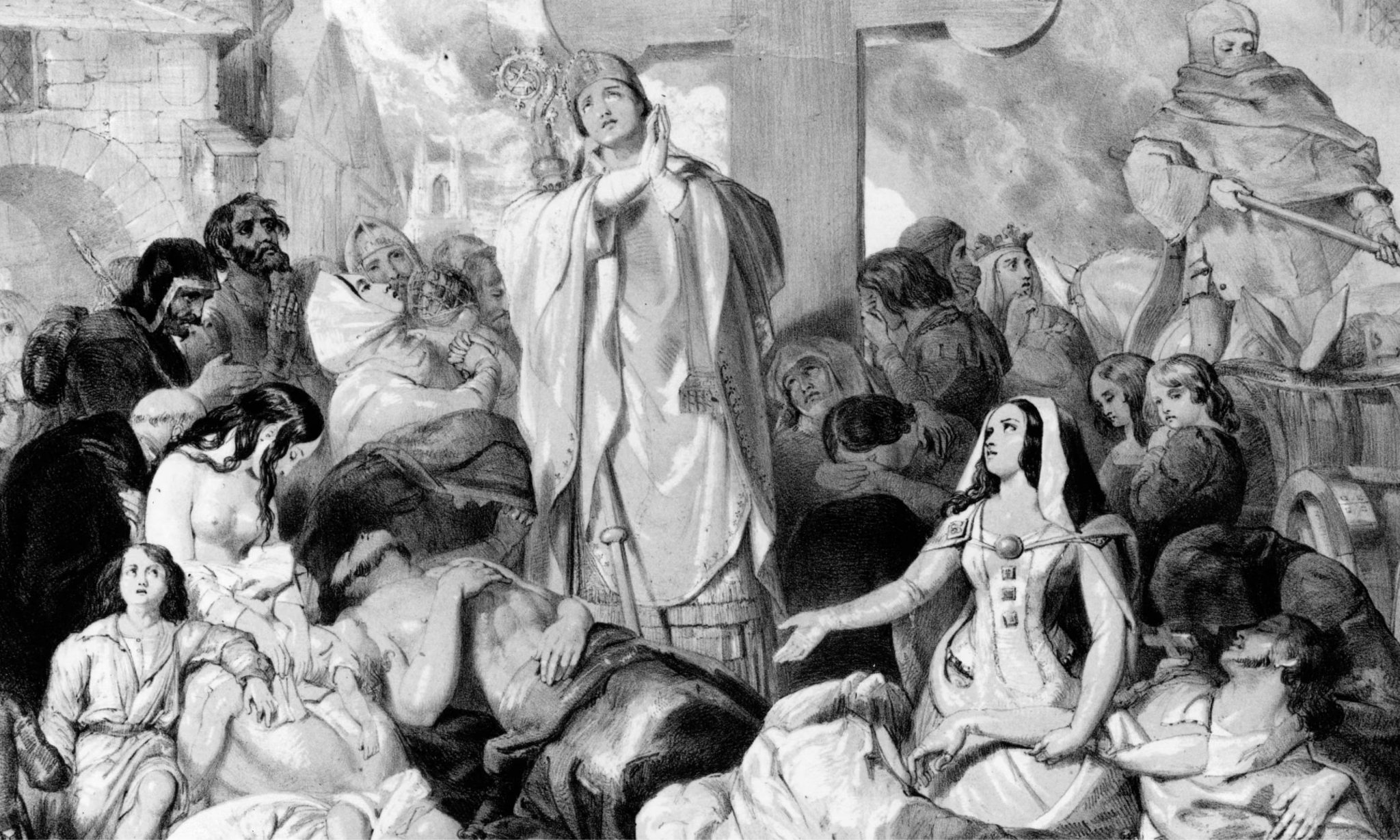
Within two years of the plague’s peak, English landowners pushed through the Ordinance of Labourers, freezing wages at pre-plague levels and compelling workers into year-long contracts with whichever employer demanded them first. Peasants resisted. Court records from the decades that followed are full of laborers walking off jobs, demanding higher pay, and moving between manors in defiance of the law. They won real concessions in the short term but the legal architecture of wage control stayed in place, and over the following centuries, the elites used it to claw back what they had lost.
As historians Ada Palmer and Eleanor Janega have documented, much of what workers gained in the decades after the plague didn’t survive the following centuries. Elites reclaimed a greater share of wealth, hierarchies ossified, and labor’s power diminished. It’s an example of why the collapse binary misrepresents history and makes it harder to process and understand what’s happening. Progress isn’t a clean upward arc. It advances, retreats, advances again. Rights are won and then eroded. Movements rise and face violent backlash. The arc bends in both directions, and the people living in any given moment rarely have the vantage point to see which way things are ultimately going.
The idea that we were on an unbroken upward trajectory until recently is one fiction. The narrower idea — that there was a stable, functioning post-World War II order that is now breaking down — is more defensible but still incomplete. That order was stable for some countries and catastrophic for others. The decades we remember as the long peace were also the decades of partition, proxy wars, coups, and famines engineered by policy (from Bengal in 1943 to the Great Leap Forward in China) or ignored. For much of the world, the collapse is not arriving. It’s been here.
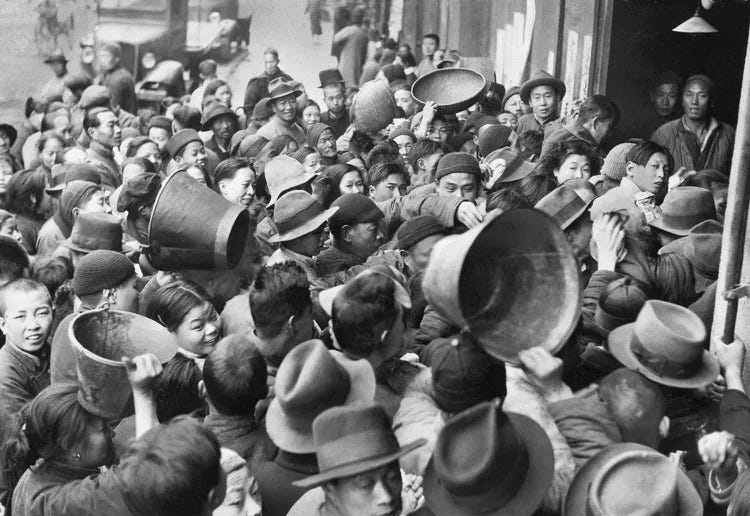
These costs were always being paid. What’s changing is that the insulation is wearing thin, and each new crisis is forcing the people who could afford to ignore it to look directly at the consequences, highlighting that progress has never come from enlightened consensus.
Every generation has been dragged, kicking and screaming, into the next phase of history. The arguments for change usually came first, often for decades. The case for women’s suffrage was made for 72 years before women voted. Reason has rarely been the missing ingredient. Instead, pressure made reason impossible to keep ignoring — natural disasters and wars and protest movements that bled for rights now taken for granted. Labor protections, civil rights, and environmental regulations all arrived because the pain of keeping things the same finally became worse than the pain of changing.
Unfortunately, that often means innocents pay a price they did nothing to deserve. Ruby Bridges was six years old when federal marshals walked her past a screaming mob into a New Orleans elementary school in 1960. She didn’t choose to be the symbol that undid segregation. The movement needed her in that hallway, and the cost of being there was hers to carry.
That has always been true, and it is one of the least forgivable things about how change works. The people who bear the cost of recalibration are rarely the people who caused the crisis. We can hold that truth, grieve it, and refuse to let it be the last word, all at once.
The discomfort of knowing and not knowing at once
Holding that complexity — the grief alongside the progress, the regression alongside the hope, the genuine uncertainty of the outcome — is hard. It requires what I’d call a somatic steadiness: a capacity to stay present with what is, without resolving it into a clean narrative. It’s a skill most of us have never been taught, so instead we reach for the tools our nervous systems have always offered. We default to threat detection. We call the ending first. We tell ourselves we’re being realistic when what we’re actually doing is protecting ourselves from hope.
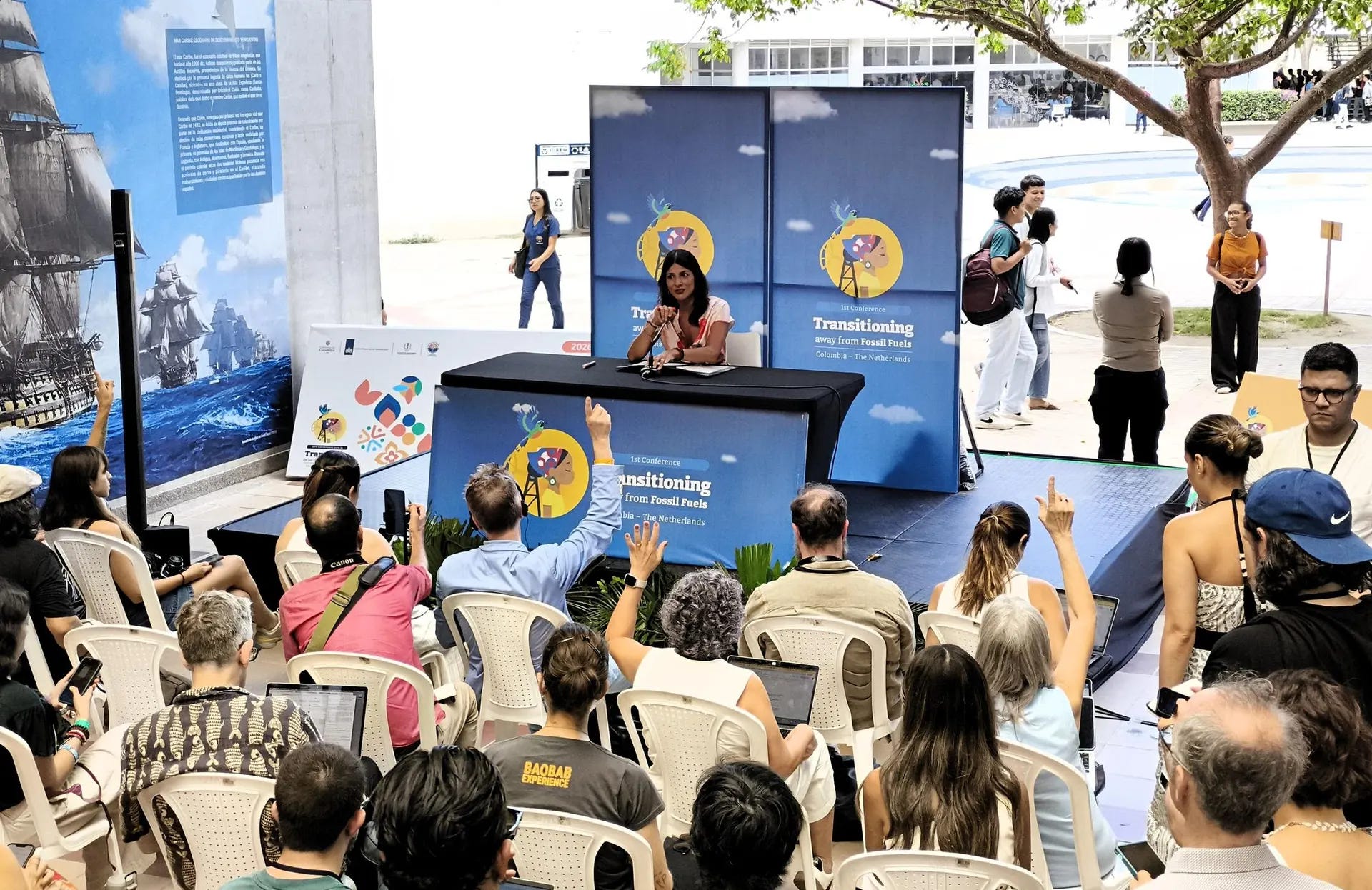
But even now, in the middle of everything, something else is happening. As the war in Iran continued to create an energy crisis, 40 nations joined a summit to discuss phasing out fossil fuels. South Korea is accelerating its renewable energy investment, targeting nearly triple its current renewable capacity by 2030, driven by energy security concerns rather than environmental idealism. Around the world, the cost of continuing to rely on oil and gas is finally becoming too high.
At the same time, a generation of young people, exhausted by the attention economy, is buying dumb phones. These are reluctant adaptations, begrudging pivots made when the pain of the alternative finally became unbearable. Which is, historically, exactly how change works.
And in every wave of terrible things, there have always been people committed to holding the line. Women teachers in Afghanistan running underground schools in defiance of everyone threatening them. Permaculture farmers quietly rebuilding topsoil, acre by acre, in the knowledge that the work will outlast them. Artists imagining #solarpunk futures where technology and nature coexist rather than compete, creating images of possibility before the possibility exists. They are doing their work inside of this “collapse,” something people have always done during hard times, because decay and renewal have never been opposites. They are parts of the same cycle.
The good things that followed the hardest periods arrived because of the crisis, not in spite of it. The pressure created the conditions. The unmasking of the system’s real costs made the change structurally necessary.
I think about a tea house I visited in Japan that has been run by the same family for over four hundred years. I try to imagine all the people that have passed through: monks and pilgrims, people who lived through the end of the peaceful and prosperous Edo period, people who survived the Second World War, people who came after the atomic bomb. And now, me.
The continuity of this single tea house is evidence that the world has already survived more than we can imagine, and that people kept living through all of it — kept making tea, kept planting things, kept building what was worth building and passing forward what was worth keeping.
The antidote to doom content isn’t optimism or the insistence that things will work out. Rather, it’s the willingness to hold the full picture. To understand that collapse is not the opposite of progress — it is, in the long view of history, one of its preconditions. It’s recognizing that we are not on the verge of something unprecedented. We are inside something ancient and recurring and genuinely painful. Something always follows these periods. The question is what we do now, while we’re still in one.
 | A guest post by
|
Wonderful piece! The idea that progress is not and has never been linear is so important, yet very hard for my college students to grasp. I teach about the history of Reconstruction in America, which is another example of how collapse can lead to rapid progress followed by agonizing retreat. But the progress of Reconstruction laid the foundation for the future civil rights movement.
Oh, how I needed this content. It gives me much to discuss with my adult children and their friends who are having trouble navigating these times. Thank you.