

Are We Still Avoiding Lettuce?
Food safety cuts have made outbreaks like cyclospora harder to stop

On Monday, August 3, 2026, the Michigan Department of Health and Human Services confirmed the deaths of two people in connection with the state’s ongoing cyclospora outbreak. While cyclosporiasis, the illness caused by the microscopic parasite cyclospora, is rarely deadly, people with weakened immune systems may be at higher risk for prolonged or severe complications like dehydration. Both of the people who died reportedly had undisclosed underlying health conditions, but the news still came as a shock.
It’s been more than a month since the cyclosporiasis outbreaks began, and there are still many unanswered questions. But one thing has become increasingly clear: Americans are growing more suspicious of food-safety systems. Polling data from the International Food Information Council suggest that confidence in the safety of food supplies in the United States is at the lowest level in 13 years. The reasons are legitimate and all too familiar — concerns vary from frequent food recalls to the belief that profits are prioritized over safety and government regulation. As an infectious disease epidemiologist who has watched the demolition of our public health systems, I too have reduced confidence in the people and policies tasked with keeping our food safe.

This outbreak is a stark reminder of how fragile our food safety systems can be when public health is politicized. We should be confident in the safety and reliability of our food systems. Instead, we are watching food safety infrastructure designed to keep Americans healthy break so dramatically that tens of thousands of people are sick.
Undermining federal infrastructure
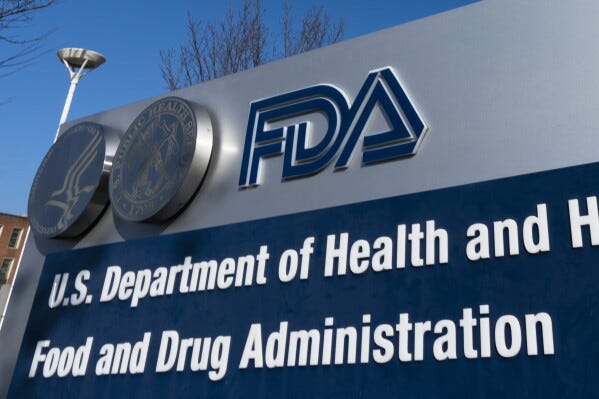
According to CBS News, government-wide hiring freezes and massive budget cuts by the Trump administration have meant that nearly one in five positions in the human food inspection divisions at the Food and Drug Administration (FDA) are now vacant, resulting in significant reductions in routine surveillance, inspections, and lab quality checks. In particular, many food safety inspectors accepted the early retirement offer from the Department of Government Efficiency (DOGE) last year when it set about slashing the FDA’s staff, all under Health and Human Services Secretary Robert F. Kennedy Jr.’s watch.
The cuts extended further: The team at the Centers for Disease Control and Prevention (CDC) tasked with specifically tracking foodborne parasites is down to three scientists, from 11 last year. The National Advisory Committee on Microbiological Criteria for Foods (NACMCF) — a group tasked with providing evidence-based recommendations to the United States Department of Agriculture (USDA), the FDA, and the CDC on issues related to food safety and supply — has been terminated.
It’s not news to say that the government can be bogged down by bureaucracy. But eliminating whole teams and processes across agencies that have historically collaborated with their diverse expertise to handle complex public health issues is far worse than dealing with annoying red tape. Brian Ronhold, who is the director of food policy at Consumer Reports, told The New York Times that these cuts have “really put [the FDA] further behind to the point where it’s virtually nonexistent.” Smaller teams mean slower and weaker responses to public health problems.
Diminished tracking
Beyond just slashing staff, the Trump administration’s policy changes have also reduced the effectiveness of detection and tracking systems focused on foodborne illness. The Foodborne Disease Active Disease Surveillance Network (FoodNet) — an initiative shared by the USDA, the FDA, and the CDC since 1995 — has been in the news a lot lately. It was designed to be an early-warning surveillance system to track foodborne illnesses caused by microbes across 10 states. Last year, the Trump administration cut the list of reportable microbes from eight to two, and cyclospora is no longer one of them.
Even as this cyclosporiasis outbreak continues, the USDA is closing the Beltsville Agricultural Research Center (based outside of Washington, DC) with the intention of “restructuring” and moving its programs to facilities across the US. To date, it is not clear what the restructuring will involve, but this center has two laboratories that were pivotal in investigating the cyclospora parasite. Experts warned that such a decision will “hinder efforts to protect consumers.”
For decades, under the congressionally mandated FDA Food Safety Modernization Act, the FDA has published a list of foods that are at greatest risk for microbial contamination. It includes leafy greens, cucumbers, herbs, peppers, tomatoes, melons, pre-cut fruits, cheese, and more, and under the Food Traceability Rule, companies that manufacture, process, pack, or hold these foods have to keep meticulous records for supply chain tracing and reporting. That rule is exactly what would help ensure timely food recalls and thorough investigations in the case of an outbreak like the current one — but it isn’t being enforced. Earlier this year, the FDA was told not to begin enforcing compliance with the rule until July of 2028.
State regulations may not protect us
While the federal food safety infrastructure has been gutted, we may not be able to rely on state-level protections to keep us safe. Because of our federalist Constitution, public health has always been at least partially a state issue — states can make their own decisions about how to prevent or respond to outbreaks, or even whether to declare one at all. That means an outbreak of anything from a parasitic infection to a respiratory virus can look like 50 different outbreaks in 50 different states.
Michigan, one of the centers of the cyclospora outbreak, has carried an extraordinarily high burden in responding to this outbreak. In a typical year, the state might see up to 50 cases. As of the first week of August, it had recorded almost 13,000 cases for the year. Responding to outbreaks is incredibly labor-intensive and expensive. The Michigan Department of Health and Human Services has been spread thin as they balance sampling, disease investigation, recalls, and data management.
Dr. Natasha Bagdasarian, the chief medical executive for Michigan, noted that the state doesn’t have the mechanisms to do the kinds of traceback investigations to identify the source of the outbreak, further emphasizing the need for a “strong federal public health system” so that data across jurisdictions and state borders can more easily be shared and compared for important early signals. Without federal support, there is only so much states can do.
Making America healthy?
The cuts at the federal level signify this administration’s public health priorities, and it’s hard not to see the irony that the political movement promoting “real food” is the same group responsible for cuts and harmful policy changes to “real food” safety programs. RFK Jr. is a leading figure in the “Make America Healthy Again” movement, and has even put the slogan on the Health and Human Services Department’s website, touting plans to “reform America’s food.” While access to safe and affordable fruits and vegetables is indeed essential, these foods are also the greatest risk for microbial contamination.
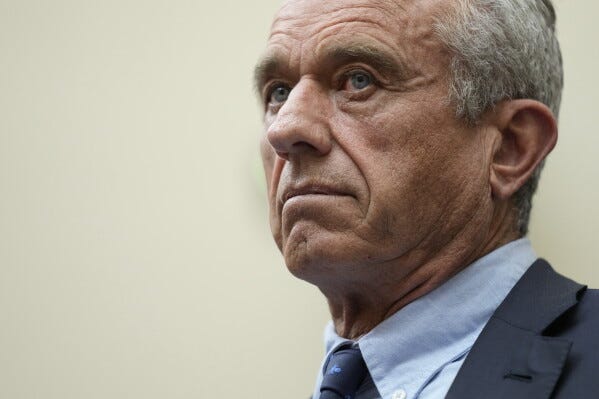
But the administration’s attention is elsewhere, largely hyper-fixated on eliminating chemicals from foods and reducing the prevalence of ultra-processed foods, which it links to chronic disease. RFK Jr. has promised to pursue regulations that would reduce the prevalence of certain additives and food dyes, and has encouraged states to restrict people’s ability to buy junk food using food stamps. In the meantime, protection against contamination by microbes has been weakened significantly, actually making it easier for unsafe foods to reach people’s plates.
It’s difficult to prevent foodborne illness when you either don’t understand or don’t believe in the mechanisms by which it spreads, and many of the decisions and statements that have come out of this administration come across as a denial of germ theory itself. In fact, Robert F. Kennedy Jr. specifically refers to his own interpretation of the ancient miasma theory — the idea that illness comes not from germs but from breathing bad air — when arguing that the way to prevent disease is through nutrition and reducing environmental toxins and stress.
The reality is, microbes are responsible for almost 10 million illnesses every year in the US — and that’s considered an undercount of the true burden of foodborne illnesses. Many cases go undetected and unreported because of people not seeking care and because the CDC’s National Outbreak Reporting System (NORS) is completely voluntary. Our systems are breaking, and we’ve got leaders focusing on the wrong threats.
There is no single budget cut or political appointment to which we can assign total blame for this situation. What we are seeing are the cumulative consequences of multiple failures and misguided decisions not based in science. There are many lessons to be learned here, most importantly that Americans deserve a public health system that is fully funded and fully staffed. Public health is both proactive and reactive — and no single state can manage the efforts required for an outbreak like this without a functioning and integrated public health data reporting system. We had to learn that the hard way with Covid-19, and we’re learning it again with cyclospora.
 | A guest post by
|