

America’s Most Unlikely Invention
The national parks are a radical act of democracy

In the late 1860s, something strange was happening in the American West.
Explorers returned from the Rocky Mountains with stories that sounded implausible even by frontier standards: rivers that boiled, columns of water that erupted from the ground like clockwork, canyons so vast they swallowed sound itself. One congressman reportedly laughed at the idea that geysers could erupt on schedule. Others assumed the reports were exaggerations — tall tales from men who had spent too long staring at empty horizons.
Then the photographs arrived.
In 1872, the Hayden Geological Survey returned from what is now Yellowstone carrying images unlike anything Americans had ever seen. William Henry Jackson’s photographs of geysers frozen mid-eruption and Thomas Moran’s sweeping paintings of canyons and waterfalls offered something radical: proof. These places were real. And if they were real, they posed a question the young nation had never had to answer before.
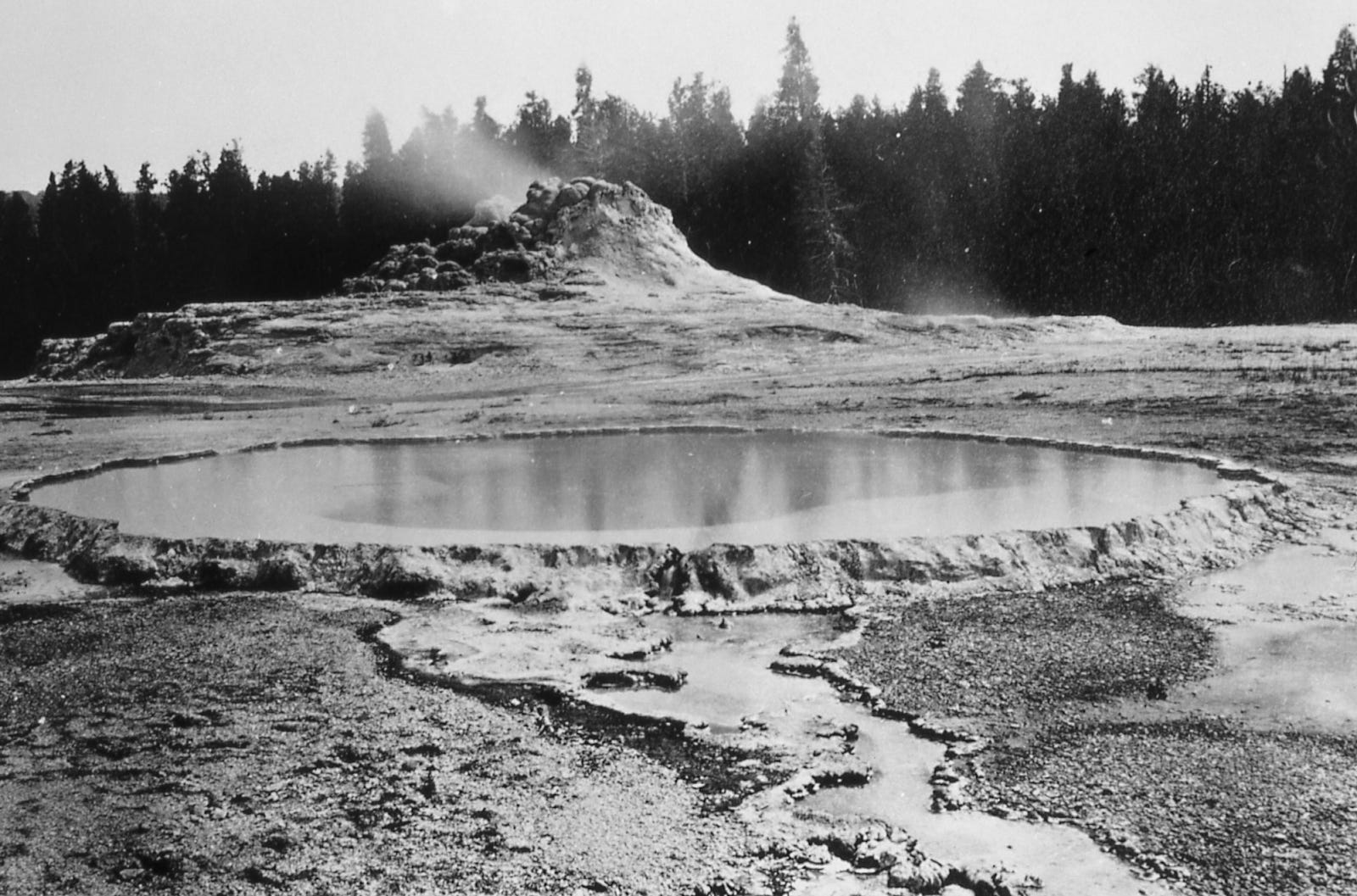
What should a country built on conquest, settlement, and private ownership do with land so extraordinary that exploiting it felt like vandalism?
The answer Congress settled on in 1872 was unprecedented. Instead of selling the land, fencing it, or handing it to industry, lawmakers declared Yellowstone “a public park or pleasuring-ground for the benefit and enjoyment of the people.”
For the first time in human history, a nation chose to preserve a vast landscape not for a king, not for profit, but for everyone.
The national park was born — not out of inevitability, but out of imagination, politics, and a growing fear that America was destroying the very things that made it distinctive.
Before parks, there was only expansion
To understand how radical the national park idea was, you have to understand what came before it.
For most of the 19th century, US land policy was built on a single premise: land existed to be used, improved, owned, settled. It was the American way. The federal government surveyed territory, parceled it out, and encouraged settlement. Forests became timber. Rivers became transportation corridors. Plains became farms.
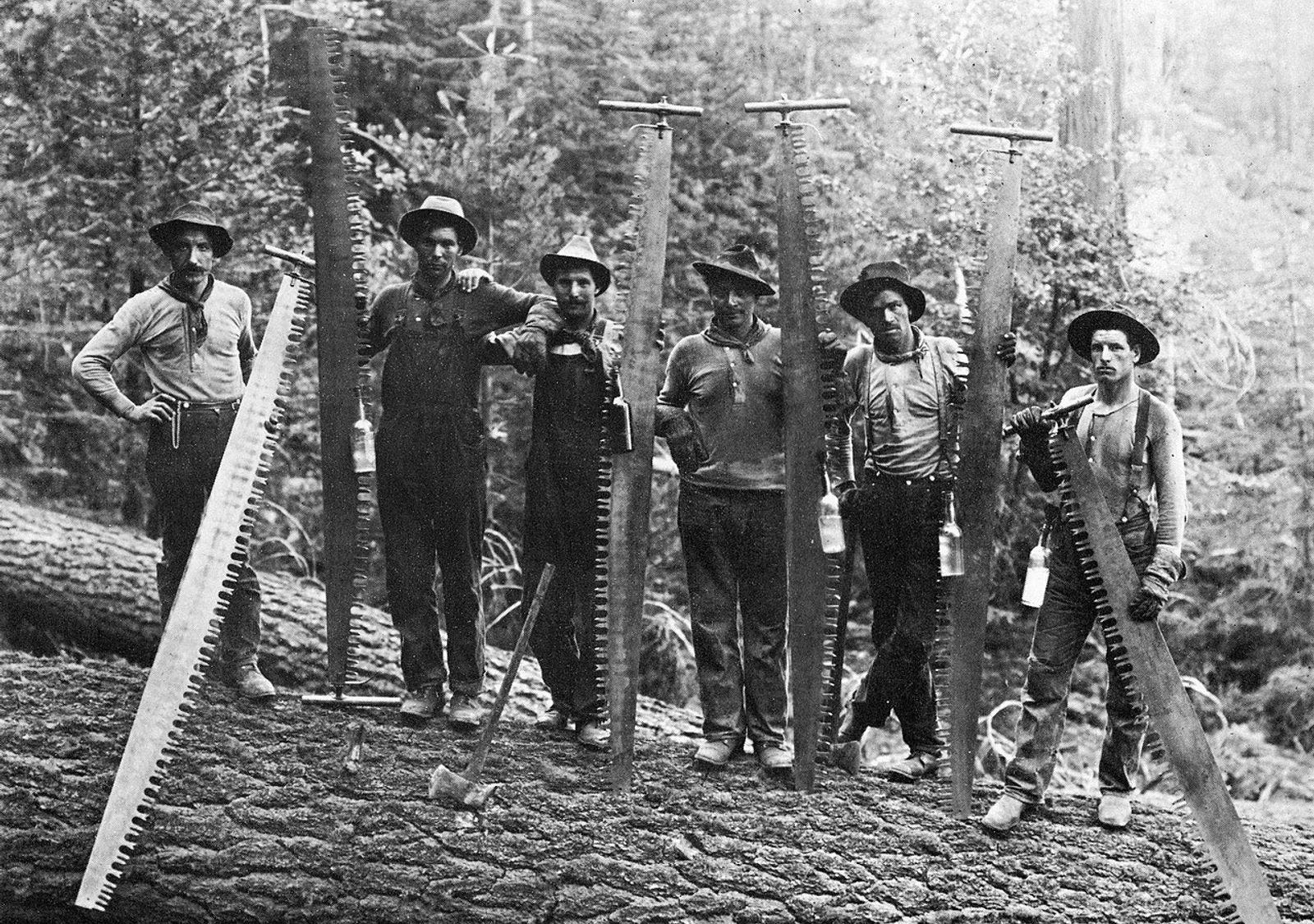
This wasn’t just economic policy; it was national identity. Expansion westward was framed as destiny, baked into the adventurous American spirit: “Go west, young man, go west!” in real life. Land that wasn’t being actively used was considered wasted.
But that worldview came with consequences. By mid-century, buffalo herds were collapsing, forests were disappearing for lumber, and scenic landscapes were being stripped for short-term gain. And Indigenous peoples — who had lived in, managed, and depended on these ecosystems for generations — were being forcibly removed to make way for settlers, railroads, and extractive industries.
Ironically, it was this very destruction that planted the seeds of conservation.
The radical idea of preservation
One of the earliest voices raising alarm was artist and writer George Catlin. Traveling through the West in the 1830s, Catlin watched Indigenous cultures pushed aside and wildlife slaughtered at industrial scale. He proposed something extraordinary for his time: that the government preserve large tracts of land “in a magnificent park… containing man and beast, in all wild[ness] and freshness of their nature’s beauty.”
At the time, the idea sounded absurd.
But by the post–Civil War era, the logic was harder to dismiss. Industrialization was accelerating. Railroads were carving through mountains. Tourism was emerging as a commercial force. Without protection, extraordinary landscapes would be privatized, degraded, or destroyed.
Yellowstone became the test case, established by an act signed into law by President Ulysses S. Grant in March of 1872.
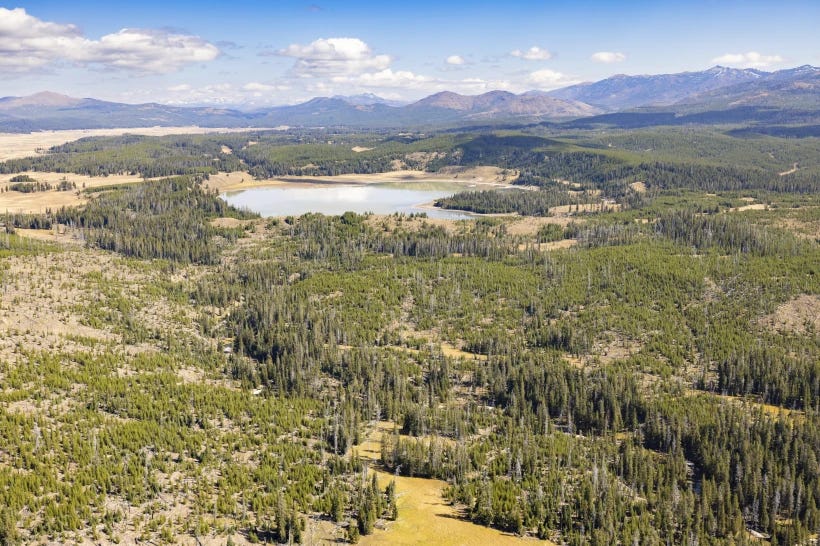
Congress didn’t create Yellowstone because it had a coherent conservation philosophy. Far from it. It created Yellowstone because lawmakers couldn’t agree on what else to do with it — and because the land was so strange, so seemingly useless for farming or industry, that preservation became the least controversial option.
And in time, that accident of politics produced a conservation revolution.
A park without a system
Yellowstone’s creation did not immediately usher in a golden age. In fact, it exposed a problem: the United States now had national parks but no plan to manage them.
Over the next several decades, Congress designated additional parks, including Yosemite, Sequoia, and Mount Rainier. But each was administered differently. Some fell under the Department of the Interior. Others were overseen by the Army or the War Department, or by the Forest Service. Enforcement was inconsistent. Infrastructure was minimal. Poaching, vandalism, and commercial exploitation were common.
At the same time, visitation surged as railroads promoted parks as destinations. Americans began to see these landscapes not just as curiosities, but as symbols of national pride. The demand for coordination — and protection — grew louder.
The National Park Service is born
By the early 20th century, the problem was obvious: the United States had created national parks but lacked a national vision for them.
That all changed in 1916.
On August 25 of that year, President Woodrow Wilson signed the Organic Act, establishing the National Park Service. The law created a single federal agency within the Department of the Interior charged with managing all national parks and monuments.
Its mission statement remains one of the most elegantly balanced expressions in American law: to conserve natural and historic objects and wildlife, while providing for their enjoyment “in such manner… as will leave them unimpaired for the enjoyment of future generations.”
That tension — between access and preservation — has defined the Park Service ever since.
The agency’s first director, Stephen Mather, understood that preservation alone would not secure the parks’ future. Americans had to experience and understand them. Under Mather, the Park Service improved roads, built lodges, and launched national publicity campaigns, but just as importantly, it professionalized the ranger corps. Rangers served as the parks’ first on-site stewards and educators—enforcing rules, preventing poaching and vandalism, guiding visitors through trails and landmarks, and explaining the geology, wildlife, and history that made each place worth protecting.
From scenery to story
As the Park Service matured, so did its mission.
Initially, parks were created almost exclusively to preserve dramatic natural landscapes — mountains, canyons, waterfalls. But over time, Americans began to ask a broader question: Shouldn’t the nation preserve its history as well as its scenery?
In 1933, President Roosevelt signed Executive Order 6166, a major reorganization that transferred dozens of historic sites — battlefields, monuments, and memorials — into the National Park Service. Suddenly, the system expanded beyond wilderness to include places like Gettysburg, the Statue of Liberty, and Independence Hall.
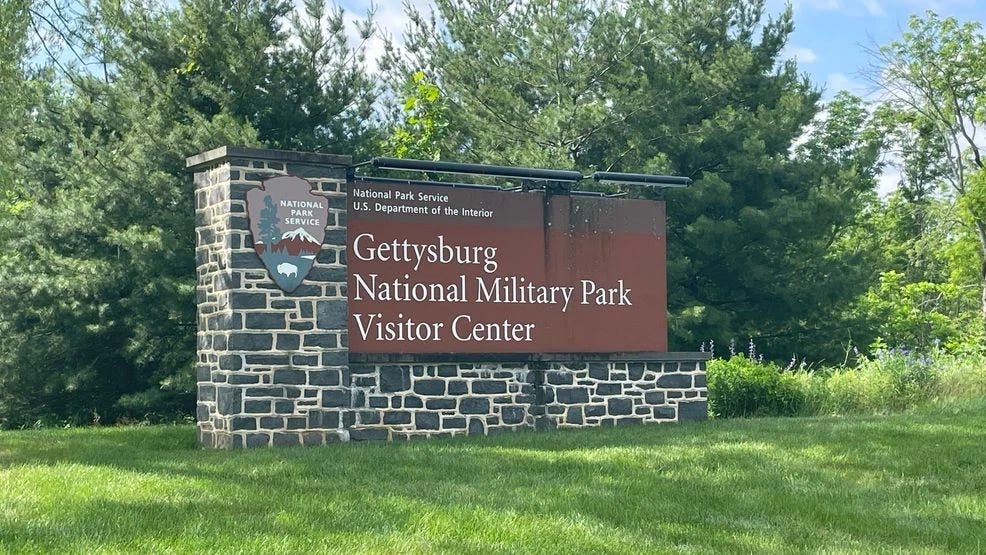
The parks became not just places of beauty, but repositories of national memory.
Later expansions included lakeshores, seashores, battlefields, historic homes, and cultural landmarks tied to Indigenous history, immigration, labor, and civil rights. What counted as “worthy of preservation” expanded beyond wilderness alone, reflecting a growing recognition that American identity was shaped not just by landscapes, but by people, conflict, displacement, and shared civic struggle.
The contradictions beneath the beauty
Yet the national parks have always carried contradictions.
Many were created through the displacement of Indigenous communities whose stewardship had shaped those landscapes for generations. Long before federal protection, Native nations actively managed these lands through controlled burns, seasonal hunting and harvesting, trail systems, and spiritual caretaking practices that maintained ecological balance. The parks were preserved not as untouched wilderness but as places long tended by human hands — hands that were later pushed aside in the name of conservation.
Only in recent years has the Park Service begun more fully acknowledging this history, working with tribes to reinterpret sites, restore co-stewardship practices, and correct the record. In practice, that has meant formal agreements that give tribes a direct role in land-management decisions — such as controlled burns, wildlife control, and cultural preservation — as well as authority to shape how park history is told to the public through signage, exhibits, and ranger programs.
The parks also sit at the intersection of politics and memory. Decisions about what stories are told, which histories are emphasized, and how America’s past is framed remain deeply contested.
A vivid example occurred in 2025 when the National Park Service briefly altered its own webpage about the Underground Railroad. It removed a prominent photo of Harriet Tubman, edited language about slavery and resistance, and reframed the site as an example of broad “racial cooperation.” — before reversing course after widespread public backlash. Historians and civil rights advocates said the edits downplayed the brutal reality of slavery and Tubman’s role in helping enslaved people escape bondage; the NPS eventually restored the original content.
The parks may feel timeless — but they are governed by human choices.
The parks today: loved, crowded, vulnerable
In the 21st century, national parks face pressures their founders never imagined.
The National Parks Service now oversees 433 park units, and visitation has surged to record levels of over 300 million people annually, straining infrastructure and ecosystems..
Many of the environmental pressures parks face have a long history. Invasive plant and animal species, introduced by global trade, tourism, and habitat disturbance, have been a concern for decades. These species can outcompete native flora and fauna, disrupt food webs, and complicate restoration efforts. Park biologists now spend significant resources each season combating these threats.
Climate change has compounded these longstanding challenges, bringing more frequent drought, intense wildfires, severe flooding, and rapidly melting glaciers.
At the same time, staffing shortages and budget constraints have worsened dramatically in recent years, leaving parks struggling to fulfill basic management responsibilities. Since January 2025, even as visitor demand has climbed, the Park Service has lost roughly 24 percent of its permanent workforce, in part due to hiring freezes, buyouts, and layoffs. This reduction follows decades of gradual staffing declines, leaving fewer rangers for patrol, fewer biologists for species monitoring, and fewer maintenance crews for trails, facilities, and safety operations.
At the same time, the Park Service remains one of the most trusted institutions in the US. Across decades, anywhere between 70% and 85% have said they approve of it, and in 2015 Gallup found that 73% of Americans supported how the government handles “national parks and open spaces.”
The parks draw visitors from many backgrounds and political persuasions, and for millions they function as classrooms, sanctuaries, and shared civic spaces in an increasingly fragmented society. But that experience is not universal. Studies have documented significant gaps in park visitation along racial and income lines, with people of color and lower-income households visiting national parks at much lower rates than white and higher-income Americans. Barriers range from limited awareness of the parks to cost, transportation, and other expenses of visiting to historical perceptions of exclusion. The ideal of parks for all has not been fully realized.
But in a country that often struggles to agree on anything, national parks remain one of the few ideas Americans consistently rally around. That alone makes them remarkable.
America’s most democratic idea
The national park system is not perfect. It never has been.
It was born from political compromise, shaped by cultural blind spots, and continually revised by changing values. It reflects America’s best instincts and its deepest contradictions.
But it also represents one of the most democratic ideas the nation has ever produced: that some things are too important to sell, too meaningful to privatize, and too valuable to belong to only a few. In choosing preservation over profit, Americans made a quiet declaration about who we are and who we hope to be.
The parks remind us that democracy is not just something practiced in voting booths and legislatures. It is practiced in how we share space, steward resources, and think beyond ourselves.
They are not relics of the past. They are promises — still being tested — about the future.
 | A guest post by
|
What a great article. National parks are a treasure. Thank you for writing this. Hopefully we can continue to preserve them.
Great article!