

A New Weapon of Resistance
Cell phones are changing what accountability looks like around the world

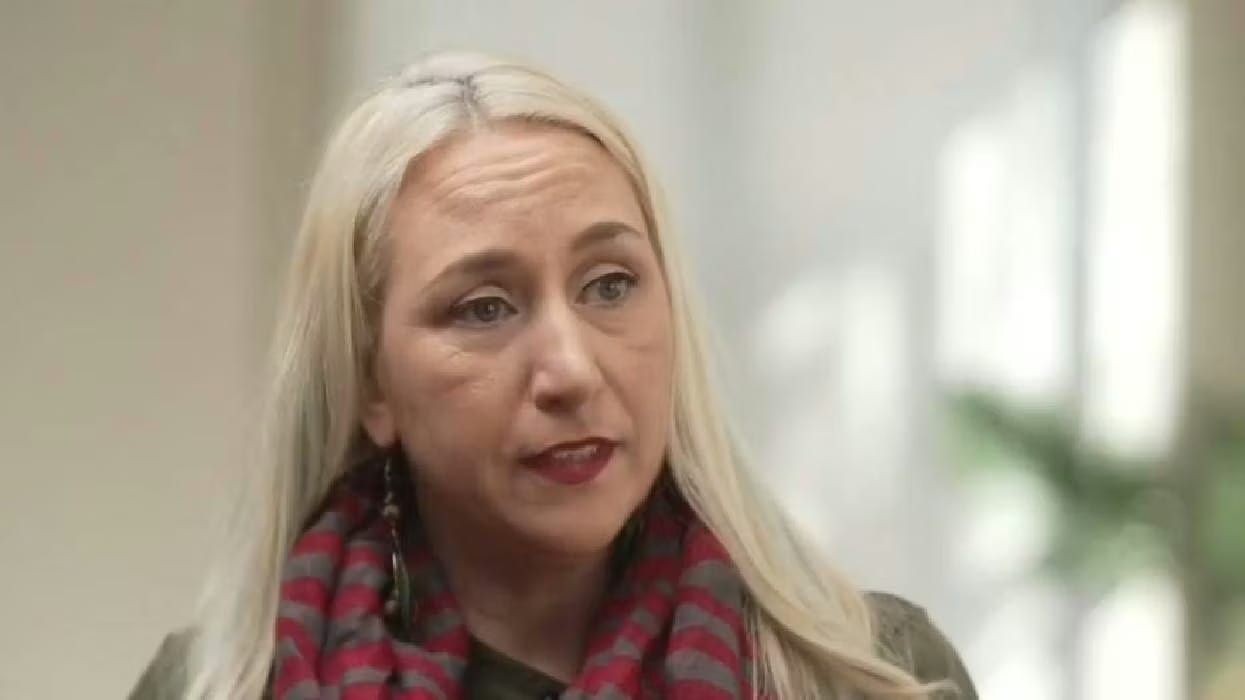
Children’s entertainer Stella Carlson never set out to be an eyewitness to a federal killing. But when Border Patrol agents shot Alex Pretti in the streets of Minneapolis last month, Carlson did what a growing number of ordinary Americans now do when confronted with state violence: she pulled out her phone and pressed “record.”
“I am not one to run when I’m afraid,” Carlson told CNN’s Anderson Cooper afterward, her voice steady despite visible trauma. “No way was I going to leave Alex by himself, undocumented… Somebody was just executed in the street. I knew I was in danger. We all were, but I wasn’t going to leave.”
Her footage — clearer and more complete than other videos of the shooting captured that day — quickly challenged the administration’s early account that Pretti, an ICU nurse monitoring ICE activity, had threatened federal agents.
This is activism in 2026: ordinary people wielding the most democratized accountability tool in human history. From Minneapolis to Tehran to Mariupol, the smartphone has fundamentally altered the relationship between citizens and state power, creating a new form of resistance that is simultaneously an act of documentation and an act of defiance.
The shootings of Renee Good and Pretti in Minneapolis represent the latest chapter in a shift that accelerated five years ago, when 17-year-old Darnella Frazier filmed Minneapolis police officer Derek Chauvin kneeling on George Floyd’s neck for nine minutes and 29 seconds, killing him. Frazier’s video sparked global protests — but more significantly, it helped achieve something rare in police violence cases: accountability. Chauvin was convicted of murder, a verdict legal experts agree would have been far less likely without that footage.
“It was like a natural instinct, honestly,” Frazier later said. “The world needed to see what I was seeing. Stuff like this happens in silence too many times.”
For decades, allegations of state violence often took place in darkness, with only official narratives to explain them away. Visual evidence was scarce and usually controlled by authorities. The camera phone changed that calculus completely.
The shift has been even more stark in countries where cell phone documentation isn’t just challenging police misconduct — it’s exposing mass atrocities that authoritarian regimes desperately want hidden.
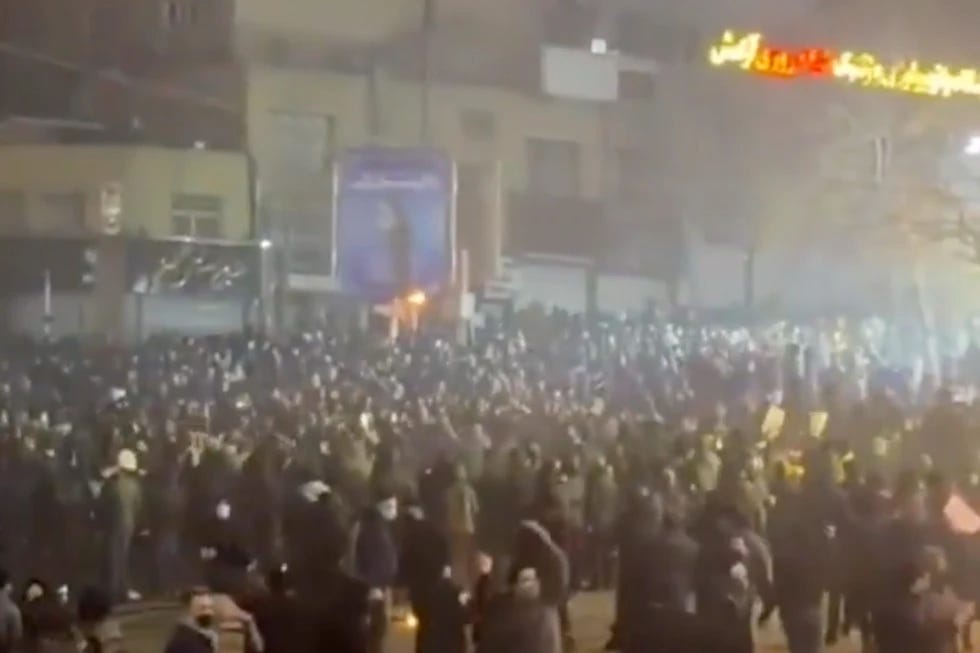
When Iran’s government launched a brutal crackdown on protesters last month, it imposed a near-total internet blackout, cutting off mobile networks and even landline communications. The regime understood the threat: video evidence of state violence, once it reaches the outside world, becomes nearly impossible to deny.
But Iranians found workarounds. Through VPNs and Starlink satellite internet, footage began trickling out. The most devastating was cell phone video from Kahrizak Forensic Medical Center in Tehran, showing hundreds of body bags piled at a site where families searched for missing relatives. Human rights organizations said the imagery conflicted with official casualty descriptions and raised serious questions about the reported death toll. Without that visual record, the government narrative would have faced far less scrutiny.
Ukraine has taken civilian documentation even further, turning it into a systematic, government-backed effort unprecedented in modern warfare. After Russia’s invasion, Ukraine’s digital ministry repurposed its civilian-government app, Diia, into a war-crimes-documentation tool, allowing citizens to upload geotagged, time-stamped footage directly to prosecutors.
Ukrainian medic Yuliia Paievska, known as Taira, recorded 256 gigabytes of body-cam footage showing the daily horrors of war in the city of Mariupol. Associated Press journalists smuggled her data card out of the besieged city hidden inside a tampon. Taira herself was later captured by Russian forces and detained for three months.
Ukrainian officials say they have received more than 10,000 submissions of evidence, contributing to potential war-crimes investigations.
Authoritarian regimes and abusive law enforcement actors share a common interest: controlling the narrative around the force they use. Cell phone video weakens that control — which helps explain why efforts to suppress recording are intensifying.
The Justice Department recently argued in federal court that observing and filming law enforcement activity is not protected by the Constitution — a position aimed directly at the growing number of Americans now monitoring ICE operations. The government position reflects an active legal dispute over how the First Amendment right to record government officials should be interpreted: while multiple federal appeals courts have held that filming public officials is protected speech, and legal advocacy groups maintain that taking video of government action in public is a core First Amendment right, there is no definitive Supreme Court ruling spelling out an absolute right to record in every circumstance.
Minnesota Governor Tim Walz responded to the DOJ’s argument by explicitly encouraging citizens to document federal agents: “Carry your phone with you at all times, and if you see ICE agents in your neighborhood, take out that phone and hit ‘record.’”
More than 34,000 Minnesotans have signed up with activist groups to be trained as ICE observers, creating a distributed network of potential witnesses that makes impunity harder to maintain.
Cell phone activism operates on two distinct but related levels. First, the act of filming can itself help deter misconduct. Law enforcement officers aware they’re being recorded may think twice before escalating to violence — though Minneapolis proves this isn’t always true.
Second, the circulation of footage through social media and the press creates public awareness that can generate pressure for accountability. When DHS Secretary Kristi Noem said that Renee Good had “weaponize[d] her vehicle” and committed an “act of domestic terroristm,” bystander footage showed Good smiling, hands visible, telling an ICE agent, “That’s fine dude. I’m not mad at you.” Competing narratives collided almost immediately.
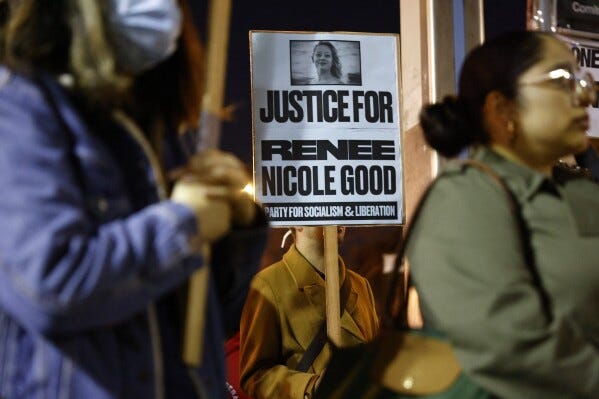
According to YouGov polling, video of Good’s killing has been viewed by roughly 70 percent of Americans. That level of exposure creates a shared evidentiary baseline that is difficult for any authority to gaslight away.
But video does not guarantee justice. Eric Garner’s 2014 death in New York at the hands of police was filmed as he repeatedly said he could not breathe, and no state criminal conviction followed. The moments after Philando Castile was shot during a Minnesota traffic stop were livestreamed by his girlfriend, but the officer was acquitted in a trial for manslaughter. The Justice Department has signaled that it sees no basis for a civil rights investigation into Good’s death, despite video evidence that shows Good was attempting to maneuver around the ICE officer who positioned himself in her path and then shot her.
But video nonetheless can make accountability possible in ways that simply don’t exist without it. Former Brooklyn public defender Scott Hechinger once represented a client accused of trying to run over a police officer with a car, and the client was exonerated after surveillance footage proved the officer’s claim was false. Without that video, Hechinger said, his client would have gone to prison for up to 15 years “on a lie” from law enforcement that “the system is primed to accept.”
Cell phone activism demands extraordinary courage from ordinary people. Darnella Frazier has spoken about the harassment, trauma, and nightmares she experienced after witnessing Floyd’s death. Ramsey Orta, who filmed Eric Garner’s death, later pleaded guilty to drug and gun charges unrelated to the filming — but told the BBC that “the cops had been following me every day since Eric died.” He believes he was targeted by the police in retaliation. Dennis Flores, a retired NYPD officer, agrees: “The case of Ramsey Orta is a prime example of how you become a target when you film the police and decide to go public,” Flores said. “He’s been made to suffer for filming cops.”
Which brings us back to Stella Carlson, standing on a Minneapolis street corner, terrified but filming anyway. “We all have to be brave and we all have to take risks,” she said. “We’re all going to be given moments to make that decision.”
Cell phones have democratized the power to bear witness. As Carlson put it: “They can take everything away from me, but they can’t take my voice.”
The most powerful weapon against state violence is not a weapon at all. It is a camera in your pocket — and the courage to keep filming when every instinct tells you to run.
 | A guest post by
|
Thank you so much for this excellent, clearly written piece. There’s so much to take in and think about.
For now, I’m focusing on the words and deeds of Stella Carlson. First, I am moved and grateful that she would not leave Alex to die alone, despite the clear danger of the situation. Thank you, Stella.
Second, she said she’s not one to run when she’s afraid—and that we all have to be brave. She told us clearly that we will all have opportunities to decide how we will respond, and she’s calling on us to be brave. I wonder, and would love to know from other readers—are you mentally rehearsing how you will respond when you’re called upon to be brave?
I am mentally running through scenarios that might require my moral and physical courage. Stella Carlson is an example, and the clarity of her voice calls to me.
I am so devastated about Alex Pretti’s death, and about the circumstances of that needless tragedy. I am grateful for Stella Carlson’s’ witness. It is so clear that bearing witness, not running, has become a vital galvanizing force for people of conscience. We never know when or how we will be needed, but I think we have to be prepared to serve our neighbors in this desperate time.
Thank you for your writing, and thank you Stella and brave neighbors of Minneapolis. I am humbled and hope to learn from your love of our communities and country, and your plainly visible courage.
Well said, Elise, and may those who choose to film wrongdoing be given the protection they deserve .