

A Handful of Families Control the News
As media ownership shrinks, government influence grows

Is American press freedom in a crisis that threatens our democracy itself? A strong case can be made that the answer is yes.
Murdoch, Ellison, Bloomberg, Redstone, Roberts, Smith, Hearst — if these names sound familiar, it’s no coincidence. These families, along with a handful of tech billionaires including Jeff Bezos, Mark Zuckerberg, and Elon Musk, control most of what the 342.5 million Americans today watch, read, and hear. After years of mergers, acquisitions, and shutdowns of smaller media companies that have accelerated under the second Trump administration, the media landscape now looks less like a public square and more like a handful of toll roads. This changed landscape now raises serious questions about press freedom, and the media’s ability to fulfill its role as a safeguard of American democracy.
To Hungarian journalist András Pethő, it all looks familiar. In early 2025, he compared the US media landscape to the rise of Viktor Orbán, the former authoritarian prime minister of Hungary: “As I watch from afar what’s happening to the free press in the United States during the first weeks of Trump’s second presidency — the verbal bullying, the legal harassment, the buckling by media owners in the face of threats — it all looks very familiar. The MAGA authorities have learned Orbán’s lessons well.” Extreme media consolidation, with only six corporations controlling over 90% of American media, has left the US information infrastructure highly vulnerable to authoritarian capture.
Disappearing local news
Last October, Northwestern University released its annual report on an ongoing 20-year study, the Local News Initiative, detailing the shrinking of reliable local news outlets. The study found that there are now 212 US counties with zero local news sources and 1,525 counties with only one remaining. Taken together, one in seven Americans — nearly 50 million people — live in news deserts. Most are in areas that are poorer, less educated, and rural.
Local US television news provides citizens with crucial local information and is trusted more than any other medium. According to a study done at the University of Delaware, “more than three-fourths (76%) of Americans express a great deal to a fair amount of trust in local television news in their community.” The study elaborates that the trust in local TV news organizations is driven by the belief that they care about their communities, report with honest intentions, and are reliable. The loss of these local news sources impacts how Americans converse with family, friends, and neighbors; their level of civic engagement; their awareness of social issues and political candidates; and their decision-making process when they vote.
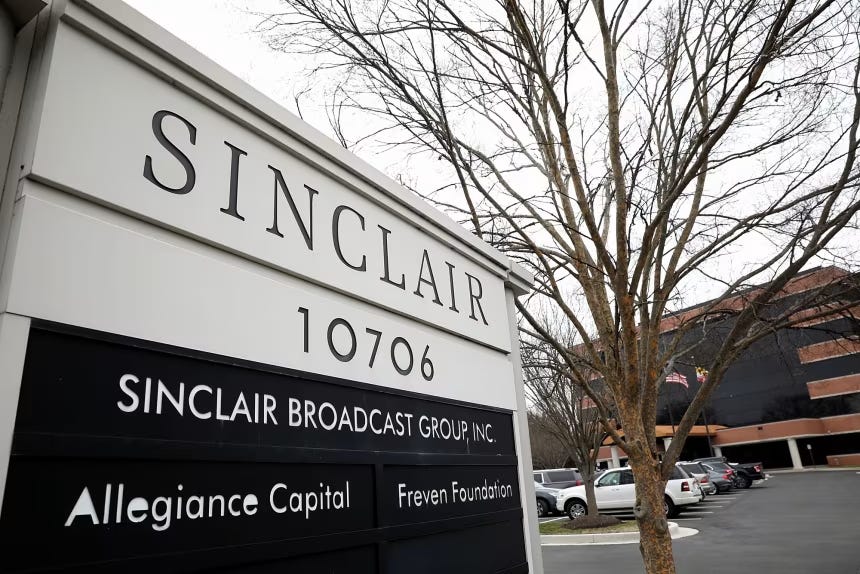
With this unprecedented loss of local news, the vast majority of US broadcast, cable, film, and print media are now controlled by six dominant conglomerates: the Walt Disney Company, Comcast, Warner Bros. Discovery, Paramount Skydance, Sony Group, and Amazon. The three major networks — NBC, ABC, and CBS — all fall under these conglomerates, as do the major cable news outlets of CNN, MSNBC, CNBC, and Fox News. Additionally, a large percentage of the remaining local affiliates are controlled by a few broadcast giants like Nexstar, Sinclair, and Gray Television.
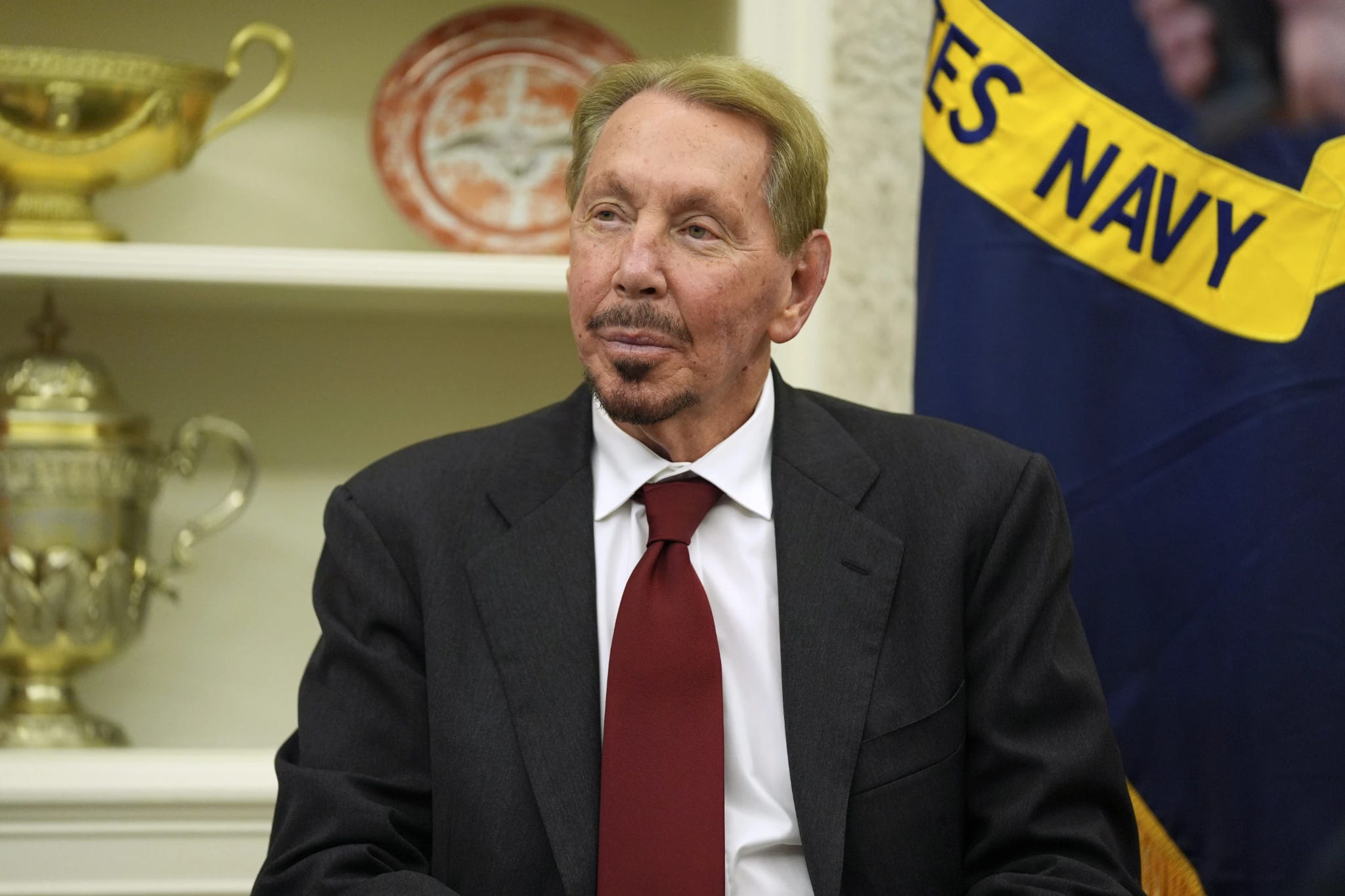
On Friday, the Department of Justice approved the latest proposed merger — Paramount’s $110 billion takeover bid for Warner Bros. Discovery, which would shrink the six conglomerates down to five. State-level lawsuits could still potentially block the deal, but if it goes through, David Ellison — son of Oracle founder and billionaire Trump donor Larry Ellison — will have control of both CBS and CNN.
An administration hostile to press freedom
This shift has been enthusiastically anticipated by President Trump and his followers, who have been critical of CNN’s reporting since his first administration. At a March 13, 2026, press conference, Secretary of Defense Pete Hegseth complained about CNN’s recent coverage of the war with Iran, stating, “The sooner David Ellison takes over that network, the better.” President Trump himself regularly refers to CNN as “Fake News CNN” and has called it a “Low Ratings Disaster,” “unpatriotic,” “corrupt,” and even guilty of “TREASON” in various social media posts.
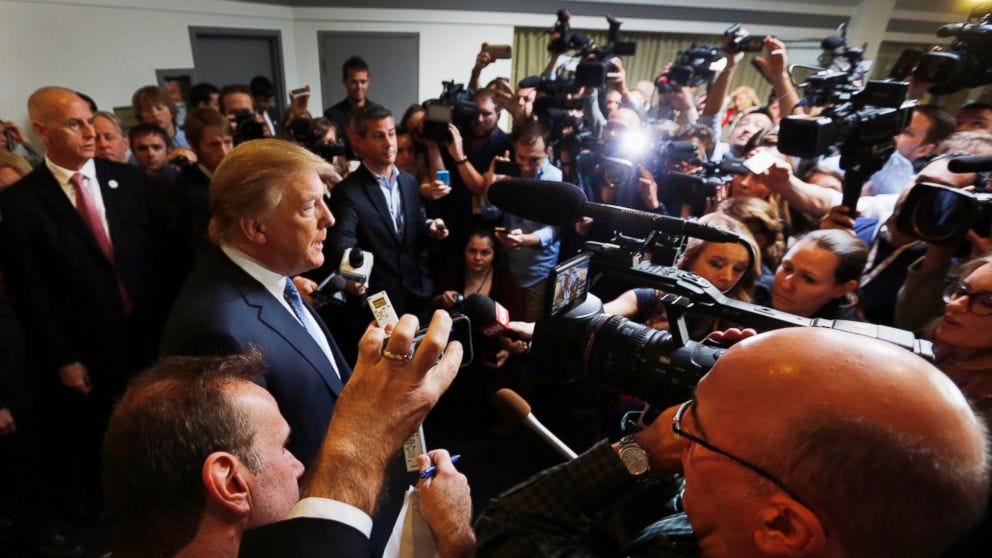
From the outset, Trump’s second administration has aggressively campaigned against freedom of the press. Unfavorable coverage is routinely dismissed by President Trump as “fake news,” and even in his first administration, he made his stance toward the press abundantly clear, tweeting on one occasion in 2017: “The FAKE NEWS media (failing @nytimes, @NBCNews, @ABC, @CBS, @CNN) is not my enemy, it is the enemy of the American People!” But it’s more than just bluster and social media posts.
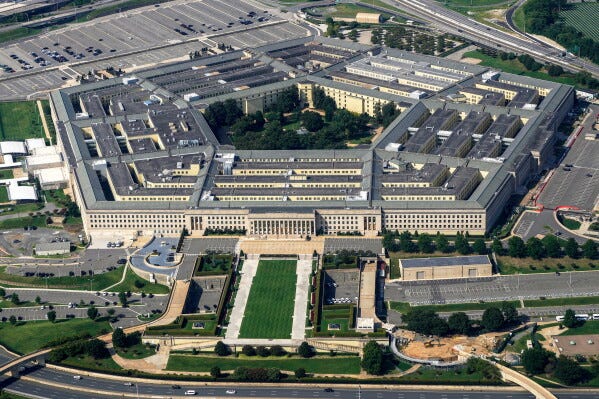
In the past year, the White House has sought to control which journalists and media outlets may participate in press pools covering the presidency, barred AP reporters from White House events, and effectively dismantled the US Agency for Global Media (USAGM), which oversees Voice of America (VOA), Radio Free Europe, and other global networks known for championing democracy and press freedom worldwide. Most recently, on June 1, 2026, journalists lost access to the Pentagon press office, which has been declared a “Sensitive Compartmented Information Facility,” housing DOD speechwriters who “routinely handle classified material,” according to Pentagon press secretary Joel Valdez.
FCC Chair Brendan Carr has repeatedly threatened to revoke broadcast licenses, despite the potentially unconstitutional nature of his threats (the First Amendment prohibits the government from restricting the freedoms of speech and of the press). In March 2026, upset over coverage of the war with Iran, he issued a general warning that licenses were not a “property right” and accused broadcasters of “running hoaxes and news distortions.” At the end of May, ABC launched a defense of its broadcast rights, accusing the FCC of threatening its station licenses as part of a campaign of “unconstitutional retaliation and coercion.” The order came immediately after President Trump and First Lady Melania Trump called for the firing of ABC late-night host Jimmy Kimmel over a monologue joke about Trump’s mortality that they found threatening.
In yet another strategic move, President Trump has filed an unprecedented number of personal lawsuits against the press, seeking tens of billions of dollars in damages. His lawyers are currently pursuing six lawsuits against news organizations and publishers, including The Wall Street Journal, The New York Times, the British Broadcasting Corporation, the Des Moines Register, and CNN. In addition to these current suits, he has recently settled two others with ABC and CBS, emerging with $32 million in damages. In December 2024, ABC News and anchor George Stephanopoulos agreed to issue an apology and pay $16 million to settle a defamation lawsuit. And last July, CBS parent company Paramount paid Trump $16 million to settle a suit over edits to a 60 Minutes interview conducted with then–Vice President Kamala Harris, his opponent in 2024.
More news outlets are bowing to government authority
The interdependency of the relationship between the government and a handful of wealthy media moguls may explain why some media outlets have bowed to the demands of the Trump administration. Most recently, longtime 60 Minutes correspondent and former CBS Evening News anchor Scott Pelley accused CBS management of attempting to “murder” 60 Minutes by “trying to inject falsehoods and bias” into any “politically sensitive” reporting, “apparently to curry a moment of favor with the Trump Administration.” According to Pelley, “Good people were silenced because they stood up for our audience. They stood for fairness against the forces of political bias; they stood for professionalism against chaos.”
In a March 14, 2026, Truth Social post, President Trump bragged about how he has been “RESHAPING THE MEDIA,” with an infographic listing highlights: “PBS Defunded,” “Colbert Leaving CBS,” “Jim Acosta Out at CNN,” and “WP [Washington Post] Massive Layoffs,” among many others. Protect Democracy — a nonpartisan, nonprofit group dedicated to defeating authoritarian threats in the US — has called this type of political maneuvering coupled with the uptick in media consolidation a move straight out of the authoritarian playbook.
Impact of a shrunken media landscape
A free press has been a staple of America’s liberties and history, and has long been perceived as a critical check on power. In 1841, Thomas Carlyle wrote, “[Edmund] Burke said there were Three Estates in Parliament; but in the Reporters’ Gallery yonder, there sat a fourth Estate more important far than they all.” These escalating attacks on the Fourth Estate by the current Trump administration seem less like isolated incidents than they do a carefully framed strategy to discredit a free press in order to control information, evade accountability, and consolidate power.
The Committee to Protect Journalists, an independent, nonprofit organization that promotes press freedom worldwide, has documented how fewer media choices led to more compliance with government narratives in different countries, including Hungary, India, Malaysia, and Venezuela.
According to findings detailed in the 2026 Democracy Report, written by the Swedish group Varieties of Democracies Institute (V-Dem), one of the world’s top democracy researchers, “the speed with which American democracy is currently [being] dismantled is unprecedented in modern history.” The report cites the “suppression and intimidation of media and dissenting voices” as a key reason for the “derailment of democracy” in the United States, saying that freedom of expression in the US “is now at its lowest level since the end of WWII.” The US and 43 other countries are listed as “autocratizing,” and the status of the US has been downgraded from “liberal democracy” to “electoral democracy.”
One of the clear patterns in the rise and fall of authoritarian regimes over the past century is their reliance on corporate power to consolidate political power. It’s much easier to pressure a few big companies and a few wealthy owners, especially if they are already your political backers, than to intimidate a fragmented host of independently owned stations.
When you control the media, you control the narrative of daily life and can influence how the government’s actions are framed. Trump understands well just how important it is to control the story when your goal is increasing and keeping political power. As the threat to American democracy grows, the public may come to understand this too.
 | A guest post by
|