

A Different Kind of Patriotism
For generations of Black Americans, loving the country has meant refusing to lie about it

In the United States, patriotism is often portrayed simply as pure pride: military flyovers, all manner of American flags, and national mythmaking about the country’s greatness. But there’s another kind of patriotism — the kind practiced by people like attorney and bestselling author of Just Mercy, Bryan Stevenson.
Stevenson identifies with a form of patriotism true to the tradition of many Black Americans: devotion to one’s country, expressed through calls for accountability and the fight against its most entrenched and unjust systems.
Through his organization, the Equal Justice Initiative, he provides free legal representation for people who have been unfairly prosecuted, excessively sentenced, or wrongly incarcerated. He’s helped secure the release of more than 140 people from death row, because he believes that the death penalty is a continuation of the American legacy of lynching, with persistent racial bias that the US Supreme Court deemed “inevitable.”
Stevenson has helped to construct public memorials in the South confronting America’s history of racial violence, literally digging up some of the worst moments in our nation’s history — memorializing the victims of lynchings through a display of 800 jars of soil from the sites of their murders.
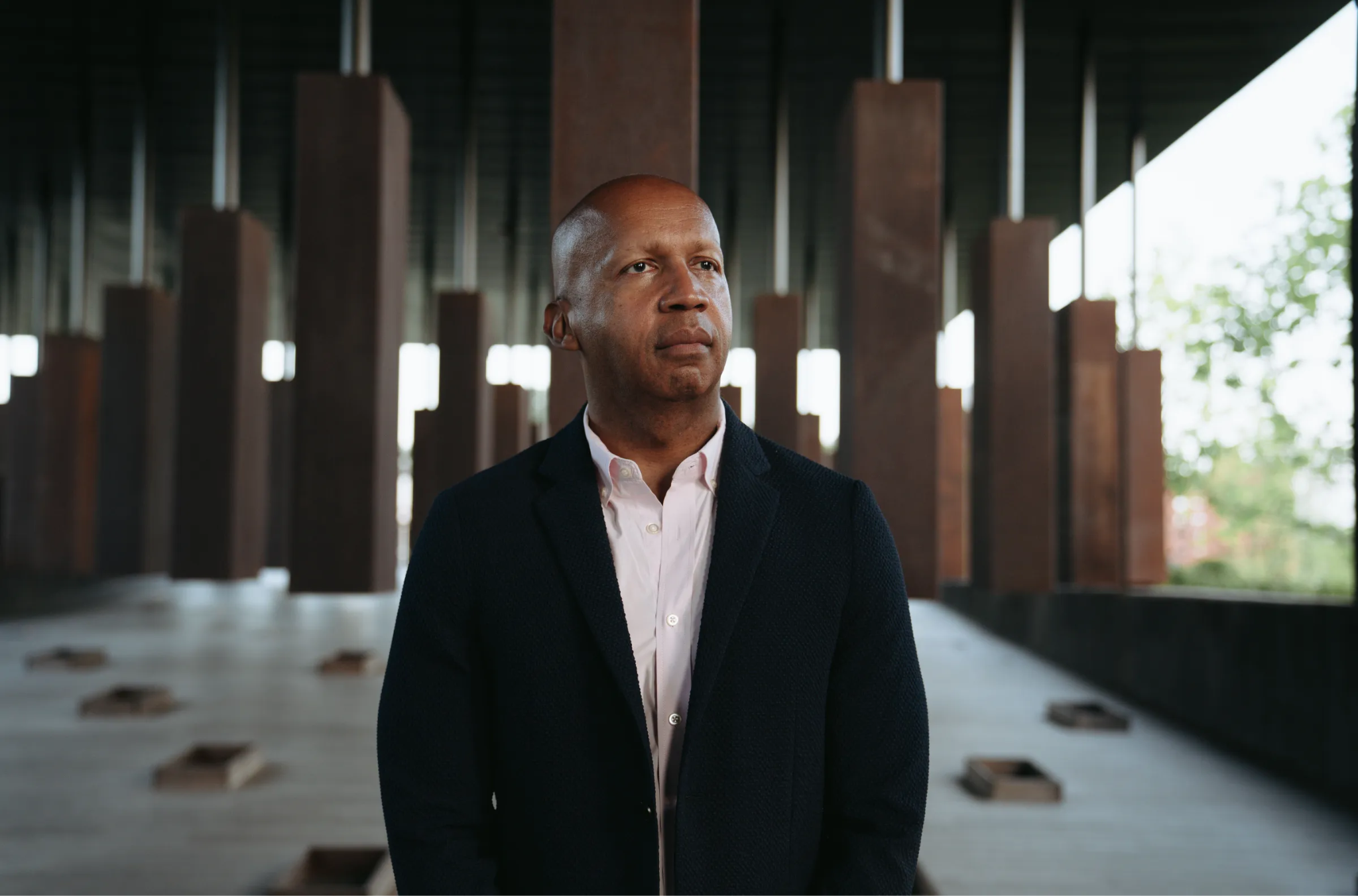
To some, this work is divisive — too focused on America’s failures, too willing to reopen old wounds. Stevenson sees it differently: “If we want to be proud of our country... then we have to care about the things that are inconsistent with pride.”
This is what Black patriotism often looks like. It contrasts with a different version of patriotism that is dominating the conversation as America approaches the 250th anniversary of its founding.
Freedom 250, an organization created by President Trump, is planning splashy celebrations of American independence featuring fireworks, country music, UFC fighting on the White House South Lawn, patriotic imagery, and a triumphalist retelling of the national story. (Note: this is different from the America 250 organization created by Congress.)
But the American story isn’t 250 years of freedom and justice. For Black Americans, it has been only 162 years since emancipation, 62 years since the Civil Rights Act of 1964 promised legal equality, and even less time if measured by when those promises were meaningfully realized.
What is Black patriotism?
To grapple with how Black patriotism shows up and the large role it has played in shaping the nation, we need to be clear on what it is.
Black patriotism is necessarily nuanced: holding pride and disappointment, hope and a healthy dose of cynicism, at the same time. It is not full of naïve optimism, because it is tempered by historical memory.
But Black patriotism remains for the country. Theodore R. Johnson offers a concise formulation: “For Black Americans, loving the country and criticizing it have always been inseparable — something other Americans have often struggled to understand.”
Smithsonian Secretary Lonnie Bunch has often said, “Protest is the highest form of patriotism,” calling us to expand our conception of who is patriotic.
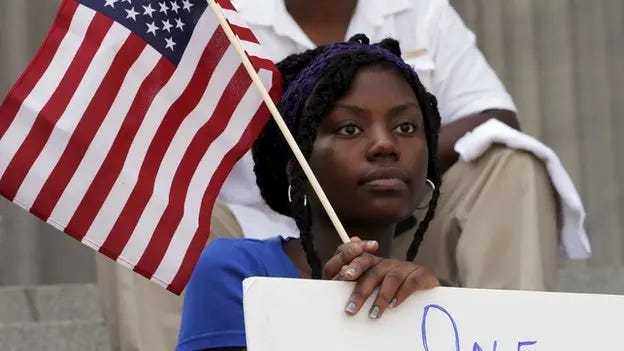
For many Black Americans, patriotic displays can feel incomplete when the nation’s failures go unacknowledged. Black patriotism insists that pride must be earned, and that we must not be blind or indifferent to whether the country is living up to its ideals. In this way, many Black people feel like the keepers of patriotism — the ones who hold the country to its own standards, ensure that we are making real progress, and require any cause for rejoicing to be truly deserved.
The movement to remove or relocate Confederate monuments and statues across the South offers a modern example of this critical patriotism in action — since Confederates were quite literally traitors to the US, calling for an end to the veneration of their disloyalty seems like one of the most patriotic things one could do, and it was largely a Black-led effort. Critics framed these efforts as unpatriotic and an attempt to erase history. But for those in support, who regarded these monuments as a celebration of the Confederacy’s war to preserve slavery, it was part of a necessary revision — an essential step toward aligning the country with its professed belief in equality.
Making sense of a dual identity
Of course, Black Americans’ sense of patriotism is not entirely uniform.
“I think that if anywhere you find just how heterogeneous Black Americans are, it’s around this question of patriotism,” Farah Jasmine Griffin, the chair of the African American and African Diaspora Studies Department at Columbia University, told NPR. “You have African Americans who are definitely patriotic, but not uncritically so, not naively so. And then you have others who find a problem with the very notion of patriotism, and I think that’s always been an ongoing and consistent tension.”
Black journalist Nikole Hannah-Jones, best known for her work on the renowned essay collection The 1619 Project, describes spending her youth in that latter category. Hannah-Jones remembers her embarrassment over her dad’s brazen patriotism following his military service. She recalls her unease with taking pride in being American, and her uncertainty about what else she would be. In a classroom activity, she was asked to draw the flag of her ancestral nation, and she remembers just sitting there stunned because, as a descendant of slaves, she had no country to claim as her forebears’ homeland. That’s an experience familiar to many.
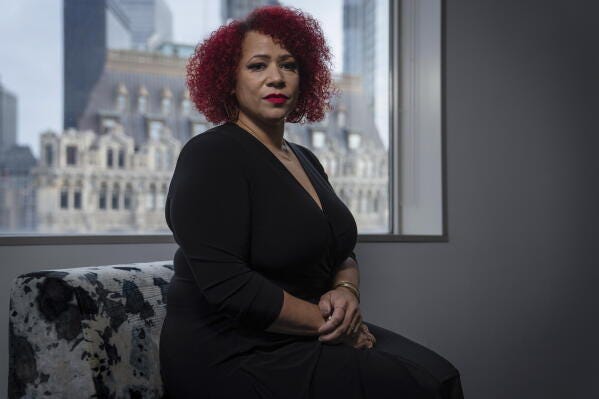
Regardless of their exact views, Black Americans see their Black identity and their American identity as conceptually distinct. Black American identity exists along a spectrum: from integration into a shared American identity to maintenance of a distinctly Black cultural and political identity. W. E. B. Du Bois described the tension of balancing the two as “double consciousness.” This illuminates the complicated relationship many Black people have with certain symbols of patriotism — for example, the widely discussed feeling of unease or suspicion that comes from seeing the flag on someone’s car or house because it suggests not so much “American” as “unequivocally proud of being American.”
The 1619 Project argues that slavery was the central force in the nation’s founding — a view embraced by some scholars and disputed by others. It was met with a direct response from the first Trump administration, The 1776 Report, which treats slavery and other injustices as times America lost its way: bumps in the road that our nation, from its founding, was designed to handle. For Hannah-Jones, conducting research and arguing for her perspective, bleak as it may seem, made it possible to find her way to Black patriotism and co-conceive of her Black and American identities.
“We were told once, by virtue of our bondage, that we could never be American,” she writes. “But it was by virtue of our bondage that we became the most American of all.” Looking back on her childhood, she reflects, “I wish, now, that I could go back to the younger me and tell her that her people’s ancestry started here, on these lands, and to boldly, proudly, draw the stars and those stripes of the American flag.”
Calling America to live up to its ideals
But whether cynical, optimistic, or somewhere in between, all forms of Black patriotism have a common goal: demanding that America live up to its ideals.
To make that demand, one must believe — to some extent — that the problem is not America’s ideals, but America’s hypocrisy.
With the view that America is fundamentally and irredeemably evil, there is nothing to appeal or aspire to; you can ask nothing and expect nothing of a nation that is beyond saving. The forefathers of Black patriotism, however — those who overturned the systems of slavery and segregation and moved the country forward — had a perhaps unexpectedly high opinion of what was possible for America, believing that it could be called and held to its standards.
Frederick Douglass, for instance, criticized America while insisting he belonged to it. Douglass’s famous speech “What to the Slave Is the Fourth of July?” is regarded as a lament that exposed the hypocrisy of slavery, but a closer examination shows something more: a deep claim to American identity and belief in the country’s foundational values.
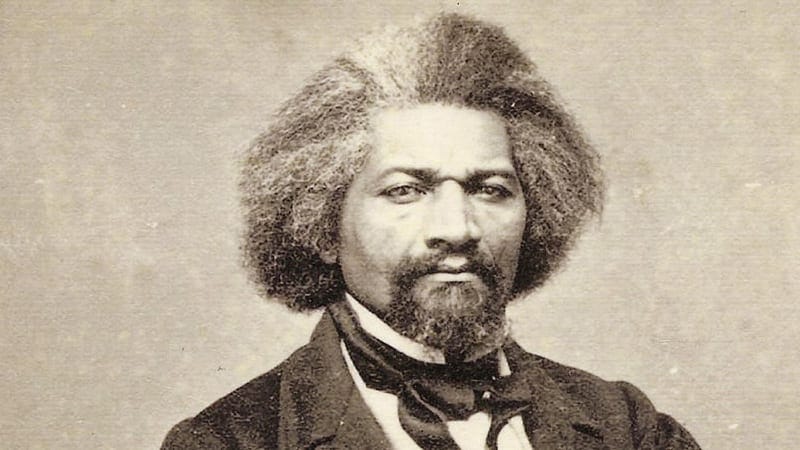
“The principles contained in that instrument [the Declaration of Independence] are saving principles,” Douglass said. “Stand by those principles, be true to them on all occasions, in all places, against all foes, and at whatever cost.” The Constitution “as it ought to be interpreted,” he said, “is a glorious liberty document.”
Similarly, Martin Luther King Jr. said that equality would be achieved when “the magnificent words of the Constitution and the Declaration of Independence” are truly lived out, but that the nation was still in pursuit of its promises.
Douglass and King each saw the ways that America violated its own principles, but instead of rejecting American-ness, eschewing the country as inherently evil, or joining the “back to Africa” movements that were popular in both of their times, they appealed to the promise of those principles. It’s an attitude that confounds the oversimplified “blindly patriotic” or “critical and unpatriotic” dichotomy.
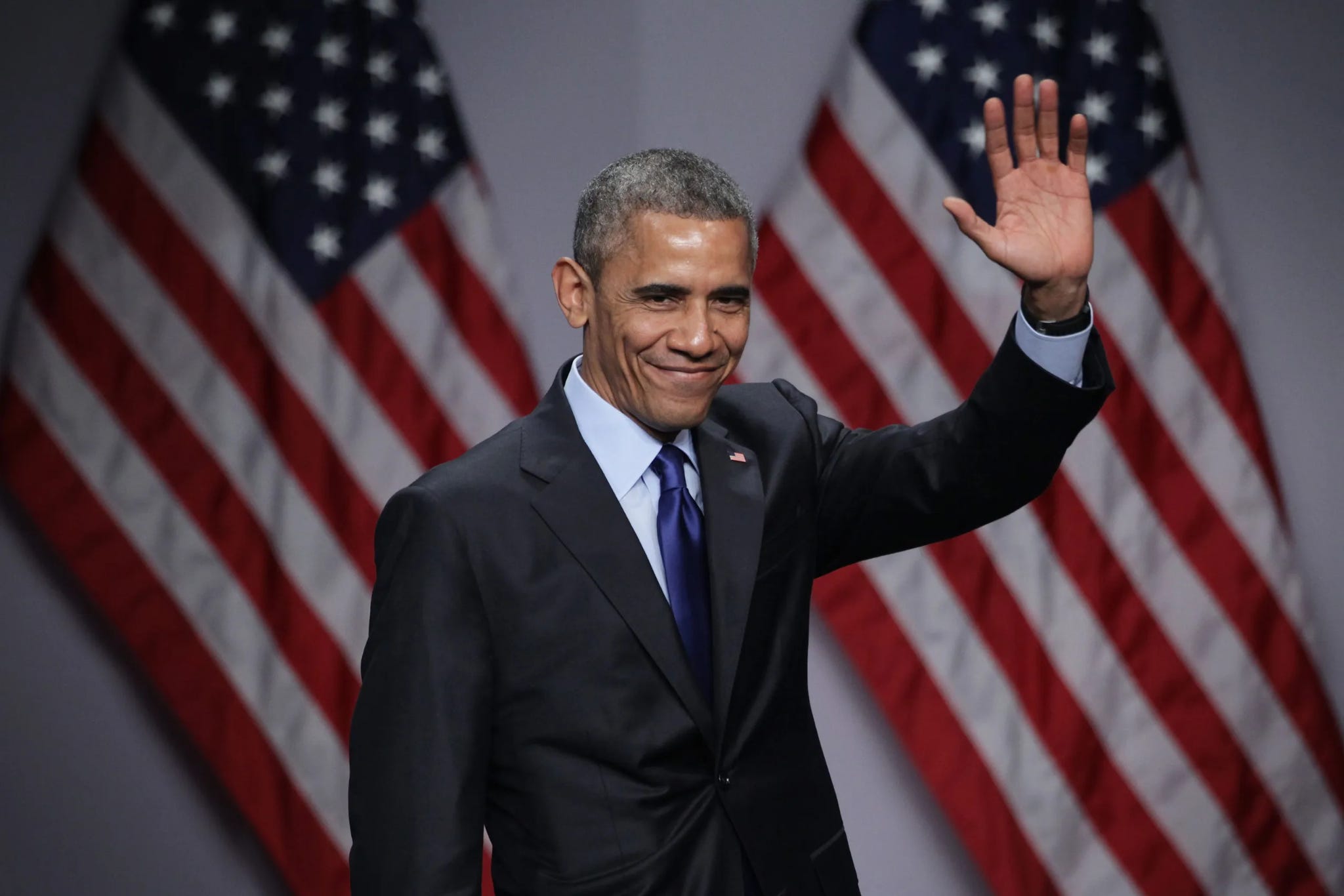
Barack Obama tried to strike this same chord while on the campaign trail in 2008, saying, “I love this country not because it’s perfect but because we’ve always been able to move it closer to perfection.” He explained that “through revolution and slavery,” countless Americans have struggled and fought and sacrificed “to bring us that much closer to our founding promise.” These words simultaneously profess a love for America’s ideals and invite a reckoning with its shortcomings.
There were serious issues for Obama when the people around him shared this message less tactfully. In February 2008, Michelle Obama drew ire for her candid remark, “For the first time in my adult lifetime, I am really proud of my country.” A month later, the Reverend Jeremiah Wright, the Obama family’s longtime pastor, was treated as an anti-patriotic pariah for making provocative statements such as “God damn America,” his rationale being that he couldn’t assent to “God bless America” when he was incensed by the mistreatment of African Americans.
In a 2008 Time article, Michael Eric Dyson made a defense of Wright, who served in the Marines and then the Navy, made his way up to the president’s medical team as a cardiopulmonary technician, and earned three White House letters of commendation. In light of his decades of service to his country — service that pre-dated equal rights for Black Americans — “Wright’s words are the tough love of a war-tested patriot speaking his mind,” a freedom that happens to be “the same right for which he was willing to die.”
Many Black Americans, both modern and historic, have had to fight against the notion that holding America to account is unpatriotic and have had their patriotism questioned. That’s not only because Black patriotism often sounds different from unquestioning loyalty to country, but also because of the societal temptation to treat Black people as not real Americans, as “other.” We saw this with Obama — both his race and his father’s immigration status seemed to situate him apart from “patriotic” Americans, and many refused to believe he was an American citizen at all. Historically, leaders like Martin Luther King Jr. and many others faced similar accusations of disloyalty, often dressed up in the language of conspiracy; King was constantly accused of being a communist and a traitor, and surveilled and threatened by the federal government.
From words to action
Black patriotism is more than criticism of the country’s shortcomings. It is also a form of action. It means actively pushing the country to be better through civic engagement and protest — what John Lewis called “good trouble.”
Without Black Americans’ civic involvement and advocacy, our democracy would be in jeopardy. Likewise, abolition, integration, voting rights, environmental protections, and many of America’s greatest triumphs could not have been achieved if it weren’t for Black Americans loving a country before it loved them back, and serving a country before it served them back.
Bryan Stevenson teased this out when he said that Black Americans throughout history have been devoted to realizing a version of “America that is committed to equality and justice.” After enduring 250 years of enslavement, “instead of seeking revenge or retribution or violence against those who had enslaved them,” they joined in American society and fought for their right to be regarded as equals. “They believed in an America” — one in which they could “live in harmony with those who had abused them” — but “they got no credit for that.”
In hindsight, we easily recognize abolitionists and civil rights leaders as heroes and patriots. The challenge now is to recognize Black patriotism in the present. Examples may be found in Black Americans’ defense of multiracial democracy — in leaders like Stacey Abrams, who, in 2021, was nominated for a Nobel Peace Prize for her efforts to combat voter suppression — and those who work toward fair and just systems, such as Dr. Robert D. Bullard, whose research showed that low-income communities of color were being poisoned by disproportionate pollution.
In each instance, Black patriots haven’t just celebrated America — they’ve confronted and tried to fix what’s broken in America. With one eye on American society’s ills and another on the nation’s promises, Black patriotism is more than accountability — it’s hope, and belief that something better is possible in this country.
 | A guest post by
|
Thank you, Marie. I love this article. It helped me organize my thoughts a bit on our current moment. MAGA patriotism, with the flag waving over the overt displays of cruelty, is the most hollow. It only loves the country when the country flatters them back. It’s the parent who loves their kid for getting a trophy but goes cold the second the kid struggles. Love like that isn’t really love.
For MAGA, a white man who took up arms against the USA to keep the right to own human beings gets folded back into the family of patriots, statue and all. A Black man who kneels to say the country hasn’t always kept its promise is a traitor. The actual treason of slavery is too embarrassing to mention, so it gets forgiven as ancient history, while the protest that hurts nobody becomes the ultimate betrayal of pointing out the charade. So fragile.
And it’s not like MAGA has no complaints about America. They’re just nimble mental gymnasts about it. Anyone they disagree with gets redefined as un-American, so they never have to admit they’re criticizing their own country as they burn it all down.
I often think about a call I made while phone banking for Prop 50 a few months back, which was an effort by California to respond to the nationwide mid-decade MAGA gerrymandering scheme. A Black guy picked up, immediately furious with me, done with voting and done with Democrats for letting MAGA win again in 2024. He needed to vent more than he needed my script, so I dropped the script, told him I shared his anger, and asked him what was on his mind. He let loose for about five minutes, then another voice cut in. He was on speakerphone in his car, and his girlfriend, a loyal Democrat, was livid he’d hand the country to MAGA for good. She got her five minutes too. I told them they were both right, that I wasn’t there to tell anyone how to think, and that the only reason I was giving up my weekend to get yelled at by strangers was that I love this country too much to watch it fall apart. Then he flipped. I don’t think anyone had let him say all of it in a long time. Before he hung up he said he was going to start voting again. I put the phone down and TBH I might have cried a little bit, feeling like something really real had just happened. Ignore the white savior part of that story, because there’s an important lesson. I didn’t change his mind or anything. The patriotism was already there. It had just gotten buried under what seems like a lot of political trauma, and being heard by his girlfriend and me cleared that block.
I guess what I’m trying to say is fights over who counts as patriotic aren’t just semantics. Sometimes hearing someone out who has had a different experience is the whole point, and it can show them that they do love the country already. Does that mean loving MAGA too? Hell no!! But you can still love the USA even if you’re well aware of our collective shortcomings as a country. In fact, I’d assert the opposite: you can’t really love the USA if you don’t acknowledge the existence of a tension with its ideals. Otherwise, you’re cool with our current moment rhyming with the worst parts of our history. No thanks! Let’s keep inching towards something more perfect.
Another beautiful essay, Marie. I feel like we could all learn a few lessons from Black Patriotism. It's really the best kind. It demands that we keep striving towards that more perfect union, that idea that still hasn't been fully realized.